
On this page
Top picks at a glance
As an Amazon Associate I earn from qualifying purchases.
- 1
 Burlap potato storageView on Amazon
- 2
 Palmhomee 6 Pieces Large Burlap SacksView on Amazon
This burlap vs mesh potato storage bags comparison is written from the product listings, since we have not used these bags ourselves. The short verdict: pick burlap if you store potatoes in bulk and want a tough, reusable sack; pick mesh if you store in smaller batches and want to see the contents at a glance. Burlap wins on durability and bulk, mesh wins on visibility and organization.
Runners-up to consider
 Burlap potato storageCheck price on Amazon
 Palmhomee 6 Pieces Large Burlap SacksCheck price on Amazon
HarvestGearLab earns a commission when you buy through links on this page, at no extra cost to you. As an Amazon Associate I earn from qualifying purchases. Affiliate disclosure.
Burlap vs mesh potato storage bags: the verdict
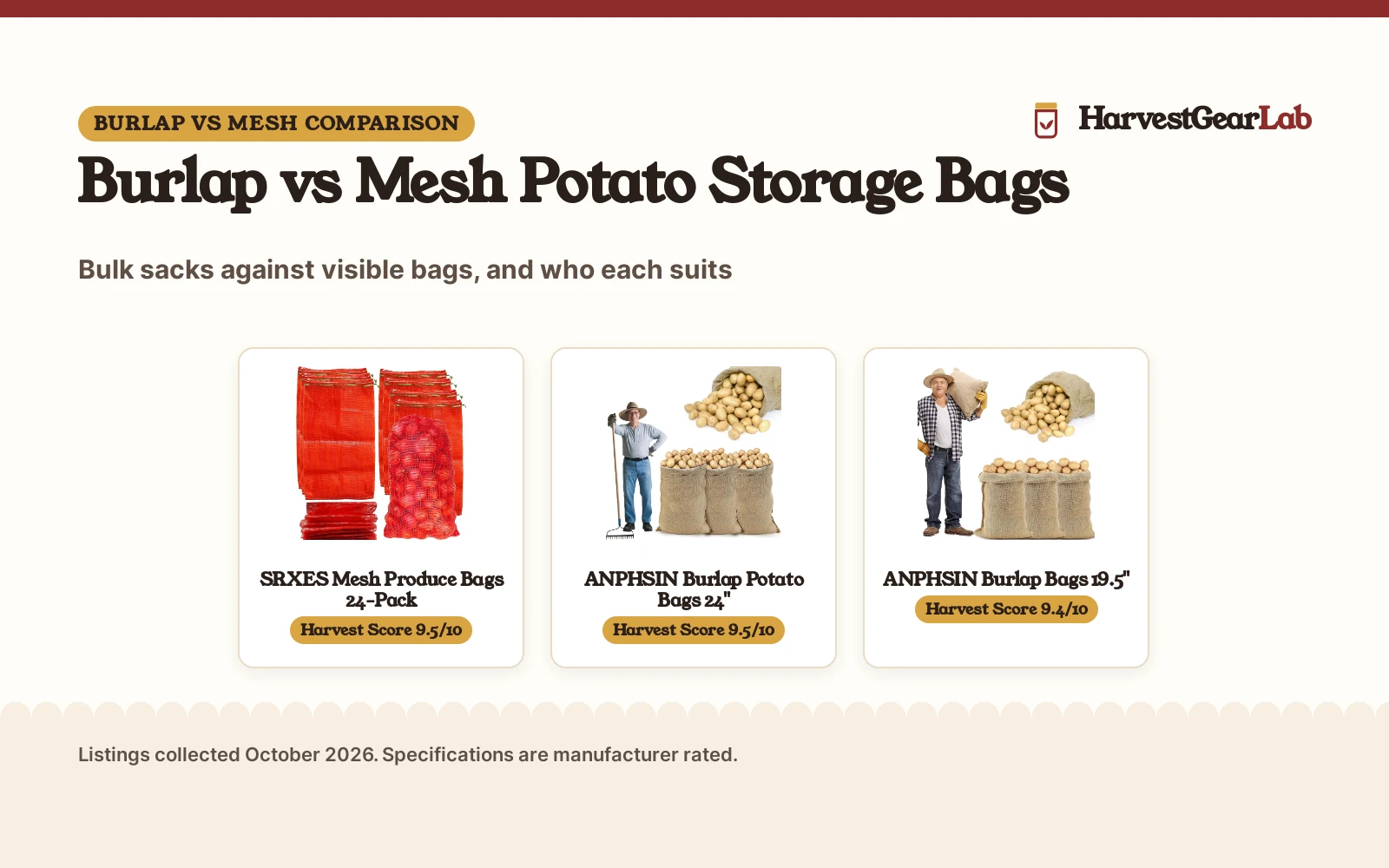
Both sides breathe, which is what potatoes need, but they solve different problems. The burlap listings here describe thick woven jute sacks, 19.5 by 35 inches or 24 by 40 inches, sold four to a pack with 32.8 feet of jute rope, washable and reusable. The mesh listing describes a 24-pack of 14 by 20 inch polypropylene mesh bags with drawstrings, where open mesh keeps produce visible so you can check contents without opening each bag.
Choose burlap for the big harvest: the sacks hold more, take rougher handling and reuse for years. Choose mesh for the weekly sort: smaller bags, easy to label by type or batch, and you spot a sprouting potato before it spreads. Keepers with a real harvest often use both, burlap for the cellar and mesh for the kitchen.
The burlap side
The burlap side is the ANPHSIN pair. The 19.5 by 35 inch listing gives four bags, 32.8 feet of jute rope, 100% natural burlap described as breathable and water permeable, a 4 pound load capacity and a 16 ounce item weight, with a drawstring closure. The 24 by 40 inch listing gives the same four-bag, 32.8-foot rope pack in natural jute, described as tightly woven with strong load-bearing capacity and tear resistance, biodegradable and recyclable, at 1.73 kg.
What burlap buys you is toughness and bulk. A woven jute sack holds a family-sized quantity of potatoes or onions, shrugs off being dragged across the cellar floor, and washes and folds flat for reuse. The rope and drawstring closure keep the contents in. The tradeoff is opacity: you cannot see what is inside, so one bad potato can start a soft spot before you notice.
| Bag | Size | Pack | See-through |
|---|---|---|---|
| SRXES Mesh Produce Bags 24-Pack | 14 x 20 in | 24 bags | Yes |
| ANPHSIN Burlap Potato Bags 24″ | 24 x 40 in | 4 bags + rope | No |
| ANPHSIN Burlap Bags 19.5″ | 19.5 x 35 in | 4 bags + rope | No |
The mesh side
The mesh side is the SRXES 24-pack. The listing describes 14 by 20 inch bags in polypropylene mesh with a drawstring on each, open mesh that lets air circulate and keeps produce visible, and 24 bags for separating vegetables by type or batch. The title calls them 20 lb bags and the spec table gives capacity 20 pounds, but it also lists a 77 pound load capacity, which does not match; plan around the 20 pound figure.
What mesh buys you is visibility and organization. Twenty-four bags means potatoes, onions and shallots each get their own, labeled by batch, and a glance shows sprouting or softening before it spreads. The tradeoff is capacity: these are 20 pound bags, not cellar sacks, and mesh is thinner than woven jute, so it suits shelf and counter storage rather than rough hauling.
One listing oddity: the bullets describe polypropylene mesh while the spec table says the material is nylon. Treat the exact fiber as unconfirmed; either way it is a synthetic mesh, per the two lines combined.
Airflow, light and rot
Both materials breathe, which is the point: potatoes stored airless go soft. Burlap breathes through the weave and also blocks light, which slows greening, a real advantage in a bright pantry corner. Mesh breathes better and lets you see the contents, but it lets light in too, so mesh bags belong in a dark spot. Neither side lists a warranty, so both score nothing on warranty.
For the rest of the storage setup, see our best potato storage for basement and best potato storage for winter guides.
Which side fits your harvest
Pick burlap if you put up potatoes in quantity: the 24 by 40 inch ANPHSIN sacks are the biggest bags here, the jute is the toughest material here, and the rope and drawstring closure suit cellar storage. Pick the smaller 19.5 by 35 inch sacks if your harvest is modest but you still want the burlap toughness. Pick mesh if you sort and store in batches: the SRXES 24-pack gives every vegetable its own visible bag, which is how you catch a bad potato early.
If you do both, spend the harvest in burlap and the week in mesh: fill the sacks in the cellar, then refill a few mesh bags for the kitchen. That is how most serious keepers run it.
FAQ: preserving at home
Do potatoes store better in burlap or mesh?
Both breathe, which potatoes need. Burlap also blocks light and holds more; mesh lets you see the contents. Pick burlap for bulk cellar storage and mesh for sorted batches.
How many bags come in each pack?
The ANPHSIN burlap listings give 4 bags plus 32.8 feet of jute rope. The SRXES mesh listing gives 24 bags.
Are these bags reusable?
The burlap listings describe the sacks as washable and reusable, folding flat for storage. The mesh listing also lists reusability, and empty mesh bags fold flat.
What size are the bags?
The burlap sacks come in 19.5 by 35 inches or 24 by 40 inches. The mesh bags are 14 by 20 inches, titled as 20 lb bags.
Can I see the potatoes through the bag?
Through the mesh bags, yes: the SRXES listing says the open mesh keeps produce visible. The burlap sacks are opaque, so you check by opening them.
More preserving guides
See every produce storage guide and all food storage guides.
More picks: potato storage for winter, potato storage for basement, reusable produce storage bags and food storage.