Pressure Canner Repair: Common Parts to Replace
Pressure canner repair starts with the sealing ring, the overpressure plug and the gauge, and this guide shows how to spot each worn part and match…
Canning, drying, storing and harvest gear for home kitchens

Pressure canners compared by jar capacity, dial or weighted gauge, stovetop compatibility, materials and stated listings for canning low-acid foods at home.
Pressure canner repair starts with the sealing ring, the overpressure plug and the gauge, and this guide shows how to spot each worn part and match…
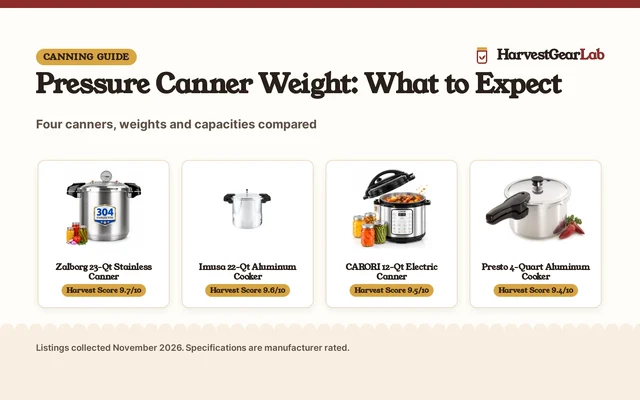
Pressure canner weight comes down to size, material and load, and this guide compares four canners by the capacity, metal and weight each listing states.
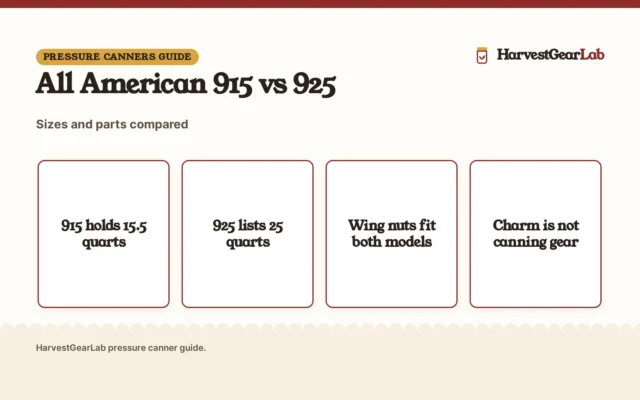
All American 915 vs 925 compared by capacity and parts: the 915 at 15.5 quarts, the 925 size at 25 quarts, plus wing nuts and a…
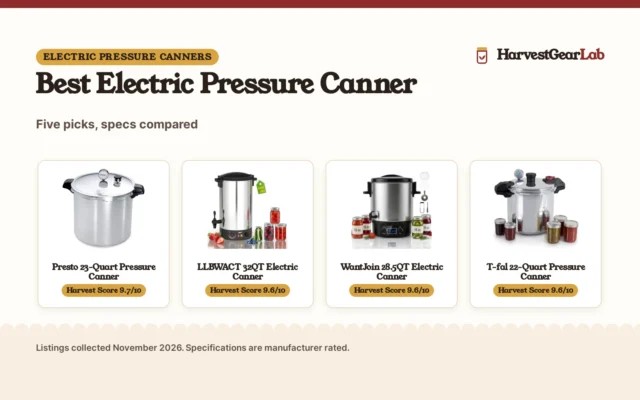
Five canners compared by capacity, heat source, stated safety features and warranty, for putting up a large harvest at home.
Five stovetop pressure canners compared by capacity, jar counts, stated safety features and warranty terms, led by a classic metal-to-metal seal model.
All American 925 vs 941 comes down to batch size: the mid-size model suits modest harvests, while the large model suits big harvest days.
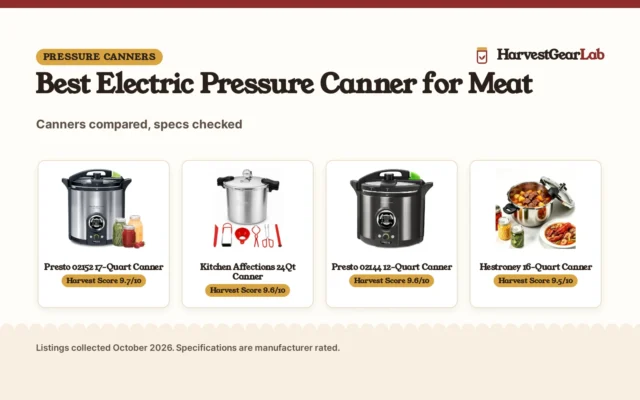
Canners for meat compared by capacity, stove fit, gauges, weights and safety features, from a 24-quart kit to digital models.
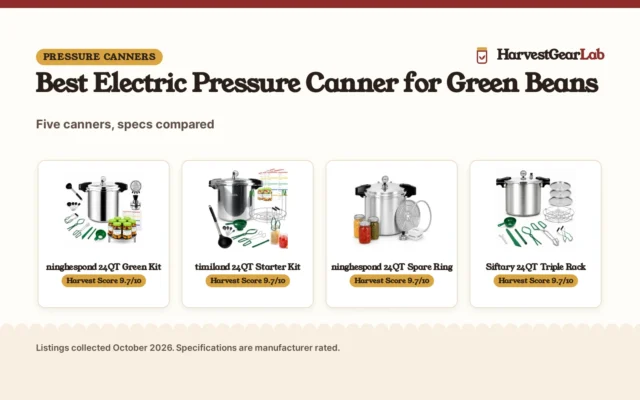
Five stovetop pressure canners rated for electric cooktops, compared by capacity, pressure control, kit pieces and warranty terms.
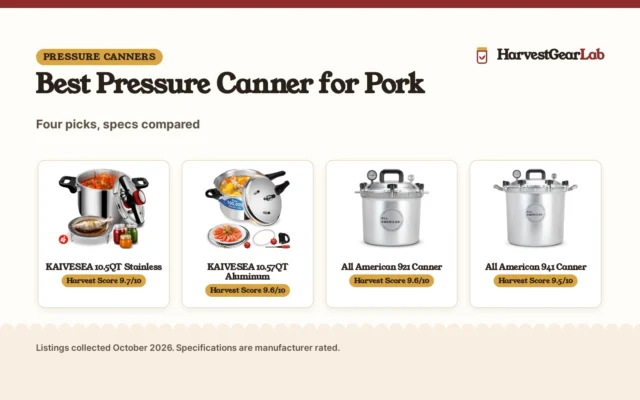
Four pressure canners compared by capacity, material, stated safety features and stovetop fit, for pork put up at home each season.
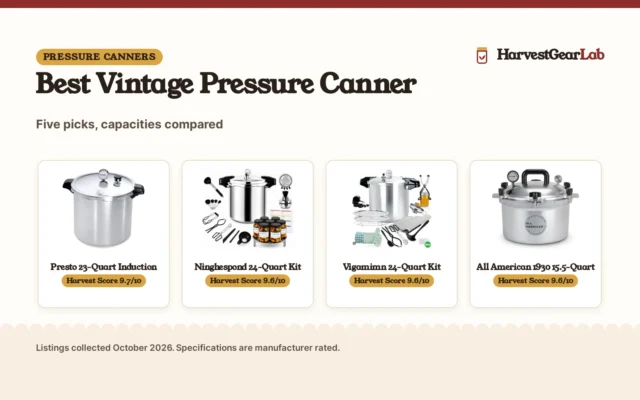
Five pressure canner listings compared by stated capacity, material and safety features, with spare parts named plainly as parts.