
On this page
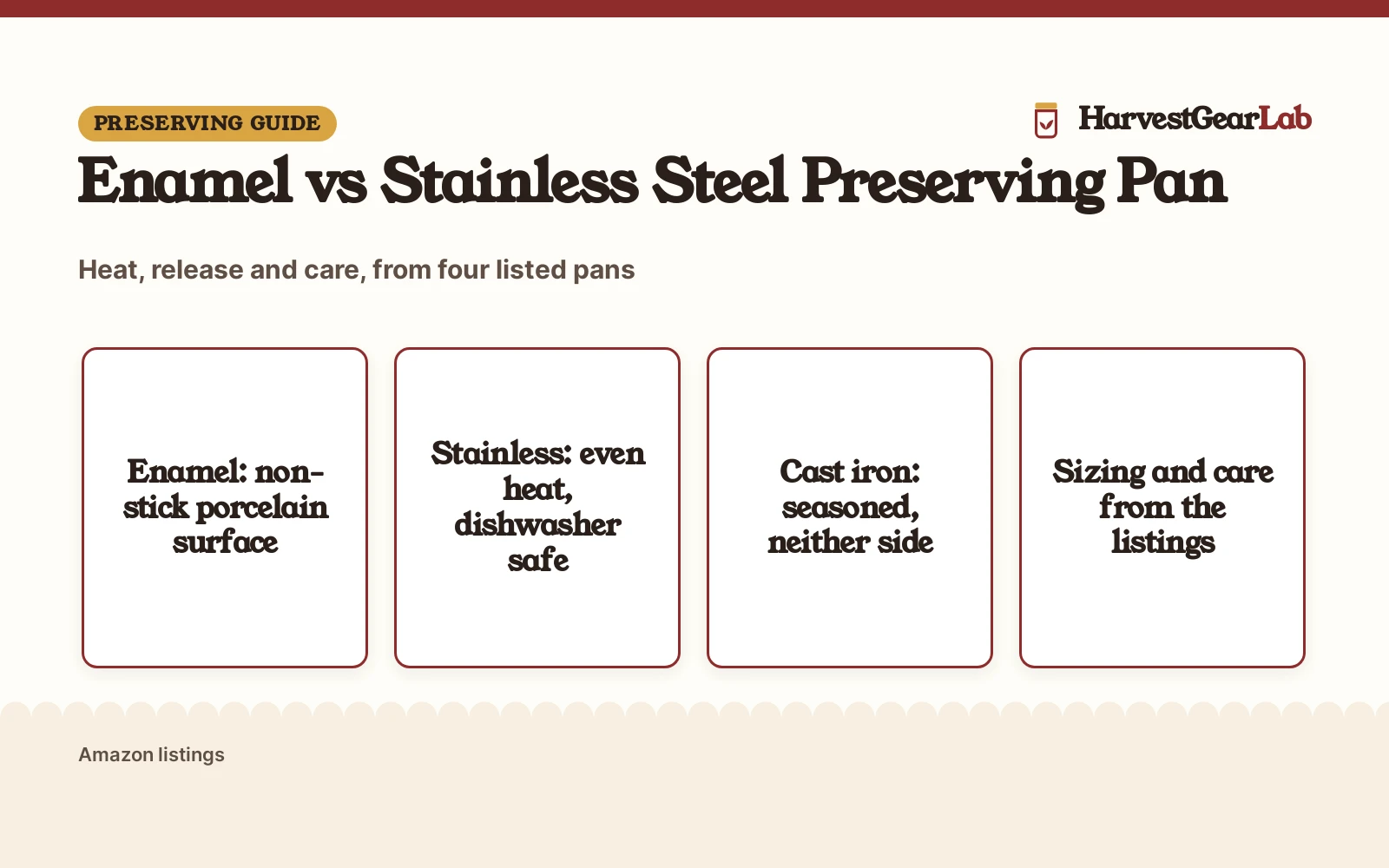
The enamel vs stainless steel preserving pan question comes down to release versus durability: enamel’s porcelain surface gives easy food release and the listings call it non-stick and non-toxic, while stainless steel’s full cap base gives even heating and dishwasher-safe durability. Choose enamel for sticky jam batches that need easy release; choose stainless for everyday preserving plus induction use. The four listings below illustrate both sides: the Granite Ware and Webake are enamel-coated steel, the Farberware is stainless steel, and the Victoria is cast iron, which is neither side.
HarvestGearLab earns a commission when you buy through links on this page, at no extra cost to you. As an Amazon Associate I earn from qualifying purchases. Affiliate disclosure.
Enamel vs stainless steel preserving pan: the short answer
Enamel wins on release: the Granite Ware saucepans list a porcelain coating that is naturally non-stick, and the Webake enamelware pan lists a ceramic coating with excellent food release. Stainless wins on durability and care: the Farberware saucepan lists a full cap base of stainless over a thick aluminum core for rapid, even heating, and it is dishwasher safe and induction compatible. If you make one big jam batch a year, enamel’s release matters most; if the pan earns daily duty, stainless takes more abuse. Compare sizes in our preserving pan vs stock pot guide.
What enamel gives you
The Granite Ware set includes 1-quart and 2-quart saucepans with a low-carbon steel core and a porcelain surface the listing calls non-stick and non-toxic, with even heat distribution for simmering sauces. The Webake enamelware pan is a 9 by 13 inch, 5-quart enameled steel pan with a ceramic coating, wide rims for a confident grip, and an oven rating of 536 degrees F. Enamelware is not intended for microwave use, per the Webake listing, and hand washing is recommended. Enamel suits acidic fruit jams because the coating, not bare metal, meets the fruit; the listings describe the surfaces as non-stick and non-toxic.
What stainless steel gives you
The Farberware Classic 1-quart saucepan lists a full cap base with stainless steel layered over a thick aluminum core, a mirror-finished exterior, a bell-shaped lid with rolled rim, and a comfortable handle. It is oven safe to 350 degrees F, dishwasher safe, and induction compatible. Stainless handles metal utensils and repeated dishwasher cycles better than coated surfaces, and the even-heating base matters when you bring fruit and sugar to a boil without scorching. See our copper vs stainless steel preserving pan comparison for the metal side in more depth.
The cast iron middle ground
The Victoria 2-quart saucepan is cast iron, so it is neither enamel nor stainless, but it earns a mention for jam makers who cook over a campfire or grill. The listing says it is seasoned with non-GMO, Kosher-certified flaxseed oil, is PTFE- and PFOA-free, and works on induction, gas, ceramic, electric, in the oven, on a grill, or over a campfire. Drip-free pour spouts help when moving hot preserves into jars. Cast iron holds heat well but needs seasoning care that enamel and stainless do not.
Sizing the pan for jam
One-quart saucepans like the Farberware and the smaller Granite Ware suit small jam batches and trial recipes. Two quarts, like the larger Granite Ware and the Victoria, handle a full batch of most home jams. The Webake’s 5-quart capacity is the biggest here, suited to large batches or roasting duty between jam seasons. A pan that is too small boils over when sugar foams; size up if you scale recipes. For dedicated jam pans, see our best preserving pan for jam guide.
Care and storage
Stainless is the lowest-maintenance: the Farberware is dishwasher safe and induction ready. Enamel needs more care: hand washing is recommended for the Webake, and it is not microwave safe. The Granite Ware listing does not state a care method, so treat it like other coated cookware. The Victoria’s seasoning improves with use but rusts if stored wet. Whichever side you pick, dry the pan fully before storing and keep enamel away from thermal shock.
FAQ: preserving at home
Is enamel safe for acidic jam?
The listings describe enamel’s porcelain surface as non-stick and non-toxic. Enamel keeps bare metal away from the fruit, which is what jam makers want.
Can I use a stainless saucepan for jam?
Yes. The Farberware lists a full cap base for even heating, which helps prevent scorching when sugar boils, and it is dishwasher safe and induction compatible.
Can enamelware go in the microwave?
No. The Webake listing states enamelware is not intended for microwave use. Hand washing is recommended.
Which is easier to clean?
Stainless is dishwasher safe, per the Farberware listing. The Webake enamelware recommends hand washing. The Granite Ware and Victoria listings state no care method.
More preserving guides
See every canning guide.
More picks: preserving pans, preserving pans for jam and copper vs stainless steel.