
On this page
Top picks at a glance
As an Amazon Associate I earn from qualifying purchases.
- 1
 Qianfenie 1 Gallon Glass Mason Jar with Airtight Clamp Lids9.6/10View on Amazon
- 2
 Glass Vacuum Seal Containers SetView on Amazon
- 3
 Zwilling Fresh & Save 3-Pc Glass Vacuum Bowl Set AirtightView on Amazon
- 4
 WhiteRhino Glass Pickle Jar with Strainer FlipView on Amazon
- 5
 Luvan Glass Pickle JarView on Amazon
- 6
 North Mountain SupplyView on Amazon
- 7
 Ball Leak-Proof Plastic Lids for Glass Mason JarsView on Amazon
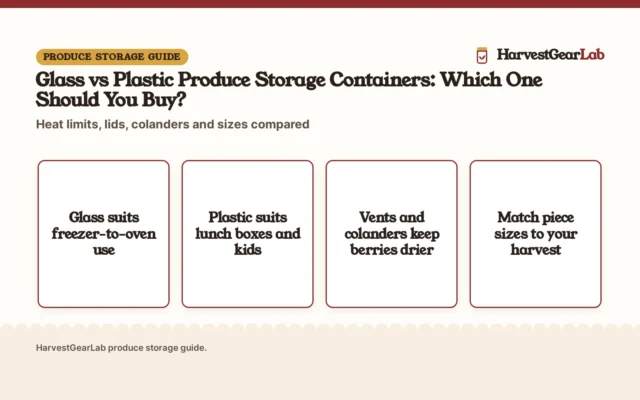
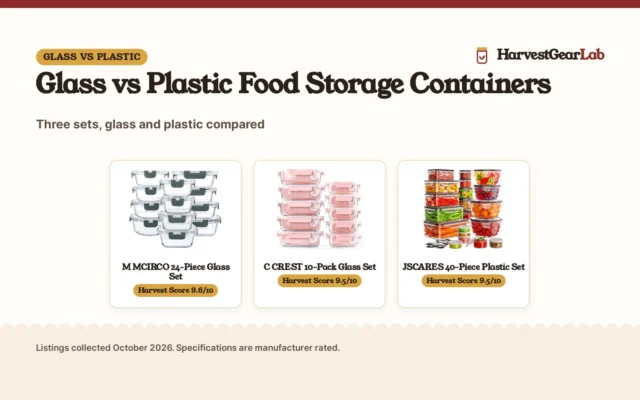
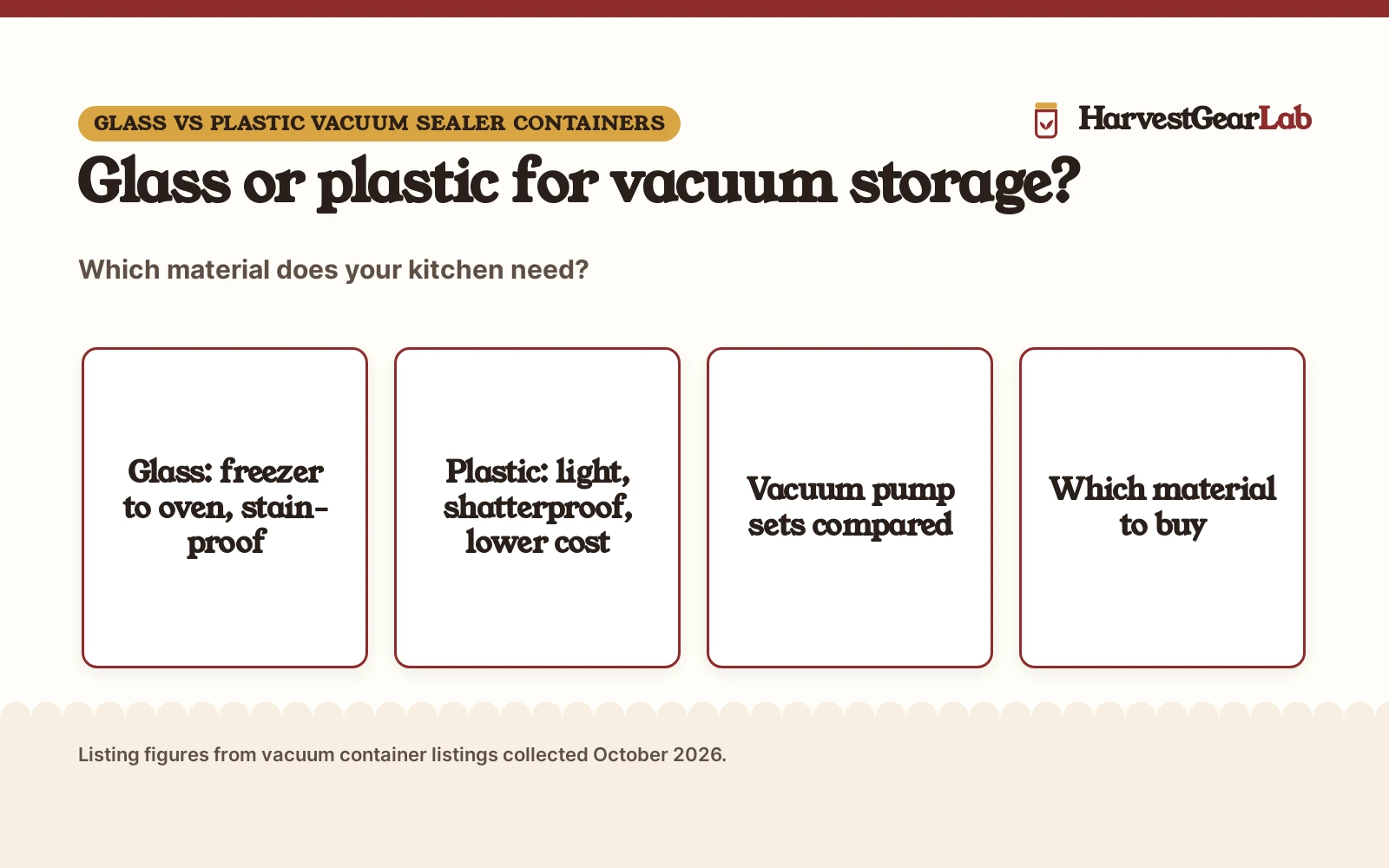
Glass vs plastic vacuum sealer containers is the material choice for vacuum food storage. Glass containers go from freezer to oven, resist stains and odors, and last for years, but they are heavy and breakable. Plastic containers are light, will not shatter, and cost less, but they cannot go in the oven and they stain over time. If you reheat in the container, choose glass. If you pack lunches and stack a tall fridge, plastic has real advantages.
Runners-up to consider
 Glass Vacuum Seal Containers SetCheck price on Amazon
 Zwilling Fresh & Save 3-Pc Glass Vacuum Bowl Set AirtightCheck price on Amazon
 WhiteRhino Glass Pickle Jar with Strainer FlipCheck price on Amazon
 Luvan Glass Pickle JarCheck price on Amazon
 North Mountain SupplyCheck price on Amazon
 Ball Leak-Proof Plastic Lids for Glass Mason JarsCheck price on Amazon
HarvestGearLab earns a commission when you buy through links on this page, at no extra cost to you. As an Amazon Associate I earn from qualifying purchases. Affiliate disclosure.
Glass vacuum sealer containers
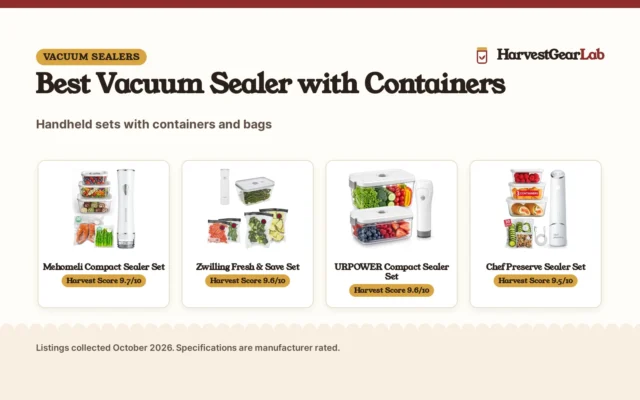
A glass vacuum container pairs a glass body with a vacuum valve in the lid: a handheld or electric pump pulls the air out, and the seal keeps food fresh longer. The Zwilling Fresh & Save glass set claims food stays fresh up to 5X longer than non-vacuum storage, with the pump sold separately. Chef Preserve lists borosilicate glass vacuum containers in a 47-fluid-ounce large size, safe for microwave without the lid, dishwasher, fridge and freezer. HOLDN’ STORAGE bundles 8 glass containers with one electronic pump, or 10 containers with two pumps, in sizes from 365ML to 1480ML.
Heat tolerance
Glass is the heat champion. The Rubbermaid Brilliance glass containers are oven-safe to 450 degrees F, so they double as cookware. The Razab borosilicate set lists a range of -40 degrees F to 980 degrees F, and the S SALIENT set lists 1040 degrees F with a -40 degree F low end. Take the lids off before the oven: the listings warn that lids deform in heat.
Stains and odors
Glass does not absorb stains or odors. Tomato sauce, curry and beet juice wash out of glass; they tint plastic over time. For vacuum storage where food sits for days, that matters.
Weight and breakage
Glass is heavy: the Razab 24-piece set weighs 9.5 pounds. Glass also breaks. If the container rides in a lunch bag or a kid’s backpack, that is a real drawback.
Plastic vacuum sealer containers
Plastic vacuum containers use the same pump-and-valve idea with a plastic body. The Rubbermaid Brilliance plastic set includes two 1.3-cup containers, two 3.2-cup containers and one 9.6-cup container with lids. The listing states BPA-free Tritan plastic with 360-degree clarity, stain-resistant material, and dishwasher, microwave and freezer safety. It also states a lifetime warranty, the longest term in these listings.
Light and tough
Plastic will not shatter when dropped, and a set weighs far less than the equivalent glass. For packed lunches, picnics and tall fridge stacks, light matters.
No oven, eventual staining
Plastic cannot go in the oven, and no listing claims otherwise. Stain-resistant is not stain-proof: over time, strong foods tint plastic. The lids are the weak point for heat, so keep them out of the microwave unless the listing says otherwise.
Glass vs plastic vacuum sealer containers: the differences
Heat
Glass goes from freezer to oven: the listings show 450 degrees F for the Rubbermaid glass and up to 1040 degrees F for the S SALIENT borosilicate. Plastic goes from freezer to microwave, never the oven.
Vacuum sealing
Both materials vacuum seal with a pump. The dedicated vacuum sets in these listings are all glass: Zwilling, Chef Preserve and HOLDN’ STORAGE. If vacuum sealing is the point, glass has the deeper bench.
Longevity
Glass lasts: it does not stain, warp or absorb odors, and the Rubbermaid plastic set’s lifetime warranty is the exception that proves plastic can last too. Plastic eventually stains and warps; glass eventually chips or breaks.
Cost and weight
Plastic costs less and weighs less. Glass costs more and weighs more: 9.5 pounds for the Razab 24-piece set. For a big meal-prep operation, that weight adds up in the fridge and the dishwasher.
Which one should you buy?
Buy glass vacuum containers if you reheat in the container, store strong-smelling or staining foods, or want the longest service life. The borosilicate sets handle freezer-to-oven duty, and the vacuum pump sets keep food fresh up to 5X longer, per the Zwilling listing. See our vacuum sealers guide for the machines that pair with them.
Buy plastic if you pack lunches, stack a tall fridge, or want the lightest set for the money. The Rubbermaid Brilliance plastic set covers 1.3 to 9.6 cups with a lifetime warranty stated.
Many keepers own both: glass for the fridge and the oven, plastic for lunches and the freezer door. Match the material to the job, not the other way around.
In the Preserving Kitchen
- Remove lids before the oven; heat deforms them.
- Let hot food cool before vacuum sealing.
- Wash and dry containers before refilling.
- Check the vacuum seal before storing; reseal if it releases.
FAQ: preserving at home
Can vacuum sealer containers go in the oven?
Glass ones can: the listings show 450 degrees F to 1040 degrees F for glass bodies, with lids removed. Plastic cannot.
Do plastic vacuum containers stain?
Stain-resistant is not stain-proof. Strong foods tint plastic over time; glass does not stain.
How much longer does vacuum storage keep food?
The Zwilling listing claims up to 5X longer than non-vacuum storage, with the pump sold separately.
Are the lids BPA-free?
The listings state BPA-free lids and materials across these sets.
Which is better for meal prep?
Glass for reheating and longevity; plastic for light packing and lower cost. Many keepers use both.
More preserving guides
See every food storage guide, including vacuum sealers and produce storage.
More picks: vacuum sealers, produce storage and food storage.