
On this page
Top picks at a glance
As an Amazon Associate I earn from qualifying purchases.
- 1
 LZONSTK 48-Blade Tenderizer9.6/10View on Amazon
- 2
 XSpecial 48-Blade Tenderizer9.6/10View on Amazon
- 3
 KitchenAid Gourmet Tenderizer9.5/10View on Amazon
- 4
 KITEXPERT Meat Tenderizer9.5/10View on Amazon
How to use meat tenderizer comes down to this: set the meat on a board, press or pound the tool across the cut, and stop when the fibers loosen and the marinade can reach the meat. A blade tenderizer presses needles into the cut to open channels, while a mallet pounds the fibers flat with a textured or smooth face. This guide walks through each step, from choosing the tool to cleaning it.
HarvestGearLab earns a commission when you buy through links on this site, at no extra cost to you. As an Amazon Associate I earn from qualifying purchases. Affiliate disclosure.
| # | Product | Harvest Score | Buy |
|---|---|---|---|
| 1 | LZONSTK 48-Blade Tenderizer | 9.6/10 | Buy on Amazon |
| 2 | XSpecial 48-Blade Tenderizer | 9.6/10 | Buy on Amazon |
| 3 | KitchenAid Gourmet Tenderizer | 9.5/10 | Buy on Amazon |
| 4 | KITEXPERT Meat Tenderizer | 9.5/10 | Buy on Amazon |
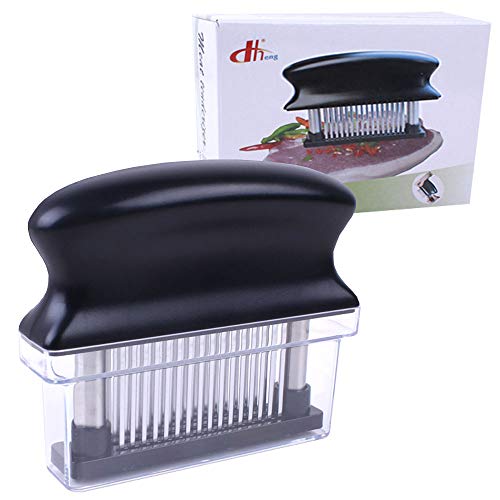
LZONSTK 48-Blade Tenderizer
A 48-blade needle tenderizer with a protection cover that handles beef, pork, veal, chicken and fish.
Pros
- 48 stainless steel blades create tiny heat channels for marinade
- Blades expand when pressed and retract when no force is applied
- Protection cover keeps the blades isolated after cleaning
Cons
- No weight is stated for this listing
- The 40% cooking time claim is the maker's claim, not a measured result
- Blades need soaking and brushing after use, not just a rinse
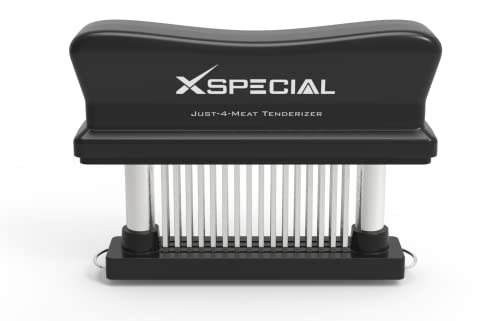
XSpecial 48-Blade Tenderizer
A detachable 48-blade stainless steel tenderizer that handles any cut and rinses apart for cleaning.
Pros
- 48 stainless steel blades create pathways for flavors to reach the core
- Detachable design rinses clean with dishwasher-safe parts
- Weighted design delivers pressure with a comfortable, firm grip
Cons
- No hanging hole or storage option is stated
- The 30 minute marinade claim is the maker's claim, not a measured result
- No protection cover is stated for storage between uses
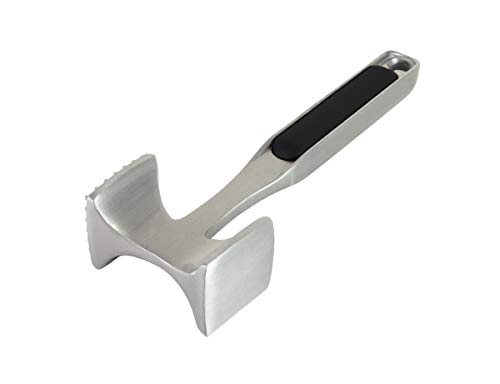
KitchenAid Gourmet Tenderizer
A lightweight aluminum mallet with textured and smooth faces that handles pounding and flattening.
Pros
- Textured face works on meat fibers, smooth face flattens cutlets
- Lightweight aluminum is strong, durable and easy to handle
- Also useful for cracking nuts, shellfish, peppercorns and hard candy
Cons
- No warranty term is stated
- Hand wash only, with no dishwasher use stated
- No needle or channel function, so marinade stays on the surface
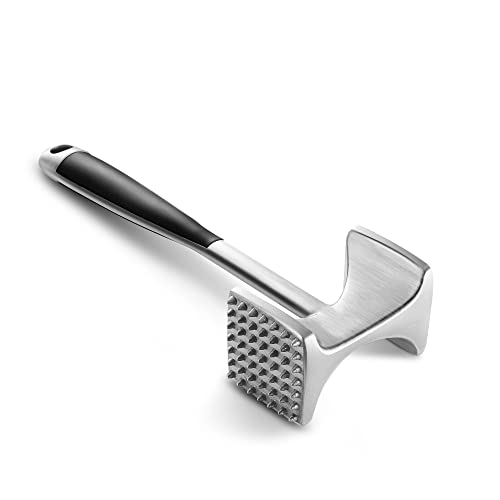
KITEXPERT Meat Tenderizer
A dual-side mallet with a comfortable-grip handle that handles steak, beef and fish.
Pros
- Textured side tenderizes, smooth side flattens steak
- Ergonomic handle lets the mallet and gravity do the work
- Dishwasher-safe, or rinse thoroughly with water after use
Cons
- No warranty term is stated
- No handle hanging hole is stated
- No needle or channel function, so marinade stays on the surface
As an Amazon Associate I earn from qualifying purchases.
How to use meat tenderizer: step by step
- Prep and dry the meat. Trim the cut as you normally would and pat the surface dry, so the tool grips the meat instead of sliding.
- Place it on a board. Set the meat on a sturdy cutting board so the cut stays put while you work.
- Press or pound across the cut. With a mallet, use the textured face to work the meat fibers, or the smooth face to flatten the meat into thin cutlets. With a needle tool, press the blades into the cut and let the tool do the work, since the LZONSTK blades (on Amazon) expand into the meat when pressed.
- Flip the meat. Turn the cut over and repeat on the other side.
- Stop when it is even. Check that the whole cut has been worked evenly, then stop. Needle tools keep the meat’s shape, and a smooth face reduces thickness.
- Clean the tool. Wash it right after use, following the cleaning notes below.
| Tool | How it works | Amazon |
|---|---|---|
| Mallet, textured face | Pounds fibers, prepares meat for marinades | |
| Mallet, smooth face | Pounds and flattens into thin cutlets | |
| Needle blades, 48 | Slices channels for marinade, keeps shape | |
| Needle blades, detachable | Same, rinses apart for cleaning |
Mallet or needles
A mallet and a needle tenderizer do the same job in different ways. The KitchenAid and KITEXPERT mallets (on Amazon) have a textured face with raised points that works on the meat fibers, and a smooth face for pounding and flattening meat into thin cutlets. The LZONSTK and XSpecial needle tools (on Amazon) have 48 stainless steel blades that slice into the meat to create tiny channels without changing its shape or appearance. Pick the mallet for flattening cutlets and the needles for opening channels.
Press, pound and flatten
With a mallet, pound the textured face across the cut to work the fibers, then turn the mallet over to the smooth face when you need to reduce the thickness. With a needle tool, press the blades into the cut and let the weight of the tool do the work. The LZONSTK blades expand into the meat when pressed and retract when no force is applied, and the XSpecial weighted design delivers pressure with a comfortable grip.
Marinades and cooking times
The channels are the point of a needle tool: they let marinade reach deeper into the cut, so flavor spreads through the meat instead of sitting on the surface. The XSpecial listing says seasonings reach the core in 30 minutes, and the LZONSTK listing says its channels lower cooking times up to 40%. Both figures are the makers’ claims, so treat them as what the listings promise, not as a rule for every cut.
Food-safety note: needle or blade tenderizing can carry bacteria from the surface into the meat. Cook tenderized meat thoroughly, to the USDA safe internal temperature for that kind of meat, and check current USDA guidance for the right figure.
Clean the tool
Wash the tool right after use, while the meat is still fresh on it. The KitchenAid listing says to hand wash with warm water and a mild detergent, then rinse and dry immediately. The KITEXPERT listing says to put the mallet in the dishwasher or rinse it with water, and to wash immediately after use. The LZONSTK listing says to soak in warm soapy water, wash with the brush, and cover the blades after cleaning. The XSpecial listing says the detachable design rinses clean and its parts are dishwasher-safe.
What to skip or double-check
- Wrong face: use the textured face for tenderizing and the smooth face for flattening, as the KitchenAid listing explains.
- Leaving meat to dry on the blades: wash needle tools right after use, so meat does not stick to them.
- Uncovered blades: cover the LZONSTK blades after cleaning, so the steel stays isolated until the next use.
The gear
The tenderizing step needs the tool itself, so the listings below cover that step, from a lightweight aluminum mallet to a 48-blade needle tenderizer.
FAQ: preserving at home
Do you use the textured or smooth side of a meat tenderizer?
The textured side, with rows of raised points, works on the meat fibers for tenderizing, while the smooth side pounds and flattens meat into thin cutlets.
How does a needle meat tenderizer work?
The 48 stainless steel blades slice into the meat to create tiny channels without changing its shape, so marinade reaches deeper. The LZONSTK blades expand when pressed and retract when no force is applied.
Can a meat tenderizer be washed in the dishwasher?
The KITEXPERT and XSpecial listings allow the dishwasher. The LZONSTK listing says to soak the blades in warm soapy water and wash them with the brush, and the KitchenAid listing says to hand wash with warm water and a mild detergent.
Does a meat tenderizer make meat cook faster?
The LZONSTK listing says its channels lower cooking times up to 40%, and the XSpecial listing says tenderized meats cook faster while staying moist. Both are the makers’ claims.
More preserving guides
See every harvest and processing guide. Also see our what is meat tenderizer powder.
More picks: meat grinders for deer processing, jerky slicers for home use and jerky kits for beginners.