
On this page
Top picks at a glance
As an Amazon Associate I earn from qualifying purchases.
- 1
 SupMaKin Safer Mandoline Slicer Plus9.7/10View on Amazon
- 2
 Gramercy Mandoline Food Slicer With 12 Slice Settings9.7/10View on Amazon
- 3
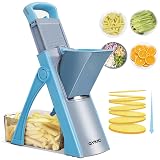 QYKIC Adjustable Mandoline Slicer9.7/10View on Amazon
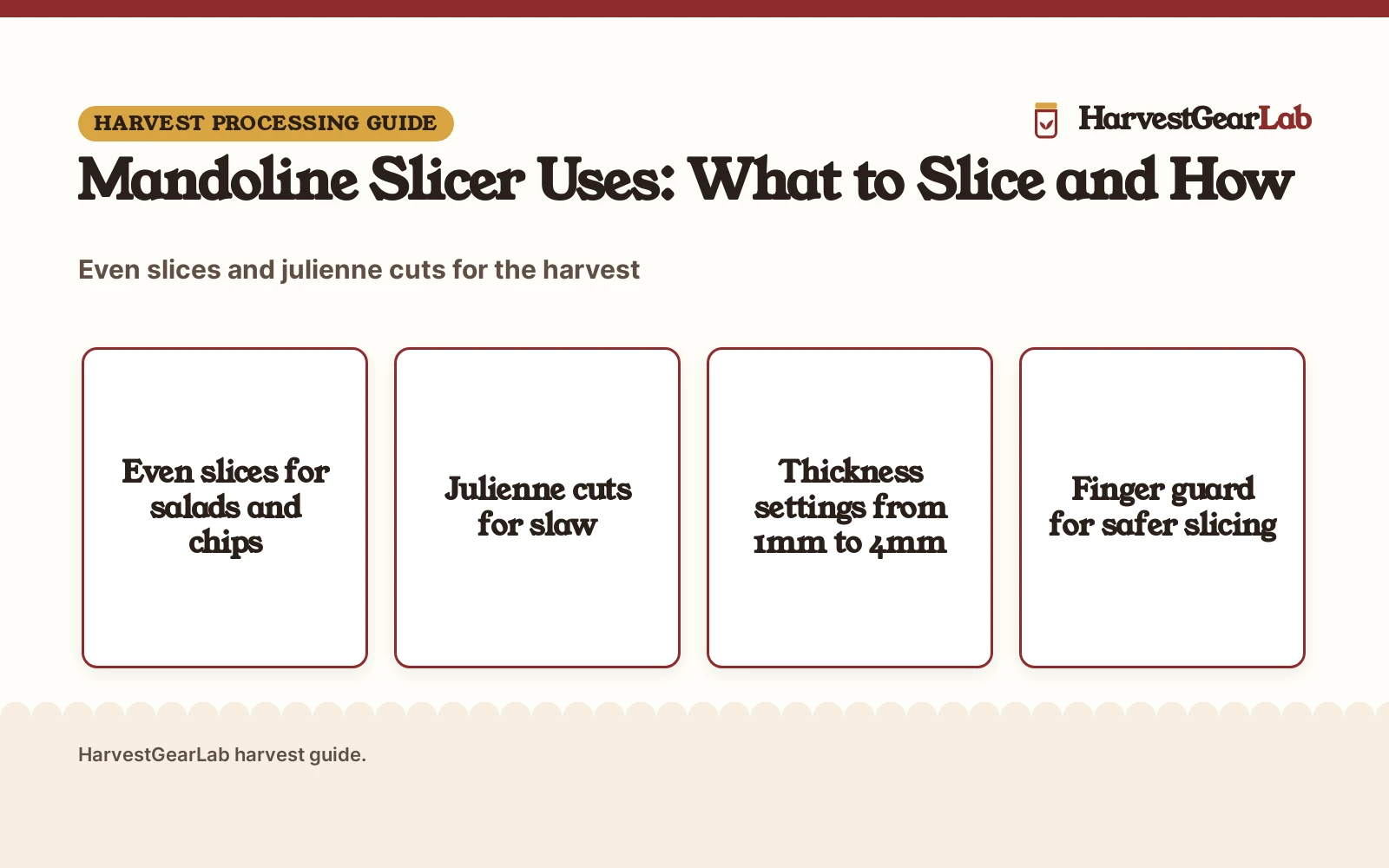
A counter full of cucumbers, potatoes and onions from the garden is where mandoline slicer uses begin. The slicer turns that pile into even slices for salads, chips and gratins, and julienne cuts for slaw, with a dial that sets the thickness. This guide walks through what to slice, how to set the thickness, and how to keep hands clear of the blade.
HarvestGearLab earns a commission when you buy through links on this site, at no extra cost to you. As an Amazon Associate I earn from qualifying purchases. Affiliate disclosure.
Mandoline slicer uses: the short list
Most mandoline slicer uses fall into a small set of jobs. The table shows the job, what to slice, and the cut that fits it.
| Job | What it slices | Cut |
|---|---|---|
| Salads | Cucumbers, onions, radishes | Thin even slices |
| Chips | Potatoes, sweet potatoes | Thin even slices |
| Gratins and casseroles | Potatoes, zucchini | Thicker even slices |
| Pickles | Cucumbers, onions | Even slices |
| Slaw and stir-fry | Cabbage, carrots, peppers | Julienne cuts |
| Drying | Apples, potatoes | Even slices |
Even slices matter because pieces of the same thickness cook and dry at the same pace. A mandoline holds that thickness across the whole pile, where a knife drifts from slice to slice.
Set the thickness before you slice
The Fullstar listing states 4 thickness settings on a dial, from 1mm to 4mm. Thin settings suit potato chips and cucumber slices for salads, while thicker settings suit vegetable slices for casseroles and salads. Turn the dial to the setting you want before the vegetable meets the blade, and slice a piece to check the cut before working through the pile. The best mandoline slicer for thin slices guide compares listings by the thin cuts they state.
Slice with the finger guard on
The blade on a mandoline stays sharp, and the guard is the part that keeps hands away from it. The Fullstar listing includes a food holder and finger guard that holds food in place while you slice. Use the guard from the start, even when the piece still feels large in the hand, and stop slicing when the piece gets short enough that fingers would come near the blade. Keep the guard with the slicer so it is there each time you reach for it.
Julienne cuts for slaw and stir-fry
Julienne cuts turn firm vegetables into thin strips for slaw, stir-fry and garnish. The Fullstar listing describes 2-in-1 slicing and julienne without swapping blades, so the same tool covers slicing and julienne. Set the thickness, slice the vegetable into even pieces, then run the pieces through the julienne side for strips. Cabbage, carrots and peppers all suit this cut, and the strips cook fast and mix well in a slaw.
What a mandoline does not do well
A mandoline suits firm vegetables and fruit that hold their shape under the blade. Very soft fruit can crush instead of slicing clean, and pieces that are too small to hold with the guard are better cut with a knife. Round vegetables roll, so cut a flat side on the vegetable before it meets the blade. For jobs that need cubes or wedges instead of slices, a knife or a chopper fits better; see the mandoline slicer vs box grater comparison and the french fry cutter vs mandoline slicer comparison for tools that cut other shapes.
Clean and store the slicer
Rinse the slicer under running water after use, and the Fullstar listing states it is dishwasher safe. Let the blades dry before storage, and keep the guard on the blade so the edge stays covered in the drawer. The compact design stores in a small space, so the slicer can live near the cutting board instead of at the back of a cupboard.
FAQ: preserving at home
What can you slice with a mandoline slicer?
Potatoes, cucumbers, onions, zucchini, cabbage, carrots, peppers, apples and other firm vegetables and fruit. The Fullstar listing names vegetables, potatoes and fruits, with slices for casseroles and salads and julienne cuts from the same tool.
What thickness settings does a mandoline slicer have?
The Fullstar listing states 4 thickness settings on a dial, from 1mm to 4mm. Thin settings suit potato chips and cucumber slices, while thicker settings suit vegetable slices for casseroles and salads.
Is a mandoline slicer safe to use?
Use the finger guard on every slice. The Fullstar listing includes a food holder and finger guard that protects hands from the blade while keeping food in place. Stop slicing when the piece gets short, and keep fingers clear of the blade at all times.
Can a mandoline slicer cut julienne?
Yes. The Fullstar listing describes 2-in-1 slicing and julienne without swapping blades. Set the thickness, then use the julienne side for thin strips for slaw and stir-fry.
How do you clean a mandoline slicer?
Rinse it under running water after use. The Fullstar listing states the slicer is dishwasher safe, so it can go in the dishwasher as well. Let the blades dry before storage.
More preserving guides
See every Harvest and Processing guide and all harvest-processing guides.
More picks: oxo mandoline vs mueller, mandoline slicers for thin slices, electric pickle slicer vs mandoline slicer and food dehydrators for fruit.