
On this page
Top picks at a glance
As an Amazon Associate I earn from qualifying purchases.
- 1
 Weston Manual Jerky Slicer9.6/10View on Amazon
- 2
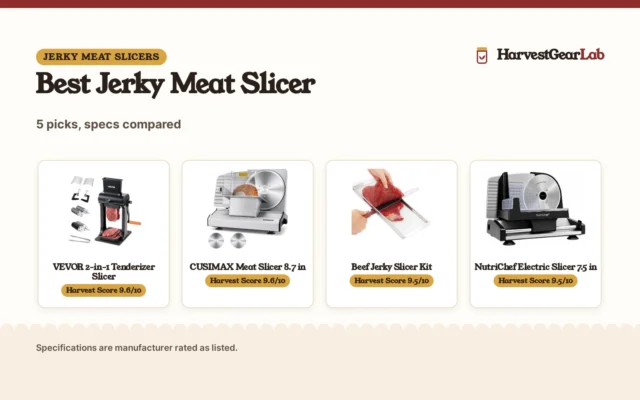
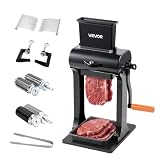 VEVOR 2-in-1 Manual Meat Tenderizer and Beef Jerky Slicer9.6/10View on Amazon
- 3
 shop-ezy manual jerky slicer board with 10 inch carving knife9.5/10View on Amazon
- 4
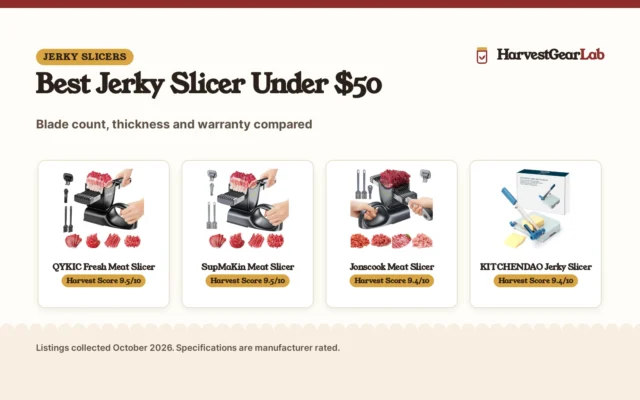
 QYKIC Fresh Meat Slicer with SteadyGripView on Amazon
- 5
 SupMaKin Fresh Meat Slicer with SteadyGripView on Amazon
- 6
 KITCHENDAO Multipurpose Cheese Slicer Cutter with Board forView on Amazon
- 7
 Meat slicer Stainless Steel Jerky Maker Cutting Board WithView on Amazon
A manual jerky slicer turns a slab of meat into even strips for the dryer, and the strips dry more evenly when each one has the same thickness. The short answer: a manual jerky slicer is a crank tool with a bladed roller that cuts meat into strips, and the right one for a home batch is the one whose cut size fits the meat on hand and whose clamps fit the table it mounts to. This guide explains how the tool works, how to read the cut size a listing states, how mounting works, and how to keep the blades clean.
Runners-up to consider
 QYKIC Fresh Meat Slicer with SteadyGripCheck price on Amazon
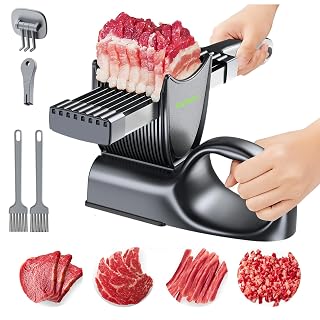 SupMaKin Fresh Meat Slicer with SteadyGripCheck price on Amazon
 KITCHENDAO Multipurpose Cheese Slicer Cutter with Board forCheck price on Amazon
 Meat slicer Stainless Steel Jerky Maker Cutting Board WithCheck price on Amazon
HarvestGearLab earns a commission when you buy through links on this site, at no extra cost to you. As an Amazon Associate I earn from qualifying purchases. Affiliate disclosure.
Manual jerky slicer: the short list
Reference listings show the shapes this tool takes. One is a 2-in-1 tool with a tenderizing roller and a slicing roller, and the other is a tenderizer and cuber with no slicing roller. The table lines up the figures each listing states, so the difference is easy to see before buying.
| Tool | Rollers | Blades per roller | Largest cut stated |
|---|---|---|---|
| MEAT! 2-in-1 tenderizer and slicer | 2 roller sets | 31 tenderizing, 32 slicing | 5 inches wide, 1.25 inches thick |
| Weston tenderizer and cuber | Tenderizing roller | 31 | 4.5 inches wide, .75 inches thick |
How a manual jerky slicer works
A manual jerky slicer is a crank tool. Meat goes in through a chute, the crank turns a roller, and stainless steel blades cut the meat into strips as it passes through. The MEAT! listing states 2 roller sets: one roller with 31 stainless steel blades for tenderizing and one roller with 32 stainless steel blades for slicing. Swap the roller to change the job, and the same frame serves as a tenderizer or a slicer.
The blades do the cutting, so the blade count and the roller type are the figures to read first. A slicing roller with 32 blades cuts strips, while a tenderizing roller with 31 blades pierces the meat to soften it. Check the listing for which roller is fitted and whether another roller set is included before buying, since a tool sold with one roller does the one job that roller is made for.
Feed the meat through the chute with the tongs or by hand, turn the crank at a steady pace, and catch the strips as they come out the other side. Keep hands clear of the roller opening, and stop cranking if a piece stalls instead of forcing it through.
Match the cut size to the meat
Listings state the largest piece the tool takes. The MEAT! listing states meat up to 5 inches wide and 1.25 inches thick, while the Weston listing states pieces up to 4.5 inches wide and .75 inches thick. Cut the meat to fit the chute before cranking, and trim pieces that are wider or thicker than the stated size.
Thickness sets the strip. A thick piece gives a thick strip, so trim the meat to the thickness the strips should have and keep the pieces in a batch close to the same size. Compare the stated cut sizes in the best jerky meat slicer guide before choosing.
Width matters as much as thickness. A piece wider than the chute will not feed through, so measure the widest piece against the stated width before buying.
Mounting and setup
A manual slicer needs a firm mount, since cranking pushes against the frame. The MEAT! listing states 3-inch clamps that attach to a table or countertop, and the Weston listing states a slip-free base that mounts with included C-clamps and can also stand freestanding on a table or countertop. Clamp the tool to a sturdy table, check that it does not rock, and keep the handle side clear so the crank turns freely.
Weight and size help plan the counter space. The Weston listing states an item weight of 9.9 pounds and dimensions of 6.75 inches by 13.5 inches by 13.75 inches. A heavy tool stays put under the crank, and a tool that lives on a shelf needs a spot it fits.
Cleaning and care
Blades and rollers touch raw meat, so cleaning matters after each batch. The MEAT! listing states the tool easily disassembles, and the Weston listing states stainless steel blades in a cast aluminum body with a durable food-grade coating. Take the tool apart after use, wash the blades and rollers, dry each part, and store the tool where the blades stay covered and dry.
The MEAT! listing includes stainless steel tongs and an ergonomic handle. Tongs keep hands clear of the blades when feeding meat through the chute, and a handle with a comfortable grip makes long cranking sessions easier on the hands.
What to skip or double-check
- A tenderizer sold as a slicer: check the listing for a slicing roller. The Weston listing describes a tenderizer and cuber, while the MEAT! listing states a slicing roller with 32 blades. A tool with a tenderizing roller alone will not cut strips.
- Blade counts that mix rollers: the MEAT! listing states 31 blades on the tenderizing roller and 32 blades on the slicing roller. Read the count for the roller that does the slicing.
- Cut size vs the meat on hand: measure the meat against the stated width and thickness before buying, since a piece wider than the chute will not feed through.
- Clamp fit: check that the clamps fit the table edge and that the base sits flat before the first batch.
- Warranty terms: the Weston listing states a 1-year warranty. The MEAT! listing states no warranty term, so read the listing for the current terms before buying.
What this guide does not cover
This guide covers choosing and using the tool. It does not give recipes, processing times, drying times or storage times. Take those from current USDA and National Center for Home Food Preservation guidance, and follow them exactly for each batch. Drying gear on the site is collected in the food drying section, and the best digital food dehydrator guide lines up dryers for the strips once they are cut.
FAQ: preserving at home
What does a manual jerky slicer do?
A manual jerky slicer cuts meat into strips for jerky. A crank turns a bladed roller, and the meat comes out in strips of the thickness the roller cuts.
How wide and thick can the meat be?
It depends on the listing. The MEAT! listing states meat up to 5 inches wide and 1.25 inches thick, while the Weston listing states pieces up to 4.5 inches wide and .75 inches thick.
Does a manual jerky slicer also tenderize meat?
Some do. The MEAT! listing states 2 roller sets, with 31 blades for tenderizing and 32 blades for slicing, while the Weston listing describes a tenderizer and cuber with 31 blades.
How do I mount a manual jerky slicer?
Clamp it to a table or countertop. The MEAT! listing states 3-inch clamps, and the Weston listing states a slip-free base with included C-clamps.
More preserving guides
See every food drying guide and the best jerky meat slicer comparison.
More picks: jerky slicers, beef jerky guns, jerky kits for beginners and jerky kit vs jerky gun.