
On this page
Top picks at a glance
As an Amazon Associate I earn from qualifying purchases.
- 1
 ALTRA LIFE Electric Meat Grinder9.7/10View on Amazon
- 2
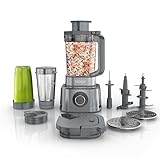 Ninja Foodi Power Blender and Processor System9.7/10View on Amazon
- 3
 MEAT! 1 HP Pro-Grade Meat Grinder #22 with Coarse and FineView on Amazon
- 4
 Commercial Meat Grinder #12CView on Amazon
- 5
 Ganiza Smoothie BlenderView on Amazon
- 6
 Gourmia Electric Meat GrinderView on Amazon
- 7
 COFUN Meat Grinder & Slicer Shredder Attachments forView on Amazon
- 8
 2026 Upgrade Quiet Meat Grinder Electric 3000W Max DC MotorView on Amazon
Meat grinder vs blender is a texture question, and the short answer is this: buy the grinder if you want ground meat with a texture you control, and reach for the blender if you want smooth purees, soups and drinks. A meat grinder pushes meat through plates for a clean, even grind and can stuff sausage; a blender spins blades at high speed to liquefy. Neither does the other’s job well, so the right buy depends on what lands on your counter most often.
Runners-up to consider
 MEAT! 1 HP Pro-Grade Meat Grinder #22 with Coarse and FineCheck price on Amazon
 Commercial Meat Grinder #12CCheck price on Amazon
 Ganiza Smoothie BlenderCheck price on Amazon
 Gourmia Electric Meat GrinderCheck price on Amazon
 COFUN Meat Grinder & Slicer Shredder Attachments forCheck price on Amazon
 2026 Upgrade Quiet Meat Grinder Electric 3000W Max DC MotorCheck price on Amazon
HarvestGearLab earns a commission when you buy through links on this site, at no extra cost to you. As an Amazon Associate I earn from qualifying purchases. Affiliate disclosure.
Meat grinder vs blender: the short list
Most home harvest work falls into four jobs. The table shows which tool fits each one.
| Job | Reach for | Why |
|---|---|---|
| Ground meat for burgers and sausage | Meat grinder | Plates control the texture; stuffing horns fill casings |
| Smooth purees, soups and drinks | Blender | High-speed blades liquefy soft foods |
| Small batches of chopped vegetables or salsa | Either | A food processor like the Ganiza handles these |
| Raw meat in a blender | Skip it | Blenders smear meat instead of grinding it |
When the grinder wins
Any job that starts with raw meat belongs to the grinder. Grinding your own gives you control over the cut, the fat ratio and the plate size, and a grinder with stuffing horns turns the same batch into sausage without a second machine. The MEAT! #22 ships with coarse and fine grinding plates plus 3 stuffing horns, and the STX Turboforce 3000 is listed as a 6-in-1 with a foot pedal for hands-free control. Volume matters too: the LEM BigBite #32 lists 11 pounds per minute and a 17-pound capacity, while the STX lists a 3-pound capacity, so match the machine to the size of your typical batch.
A grinder also earns its counter space at deer season. Whole-muscle trim becomes burger, breakfast sausage and snack sticks in one afternoon, and the heavy machines here are built for exactly that: the LEM weighs 64.8 pounds and the MEAT! weighs 62.6 pounds, both in steel housings. Our best meat grinder for deer processing guide lines up more heavy-duty picks.
When the blender wins
Anything that should end up smooth belongs to the blender. Soups, sauces, smoothies and purees need high-speed blades and liquid, which is the opposite of what a grinder does. A food processor sits between the two: the Ganiza runs 450 watts with 8-cup stainless and 8-cup glass bowls and 2 speeds, which covers chopping, salsa and small puree jobs without a full-size blender. If your counter work is mostly vegetables and fruit, the blender or food processor you already own may be enough, and our meat grinder vs food processor comparison covers that middle ground.
The gear: four picks, compared
Four listings, ranked by our scores: three electric meat grinders and one food processor for the blending side. The table shows the headline numbers; the notes below it call out what each listing actually states.
| Pick | Type | Power | Capacity | Extras |
|---|---|---|---|---|
| STX Turboforce 3000 | Electric meat grinder | 1200 watts, 3000W max | 3 lb | 3-speed, foot pedal, 3-year warranty |
| Ganiza Food Processor | Food processor | 450 watts | 8-cup bowls | 2 speeds, safety lock, overheat protection |
| LEM BigBite #32 | Electric meat grinder | 1 HP | 17 lb, 11 lb per minute | Dual grind, stainless steel |
| MEAT! 1 HP #22 | Electric meat grinder | 735 watts | 12 lb | Coarse and fine plates, 3 stuffing horns |
STX Turboforce 3000. The standout on paper: 1200 watts with a 3000W max in the title, 3 speeds, a foot pedal, and the only concrete warranty here, a 3-year warranty with parts and labor plus a 30-day money-back warranty. At 12.5 pounds and 16.5 by 6.5 by 14 inches it is also the easiest to store. The 3-pound capacity suits small batches rather than whole-animal processing.
Ganiza Food Processor. The blending-side pick: 450 watts, 8-cup stainless and 8-cup glass bowls, 2 speeds, and stated safety features in the form of a safety lock and overheat protection. One flag: the spec table lists an item weight of 100 grams, which cannot be right for a machine with two 8-cup bowls, so treat that figure as a table error. For chopping and small purees it covers the jobs a grinder cannot.
LEM BigBite #32. The volume pick: a 3-inch throat, dual grind, 11 pounds per minute and a 17-pound capacity in a stainless steel housing. One contradiction: the item highlight says 1.5 HP while the spec table lists horsepower as 1, so confirm the motor rating on the listing before buying. At 64.8 pounds it is a permanent counter resident, not a cabinet machine.
MEAT! 1 HP #22. The sausage pick: coarse and fine grinding plates with 3 stuffing horns included, a 12-pound capacity and a steel build at 62.6 pounds. One contradiction: the title says 1 HP while the spec table lists horsepower as 2, so confirm the motor rating on the listing. It lists 735 watts at 120 volts.
What to skip or double-check
Skip the idea of grinding raw meat in a blender: blades smear the fat and warm the meat instead of cutting it cleanly, and the motor works far harder than its design intends. Before buying a grinder, double-check the plate sizes and throat against the batches you run, confirm whether sausage horns are included or sold separately, and read the warranty line: the STX states a 3-year warranty with parts and labor, while the LEM listing states only “Manufacturer Warranty” with no term. Also check the footprint: the two heavy grinders weigh over 60 pounds each, so plan a permanent spot.
What this guide does not cover
This guide covers the buy decision, not the craft. It does not cover sausage recipes, seasoning ratios, curing, or how long to store ground meat; for food safety questions, follow current USDA guidance. It also does not cover commercial equipment or hand-crank grinders, which suit different volumes and budgets.
FAQ: preserving at home
Can a blender grind meat?
Not well. A blender’s blades smear and warm raw meat instead of cutting it, while a grinder’s auger and plates cut it cleanly. The STX, LEM and MEAT! listings are built for grinding; the Ganiza is the blending-side pick.
What size meat grinder do I need?
Match the throat and capacity to your batch. The LEM lists a 3-inch throat with a 17-pound capacity, the MEAT! is a #22 with a 12-pound capacity, and the STX lists a 3-pound capacity for small batches.
Do these grinders stuff sausage?
The MEAT! #22 includes 3 stuffing horns with coarse and fine plates, the LEM highlight mentions sausage stuffing, and the STX is listed as a 6-in-1. Confirm the exact attachments on the listing before buying.
Which of these has the longest stated warranty?
The STX, with a 3-year warranty covering parts and labor plus a 30-day money-back warranty. The LEM listing states only “Manufacturer Warranty” with no term, and the other two listings state no term.
More preserving guides
See every harvest and processing guide and all apple peeler guides.
More picks: meat grinders for deer processing, meat grinders for sausage making, meat grinder vs food processor and small meat grinders.