
On this page
The last crates of the harvest are on the counter, and the question is where they go for the winter. Root cellar vs chest freezer is a choice between cool storage that runs on the earth and frozen storage that runs on power. A root cellar keeps fresh produce cool, dark and damp without a plug, while a chest freezer holds food frozen with power. This guide compares them, and points to the books that cover the cellar side.
HarvestGearLab earns a commission when you buy through links on this site, at no extra cost to you. As an Amazon Associate I earn from qualifying purchases. Affiliate disclosure.
Root cellar vs chest freezer: the short list
The table sums up the split. A root cellar is a cool, dark, damp space for fresh produce; a chest freezer is a powered box that holds food frozen. The cellar needs the right space in the house or the ground, and the freezer needs a power outlet and a floor that holds it.
| Root cellar | Chest freezer | |
|---|---|---|
| Power | None | Needs power |
| Storage | Cool, dark and damp | Frozen |
| Best for | Fresh produce from the garden | Food frozen for later |
| Upkeep | Sorting and checking the produce | Keeping the freezer running |
What a root cellar does
A root cellar is a cool, dark, damp space that keeps fresh produce from the garden through the cold months. The Storey book Root Cellaring describes keeping produce harvest-fresh in a basement, porch, garage or closet hideaway, which shows the idea does not need a dug cellar: any cool, dark spot that stays damp can serve. The cellar works by holding the harvest cool enough to slow spoiling, without freezing it. Roots, apples and other garden produce go in whole, and the keeper sorts through them as the months pass, pulling out anything that softens or spoils.
What a chest freezer does
A chest freezer is a powered box that holds food at frozen temperatures, so the harvest goes in prepared and frozen rather than fresh. It needs a power outlet, and it keeps working only while the power stays on. Unlike the cellar, it does not need a cool basement or a damp corner: a dry floor with an outlet is the main need. The trade is power for certainty: the food stays frozen as long as the freezer runs, and the keeper trades the cellar’s sorting for the freezer’s packing and labeling.
Books that cover the root cellar side
The books below cover the root cellar side of this comparison, listed in the order that fits the question best: the cellaring guide first, then the building guides, then the gardening book that ends at the cellar.
| Book | What it covers | Published |
|---|---|---|
| Root Cellaring: Natural Cold Storage of Fruits & Vegetables | Keeping produce harvest-fresh in a basement, porch, garage or closet | 1991 |
| Root Cellaring: A Guide to Building a Root Cellar and Keeping Food in Cold Storage | Building a root cellar and keeping food in cold storage | Not stated |
| Build Your Own underground Root Cellar | Building an underground root cellar | 1983 |
| Survival Gardening: Grow Your Own Emergency Food Supply, from Seed to Root Cellar | Growing food from seed to root cellar | 2025 |
The Storey book from 1991 is the core reference here: it covers keeping produce in an existing cool space, while the building guides cover digging and building a cellar from scratch. The Workman book from 2025 covers the whole run from seed to cellar, so it suits a reader planning the garden as well as the storage.
How to choose
Start with the house
A root cellar needs a cool, dark, damp spot: a basement, porch, garage or closet, as the Storey book puts it. A chest freezer needs a dry floor and a power outlet. Walk the house first and see which need is easier to meet.
Start with the harvest
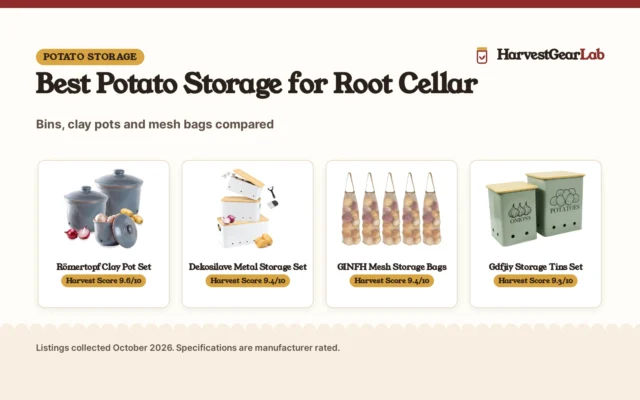
Fresh produce that keeps well cool goes to the cellar; food that needs freezing goes to the freezer. The cellar suits the gardener with crates of roots and fruit; the freezer suits the keeper who freezes meals and meat. For produce that stores in the cellar, see the potato storage for root cellar picks.
Count the work
A cellar asks for sorting and checking through the cold months; a freezer asks for packing, labeling and power. A power cut is the freezer’s weak point: see how long a chest freezer can go without power before counting on the freezer alone. Pick the work you will actually do.
What this guide does not cover
This guide does not give storage times or temperatures for specific foods, and it does not give building plans for a cellar. The books above cover the cellar side in more depth, and current USDA and National Center for Home Food Preservation guidance covers safe storage for each food. Follow that guidance for each food, and use the books for the cellar itself.
FAQ: preserving at home
Can I use a root cellar without digging one?
Yes. The Storey book describes keeping produce harvest-fresh in a basement, porch, garage or closet hideaway, so a dug cellar is one option, not the only one.
What foods go in a root cellar?
Fresh produce from the garden, kept cool, dark and damp. The books cover the cellar side; for safe storage of each food, follow current USDA and National Center for Home Food Preservation guidance.
Does a chest freezer work without power?
No. A chest freezer holds food frozen only while it has power, so a power cut leaves the food to thaw. A root cellar needs no power at all.
Which books cover building a root cellar?
The building books here are Build Your Own underground Root Cellar from 1983, and the Majosta guide to building a root cellar and keeping food in cold storage. The Storey Root Cellaring book from 1991 covers keeping produce in an existing cool space.
Do I need a root cellar and a chest freezer?
Not always. A root cellar suits fresh produce kept cool, and a chest freezer suits food kept frozen. Many keepers use the cellar for the garden harvest and the freezer for the rest.
More preserving guides
See every food storage guide and all cold storage guides.
More picks: storage for cabbage, medium size chest freezer, how to use freezer paper and freezer thermometer for chest freezer.