
On this page
Top picks at a glance
As an Amazon Associate I earn from qualifying purchases.
- 1
 BTZHRI Yogurt Maker9.7/10View on Amazon
- 2
 Astercook 15-Piece Knife Set with Block and Sharpener9.7/10View on Amazon
- 3
 Suteck Yogurt Maker with 8 Jars9.6/10View on Amazon
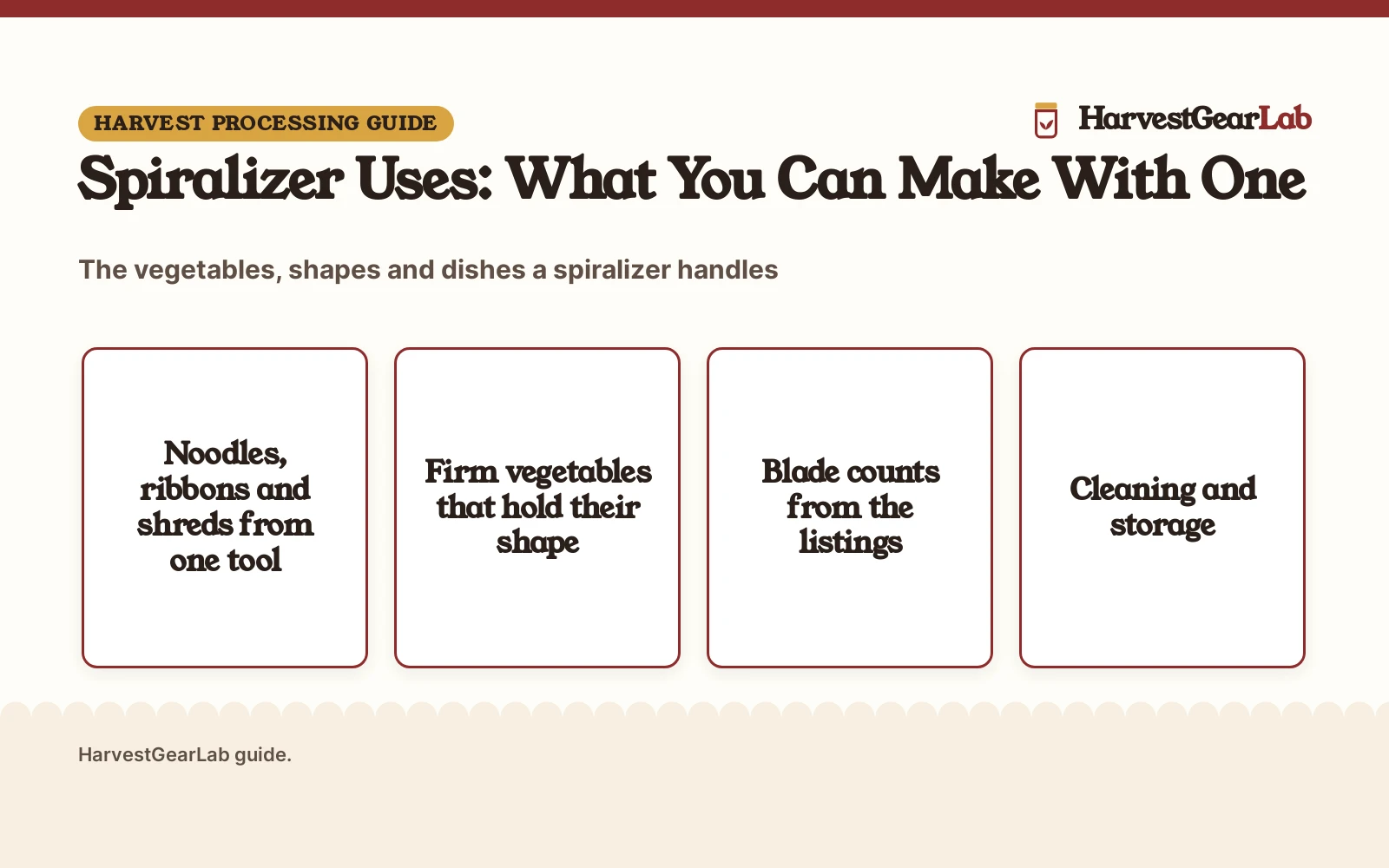
A counter piled high with zucchini, carrots and potatoes from the garden is where most spiralizer questions start. Spiralizer uses cover far more than curly noodles: the same tool turns firm vegetables into ribbons for salads, shreds for slaws, slices for layering and curls for garnish. This guide walks through each use, the shapes each blade makes and the vegetables that suit the tool, so more of the harvest gets eaten and less of it waits in the crisper drawer.
HarvestGearLab earns a commission when you buy through links on this site, at no extra cost to you. As an Amazon Associate I earn from qualifying purchases. Affiliate disclosure.
Spiralizer uses: the short list
Most spiralizer uses fall into a few groups. The table shows what each one makes and which vegetables suit it.
| Use | What it makes | Vegetables that suit it | Blade or shape |
|---|---|---|---|
| Veggie noodles | Long curls that stand in for pasta | Zucchini, carrot, sweet potato, squash | Spiral blade |
| Ribbons | Wide flat strips for salads | Cucumber, zucchini, carrot | Slicing blade |
| Shreds | Fine strands for slaws | Cabbage, carrot, beet | Fine spiral blade |
| Slices | Even rounds for layering | Potato, tomato, cucumber | Slicing blade |
| Garnishes | Curls and nests for the plate | Carrot, radish, beet | Spiral blade |
Start with the shape, not the tool
Pick the shape first and the blade follows. Noodles suit hot dishes and pasta swaps, ribbons suit raw salads, shreds suit slaws, and slices suit layering in a dish. A spiralizer that offers several blade styles covers more of these uses from a single tool, while a handheld model with fewer blades suits a cook who only wants noodles.
Blade counts vary by listing. The KitchenAid KSM2APC attachment (on Amazon) lists 7 blades: 3 spiralizing, 3 slicing and 1 peeling blade. The Ourokhome mandolin (on Amazon) and spiralizer lists 10 blades: 6 mandolin blades and 4 spiral blades. The NUNEWARES spiralizer (on Amazon) lists 4 blades, and the ELIRIVAWET handheld (on Amazon) lists 3 blades with 4 modes. Compare the blade list with the shapes in the table above before choosing, and see our spiralizer vs mandoline slicer comparison if a mandoline is already on the counter.
Vegetables that spiral well
Firm vegetables hold their shape under the blade, and the listings name a long list of them: zucchini, potato, cucumber, tomato, carrot, ginger, lemon, cabbage, onion, beet, turnip, rutabaga, radish, squash and sweet potato. The Spiralizer brand listing notes that its blades handle harder root vegetables such as sweet potatoes and turnips. Trim each piece to fit the tool, cut off uneven ends so the vegetable sits straight, and work with firm pieces rather than soft or overripe ones, which tear instead of curling.
Vegetables with a very soft middle, such as a ripe tomato, suit slicing rather than spiralizing into long noodles. Peel first where the tool lists a peeling blade, as the KitchenAid attachment does.
Noodles and pasta swaps
The best-known spiralizer use is the vegetable noodle. Zucchini noodles, carrot noodles and sweet potato noodles all come from the spiral blades, and the shape cooks fast in a pan with sauce. The NUNEWARES listing frames the use as replacing pasta with vegetable equivalents, and the Spiralizer brand listing makes the same point for cooks following a low carb or gluten-free diet. Serve the noodles soon after cooking, since they soften as they sit.
A 500ml bin under the blade, as the NUNEWARES listing states, catches the noodles as they fall, while the Ourokhome 2 L collection tray holds a larger batch before it needs emptying.
Salads, slaws and garnishes
Ribbons and shreds are the salad uses. Wide cucumber and zucchini ribbons fold into a salad without a knife, carrot shreds mix into a slaw, and cabbage shreds add crunch to a bowl. The fine spiralizing blade on the KitchenAid attachment makes the thin strands a slaw needs, while a slicing blade makes the broad ribbons.
Garnishes are the small use that makes a plate look finished: carrot curls, radish curls and beet nests sit on top of a salad or a soup. The NUNEWARES listing names garnishes, apple chips, salads and pizza toppings among the uses for its spiralizer. Keep garnishes in cold water until serving so they stay crisp.
What to skip or double-check
- Soft or overripe vegetables: they tear and mash instead of curling, so pick firm pieces.
- Pieces wider than the tool: trim them to fit before spiralizing, or the blade will not catch.
- Skins and peel: peel first where the vegetable needs it; the KitchenAid attachment lists a peeling blade for this step.
- Fingers near the blade: the Ourokhome listing notes an expanded hand guard, and the NUNEWARES listing notes a strong suction cup that holds the base still while you work.
- Cleaning as you go: rinse the blades before food dries on them; several listings include a cleaning brush.
Cleaning and storage
Cleaning is part of the use, not an afterthought. The KitchenAid attachment lists blades that are dishwasher safe on the top rack, and the ELIRIVAWET handheld lists dishwasher cleaning as well. The NUNEWARES and Ourokhome listings include a cleaning brush for food caught on the blades, and the Ourokhome listing notes that its blades fit in blade storage boxes.
Store the blades where they cannot cut a hand reaching into a drawer: the KitchenAid attachment and its accessories fit inside a storage case, and the ELIRIVAWET handheld is small enough to fit in a kitchen drawer.
What this guide does not cover
This is a uses guide. It does not give recipes, cooking times or preserving guidance. Take preserving times and pressures from current USDA and National Center for Home Food Preservation guidance. Every harvest processing guide on the site is collected in our harvest processing section.
FAQ: preserving at home
Which vegetables work well in a spiralizer?
Firm vegetables such as zucchini, carrot, potato, cucumber, cabbage, beet, turnip, rutabaga, radish, squash and sweet potato. Soft or overripe pieces tear instead of curling, so pick firm ones and trim them to fit.
Can a spiralizer replace a mandoline slicer?
Partly. A spiralizer makes noodles, curls and shreds, while a mandoline makes flat slices, though some tools combine both: the Ourokhome lists 6 mandolin blades and 4 spiral blades in one tool.
Can I spiralize potatoes?
Yes. Potato appears in the listings as a vegetable the blades handle, and potato noodles and ribbons suit hot dishes and layering. See our spiralizer for potatoes guide for listings that suit the job.
How do I clean a spiralizer?
Rinse the blades before food dries on them. The KitchenAid attachment lists blades that are dishwasher safe on the top rack, the ELIRIVAWET handheld lists dishwasher cleaning, and the NUNEWARES and Ourokhome listings include a cleaning brush.
What is the difference between a spiralizer and a vegetable chopper?
A spiralizer cuts vegetables into noodles, ribbons and shreds, while a chopper dices them into pieces. Our vegetable chopper vs spiralizer comparison lines up the two tools.
More preserving guides
See every harvest processing guide and all Harvest Guides guides.
More picks: spiralizer picks compared, spiralizer vs mandoline slicer, spiralizer for beginners and potato slicer vs spiralizer.