
On this page
What is cold press juicer? It is a slow juicer that crushes produce and presses out the juice, leaving dry pulp behind. The name points to the method: a turning screw presses fruit and vegetables against a strainer instead of shredding them at high speed, so the juice comes out with little foam and little heat from friction. This guide explains how it works step by step, how it differs from a centrifugal juicer, and what to look for before you buy.
HarvestGearLab earns a commission when you buy through links on this site, at no extra cost to you. As an Amazon Associate I earn from qualifying purchases. Affiliate disclosure.
What is cold press juicer: the short answer
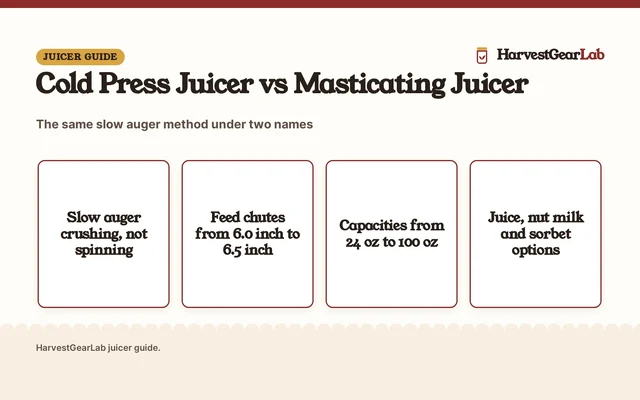
A cold press juicer, also called a masticating juicer, works by crushing and pressing. Produce goes into a feed chute, a slow-turning screw, called an auger, crushes it against a strainer, and the strainer lets juice through while pulp passes out through a separate outlet. The screw turns slowly, so the machine runs quietly and the juice carries little foam. Cold press juicers suit leafy greens, carrots, apples and citrus, and they handle soft fruit well. They are not blenders: a blender keeps the whole fruit in the jar, while a juicer separates juice from pulp.
How a cold press juicer works
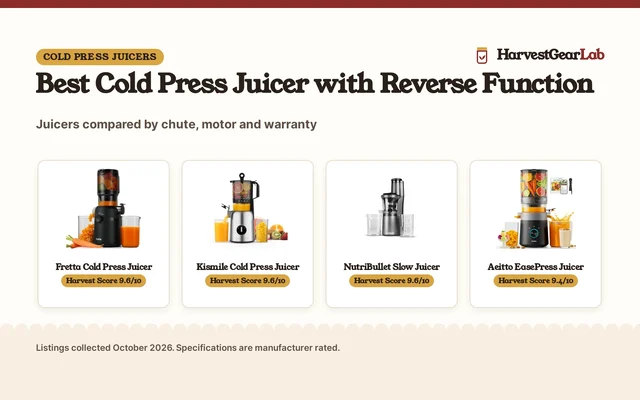
Juicing with a cold press juicer follows a plain sequence. Wash the produce and cut it to fit the feed chute, then switch the machine on and feed pieces in a few at a time. The auger draws each piece in, crushes it, and presses the pulp against the strainer, so juice flows from the juice outlet while pulp leaves through the pulp outlet. Keep feeding until the produce is done, then switch the machine off and take the parts apart for cleaning. A reverse switch helps when a piece sticks: run it briefly in reverse, then forward again.
Cold press vs centrifugal juicers
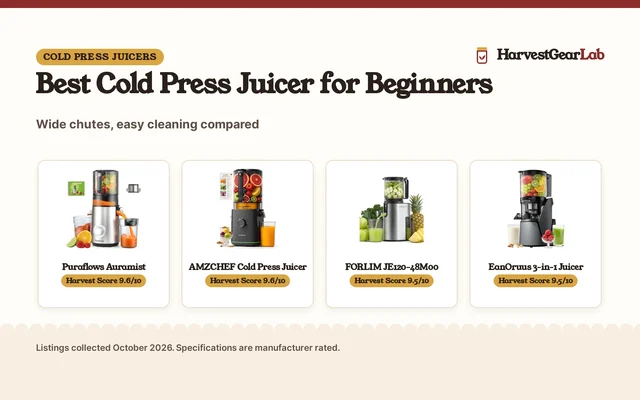
A centrifugal juicer spins produce fast against a shredder disc and flings juice out through a strainer, while a cold press juicer crushes produce slowly and presses it. The fast spin makes juice quickly and handles hard fruit well, but it whips air into the juice and leaves wetter pulp. The slow press takes longer and needs produce cut to fit, but it works well on leafy greens and soft fruit and leaves drier pulp. Choose a centrifugal juicer for speed and simple hard fruit, and a cold press juicer for greens, soft fruit and quiet running. If the names still blur together, our cold press juicer vs masticating juicer comparison sorts out the terms, and our best cold press juicer for beginners guide lines up starter machines.
| Juicer type | How it works | Juice and pulp | Suits |
|---|---|---|---|
| Cold press | Slow screw crushes and presses | Little foam, drier pulp | Leafy greens and soft fruit |
| Centrifugal | Fast spin shreds and flings | More foam, wetter pulp | Hard fruit and speed |
What to put through a cold press juicer
Leafy greens, herbs, carrots, beets, apples, pears and citrus all run well through a cold press juicer. Hard produce such as carrots and beets needs cutting to fit the chute, while soft fruit such as berries and ripe mango feeds through easily. Citrus can go in peeled, and leafy greens roll into small bundles that feed through the chute. Avoid feeding pits, hard stones and tough stems, and cut long stalks to fit. Frozen fruit belongs in a blender, not a juicer: a juicer needs fresh produce that the screw can crush and press.
Cleaning and care
Clean a cold press juicer soon after use, while pulp is still soft. Take the parts apart, rinse the strainer under running water, and brush the mesh clear of pulp. Wash the remaining parts with warm soapy water, rinse them, and let them dry before you put the machine back together. Wipe the base with a damp cloth and keep the cord dry. Regular cleaning keeps the strainer clear and the juice flowing freely.
FAQ: preserving at home
What does cold press juicer mean?
It means a juicer that crushes and presses produce slowly to separate juice from pulp, instead of shredding produce at high speed. The press works cold in the sense that the slow action adds little heat from friction.
Is a cold press juicer the same as a masticating juicer?
Yes. Masticating is another name for the same slow crush-and-press method, and sellers use either name for the same kind of machine.
What is cold press juicing?
Cold press juicing is the method of crushing produce with a slow screw and pressing it against a strainer so juice flows out and pulp leaves separately. It is the same method a cold press juicer uses.
Can a cold press juicer juice leafy greens?
Yes. Leafy greens are among the foods a cold press juicer handles well, since the slow screw crushes the leaves instead of flinging them.
More preserving guides
See every harvest and processing guide and all cider and fruit presses guides.
More picks: cold pressed juicers, masticating juicers for greens, cold press juicers for leafy greens and cold press vs masticating.