
On this page
Top picks at a glance
As an Amazon Associate I earn from qualifying purchases.
- 1
 Bigwind Compact Handheld Vacuum Sealer with 45 Reusable Bags9.8/10View on Amazon
- 2
 Mesliese 6-in-1 Vacuum Sealer with Bag Cutter9.8/10View on Amazon
- 3
 BEEKBING Handheld Vacuum Sealer with 30 Reusable Bags and 109.8/10View on Amazon
- 4
 MegaWise Vacuum Sealer MachineView on Amazon
- 5
 Bonsenkitchen Precut Vacuum Sealer Bags 100 CountView on Amazon
- 6
 42 PCS Sous Vide Vacuum Sealer SetView on Amazon
- 7
 Vacuum Sealer Bags RollsView on Amazon
- 8
 Syntus 200 PCS Vacuum Sealer BagsView on Amazon
- 9
 Syntus 100 PCS Vacuum Sealer BagsView on Amazon
When the apples come in and the freezer needs room, many home cooks ask what is vacuum sealer and whether it earns a place on the counter. A vacuum sealer is a countertop machine that removes air from a plastic bag or jar, then heat seals the bag closed. This guide walks through that process step by step, explains the terms listings use, and shows what to check before you buy.
Runners-up to consider
 MegaWise Vacuum Sealer MachineCheck price on Amazon
 Bonsenkitchen Precut Vacuum Sealer Bags 100 CountCheck price on Amazon
 42 PCS Sous Vide Vacuum Sealer SetCheck price on Amazon
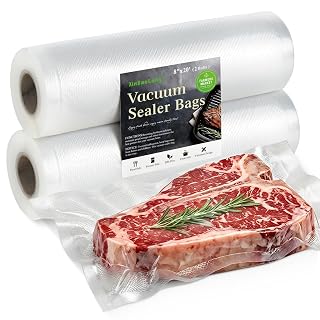 Vacuum Sealer Bags RollsCheck price on Amazon
 Syntus 200 PCS Vacuum Sealer BagsCheck price on Amazon
 Syntus 100 PCS Vacuum Sealer BagsCheck price on Amazon
HarvestGearLab earns a commission when you buy through links on this site, at no extra cost to you. As an Amazon Associate I earn from qualifying purchases. Affiliate disclosure.
What is vacuum sealer: the short answer
The short answer: a vacuum sealer removes air from the bag, then seals the open end with a heated strip. Less air around food is the reason most people use one, because air dries out the surface of food and speeds up freezer burn. Many machines offer a dry mode and a moist mode, and some add an external hose for jars and canisters.
How a vacuum sealer works, step by step
Most machines follow the same basic order, even though the lids and buttons differ from model to model.
Fill the bag
Place the food in a bag made for vacuum sealing, and leave a clear margin of bag above the food. Keep juice, sauce and crumbs away from the open edge, because anything caught in the seal area can stop the strip from making a clean closure.
Place the open end in the sealer
Lay the open end across the sealing area, then close the lid. Some listings describe an easy-lock handle that latches the lid, and the cycle usually starts only after the lid is closed.
Choose the mode for the food
Dry mode suits foods with no liquid, such as bread, nuts and dry goods. Moist mode is for foods that release juice or fat, such as meat, fish and marinated vegetables. Pulse control lets you stop the vacuum at will, which helps with delicate items. Listings name these modes in different words, so check which foods each one covers.
Let the machine pull the air
The pump draws air out of the bag through the open end, and the machine then runs the seal. Automatic models run the cycle on their own once started. Some listings state a semi-automatic operation mode, while others state automatic operation, so read the operation line before you buy.
Heat seal and cut
A heated strip melts the plastic layers together to close the bag. Look for wrinkles or gaps in the seal before you store the bag, and if the seal looks weak, cut a fresh edge and seal it again. Many models include a built-in cutter, so you can size bags to the food.
Why people use a vacuum sealer
The main reason is less air around food. Sealed portions are easier to label, stack and find in a crowded freezer, and dry goods sealed in a bag stay closed off from pantry air and moisture. Vacuum sealing is a storage step, and some listings also mention sous vide use with the same bags.
What the figures on a listing mean
Listings share the same kinds of figures. Suction is written in kPa, and a higher figure means a stronger pull on the air. The Mesliese listing states 90kPa, the Yerory listing 75KPa and the Vervex listing 95kPa. Motor power is in watts, and the Mesliese listing states 120w. Dimensions and weight help you judge counter and drawer space.
A figure on its own does not show how well a machine seals, and a listing can disagree with itself. The Vervex bullets give 230W, while its spec table lists 120 watts. When a title or bullet and a spec table differ, trust the title and bullets over the table, and confirm the difference with the maker before you buy.
What is vacuum sealer: what to check before you buy
Start with the foods you store most. A moist mode matters for meat and fish, and a built-in cutter matters if you cut bags often. Read the included parts too: listings name bag rolls, pre-cut bags, a hose and sometimes a canister adapter, and the number of bags in the kit shows how far it goes.
Check bag compatibility
Bag rolls and pre-cut bags come in set sizes, so confirm the listing states them. Some listings say the machine works with standard vacuum seal bags and rolls, which gives you more choice when you buy supplies.
Plan for cleaning
A removable drip tray helps when you seal juicy or marinated food, and smooth surfaces are easier to wipe than textured ones. Listings describe drip trays and liquid reminders in different ways, so check which features the model actually includes. For ranked comparisons, see the best vacuum sealer guide, or start with the best vacuum sealer for beginners list.
Safety and storage limits
Vacuum sealing removes air, but it does not make food shelf stable or safe for a set time. Keep sealed food refrigerated or frozen as the food requires, and follow current food safety guidance for each food. A vacuum sealer is not a canner. For home canning, follow current USDA and National Center for Home Food Preservation guidance.
FAQ: preserving at home
Is a vacuum sealer good for storing food?
For many households it is, especially for freezer portions and dry goods that need a closed bag. Results depend on the food, the seal and how cold the food stays, so no machine can promise a set storage time.
Why use a vacuum sealer instead of a zip bag?
A vacuum sealer pulls more air out of the bag and closes it with a heated seal, so less air reaches the food. A zip bag keeps more air inside, which is why many people choose vacuum bags for freezer storage.
What can I vacuum seal?
Listings name meat, fish, vegetables, fruit, nuts and dry goods. Moist foods need a moist mode and a drip tray, and delicate items such as bread often do better with pulse control.
More preserving guides
See every vacuum sealers guide and all food storage guides.
More picks: vacuum sealers, vacuum sealers for beginners, vacuum sealers with reusable bags and bags for freezing.