
On this page
Top picks at a glance
As an Amazon Associate I earn from qualifying purchases.
- 1
 Arrow 2pk Canning Funnel9.7/10View on Amazon
- 2
 Gejoy 12pc Stainless Canning Funnels9.7/10View on Amazon
- 3
 serinar Wide Mouth Canning Funnel9.7/10View on Amazon
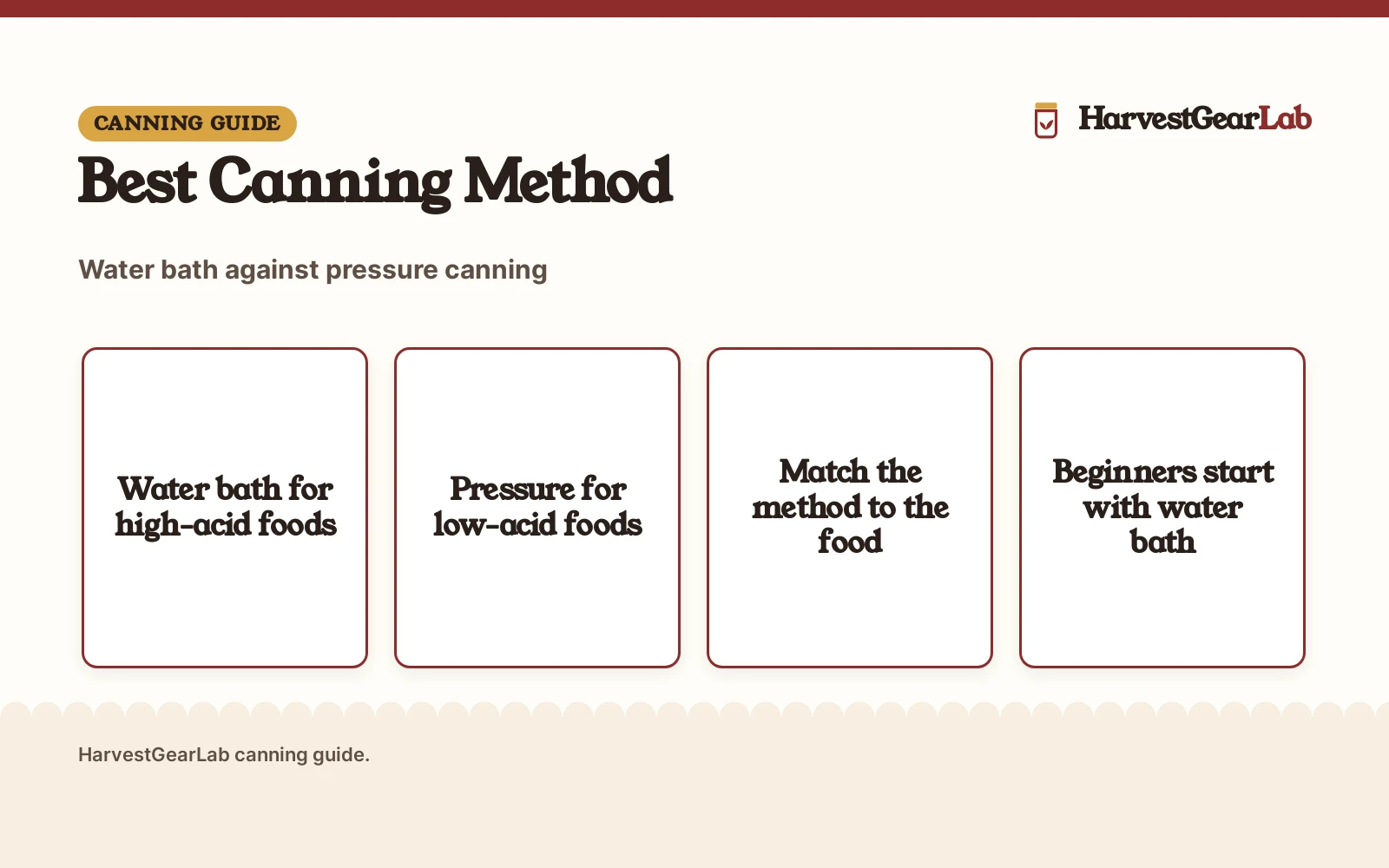
The best canning method is the one that matches your food: water bath canning for high-acid foods like fruit, jam, jelly and pickles, and pressure canning for low-acid foods like vegetables, beans and meat. No single method covers both safely, because the two methods reach different heat levels and handle different risks. Start with the food, then pick the method that suits it.
HarvestGearLab earns a commission when you buy through links on this page, at no extra cost to you. As an Amazon Associate I earn from qualifying purchases. Affiliate disclosure.
Water bath canning: how it works
Water bath canning submerges filled, sealed jars in a large pot of boiling water for the full processing time. The boiling water heats the food through and drives air out of the jar, and the cooling jar pulls the lid down into a vacuum seal. This method suits high-acid foods: fruit, jams, jellies, pickles and tomato products with added acid. The acid in these foods, not the boiling water, is what keeps the sealed jar safe on the shelf, so water bath canning is only right for recipes made to be acidic.
Pressure canning: how it works
Pressure canning processes jars in a sealed canner where steam builds pressure, which raises the temperature above what boiling water can reach. That extra heat is what makes low-acid foods safe: plain vegetables, beans, soups, stock and meat need it, because boiling water alone does not reach high enough temperatures for them. A pressure canner uses a weighted gauge or dial gauge to hold the target pressure steady, and you vent the canner before the timed processing starts so only steam remains inside.
Which method for which food
Match the method to acidity, not to convenience. Fruit, jam, jelly, pickles and properly acidified tomato products go in the water bath. Plain vegetables, green beans, corn, carrots, potatoes, dried beans, meat, poultry, fish and any soup or stock go in the pressure canner. When a recipe combines foods, the lowest-acid ingredient decides: a vegetable soup with meat is a pressure canning job even if it also contains tomatoes. If you are unsure about a recipe’s acidity, use a pressure canner recipe from a current, reputable source.
Equipment each method needs
A water bath setup is the simpler one: a deep pot with a rack that holds jars off the bottom, a lid, jar lifter tongs, a funnel and a way to keep jars hot before filling. A pressure setup needs a pressure canner with a locking lid, a rack, a weighted or dial gauge, plus the same jar tools. Both methods use the same jars, two-piece lids and bands, and both need the headspace the recipe states so the seal forms correctly.
Best canning method for a beginner
Most beginners start with water bath canning because the equipment is simpler and the recipes are forgiving: a batch of jam or pickles teaches jar handling, headspace and seal checking in one afternoon. Move to pressure canning when you want to preserve vegetables, beans or meat, and practice with water in the canner first so the venting, pressurizing and cool-down steps feel familiar before food is inside.
What this guide does not cover
This guide covers the choice between water bath and pressure canning only, not specific processing times, which vary by recipe, jar size and altitude. Always follow a current, reputable recipe for times and pressures, and check your pressure canner’s gauge as its manual directs.
FAQ: preserving at home
What is the water bath canning method?
It submerges sealed jars in boiling water for the recipe’s processing time. It suits high-acid foods like fruit, jam, jelly and pickles, where the food’s acidity keeps the sealed jar safe.
How do you use canning tongs?
Jar lifter tongs grip a hot jar around its neck so you can lower it into the canner and lift it out without touching the hot glass. Keep the jar upright as you move it, and set it on a towel to cool.
How long does home canned food last?
Sealed jars stored in a cool, dark place keep their quality for many months, and many keepers use them within a year. Check every seal before opening, and discard any jar with a bulging lid, off smell or broken seal.
How do you use canning jars?
Wash and heat the jars, fill with hot food to the recipe’s headspace, wipe the rims, set lids and bands fingertip-tight, then process by the method and time the recipe states. Cool undisturbed, check seals, then store.
Can canning lids be reused?
Standard flat lids are made for one sealing use: the sealing compound molds to the jar rim on first processing and may not seal again. Bands and jars can be reused as long as they are undamaged.
More preserving guides
See every canning guide and all canning tools guides.
More picks: best canning funnel for mason jars, best ball jar lifter for canning and best canning jars for jam.