
On this page
Top picks at a glance
As an Amazon Associate I earn from qualifying purchases.
- 1
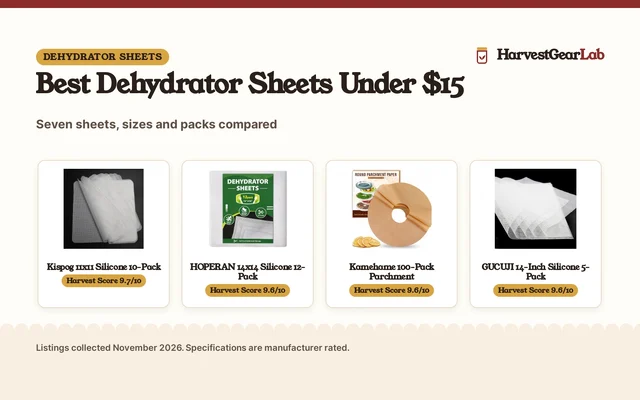
 ZOES HOMEWARE 2026 Foldable Clothes Drying Rack9.7/10View on Amazon
- 2
 MUMSUNG Collapsible Pasta Drying Rack9.7/10View on Amazon
- 3
 Hwayslon 6 Layer Hanging Drying Net9.6/10View on Amazon
Alternative drying methods are the ways to dry food without an electric dehydrator: air drying, oven drying, microwave drying, freeze drying and more. Each one trades time, equipment and food quality differently, and the right choice depends on what you are drying and what you own. This guide walks through the options step by step, with concrete figures drawn from the reference listings.
HarvestGearLab earns a commission when you buy through links on this page, at no extra cost to you. As an Amazon Associate I earn from qualifying purchases. Affiliate disclosure.
Why dry food at all
Drying removes water, and water is what lets spoilage organisms grow. A dried apple ring or a bundle of herbs keeps at room temperature because microbes cannot get a foothold. The alternative methods below do this without a dedicated dehydrator, using air, heat or cold. The herb drying guide in our reference listings names four of them in its title: air drying herbs, dehydrator herbs, oven drying herbs and microwave drying, a useful map of the territory. See our drying vegetables for storage guide for the vegetable side.
Air drying
Air drying is the oldest method: herbs tied in bundles and hung in a warm, dark, airy spot, or fruits on racks with airflow. It costs nothing and needs no power, but it takes days and only works where the air is dry; humid climates invite mold. Herbs dry well this way because their low moisture content finishes before spoilage starts. Our herb drying rack vs food dehydrator comparison covers the equipment angle.
Oven drying
The oven is the dehydrator most people already own. Set it to its lowest heat with the door cracked, and the warm air does the work. It is faster than air drying and handles wetter foods like fruit slices, but ovens cycle hot and cold, so the food needs watching and turning. It also heats the whole kitchen, which is a real cost in summer. Use it for small batches when you want results today without buying a machine.
Microwave drying
The microwave dries herbs in minutes by driving water out of the leaves directly. It is the fastest method here, but also the least forgiving: a few seconds too long and the herbs scorch or lose their oils. It suits tiny batches of leafy herbs where speed matters more than perfect texture. The reference herb guide lists microwave drying alongside the other methods, which signals it is a legitimate technique, not a hack.
Freeze drying
Freeze drying freezes the food, then removes the ice as vapor, leaving the structure intact. It keeps color, shape and nutrients better than heat drying, and the results rehydrate well. The tradeoff is equipment: a home freeze dryer is the most expensive drying appliance most people will buy. The reference listings include a home freeze drying log book, independently published July 5, 2022, with 110 pages of record sheets for freeze drying activities and batch schedules, which shows how seriously home freeze dryers track their runs. See our freeze drying vs canning guide for the bigger preservation picture.
Osmo-freeze drying
Osmo-freeze drying is a research-level alternative: food is first partially dried by osmosis in a sugar or salt solution, then freeze dried. The reference listings include a 2012 academic study, Preparation of Sapota Powder by Osmo-Freeze Drying, subtitled a better alternative to conventional drying methods. For home preservers the takeaway is the principle, not the equipment: a salt or sugar pre-treatment pulls water out before the main drying step, which is why salted meats and candied fruits dry faster and keep longer.
Alternative drying methods: which should you choose?
Choose air drying if you have dry air, time and herbs or other low-moisture foods. It costs nothing and keeps flavors intact.
Choose the oven if you want results today with equipment you own. Watch the batch and turn the food.
Choose the microwave if you need a handful of herbs dried in minutes and can watch closely.
Choose freeze drying if you want the best quality and rehydration, and can justify the equipment. Track batches in a log book; the 110-page reference log exists for exactly this.
Choose osmotic pre-treatment if you are drying very wet foods and want a head start before the main method.
Storage after drying
Drying is only half the job. Cool the food completely, then pack it airtight away from light and moisture; any residual warmth creates condensation inside the container. Our dehydrating vs freezing food guide compares the two long-term storage strategies.
FAQ: preserving at home
What is the cheapest drying method?
Air drying costs nothing but time. The oven uses power you already pay for; the microwave is faster but only suits small batches.
Can I dry herbs without a dehydrator?
Yes. The reference herb guide lists air drying, oven drying and microwave drying alongside dehydrator drying, so all three are established alternatives.
Is freeze drying better than heat drying?
For quality and rehydration, yes; for cost and simplicity, no. A 110-page home freeze drying log book in the references shows the method’s following.
What is osmo-freeze drying?
A research method where food is partially dried by osmosis in a sugar or salt solution before freeze drying; the principle also explains why salted and sugared foods dry faster.
More preserving guides
See every food drying guide, our food dehydrators and freeze dryers categories.