
On this page
Top picks at a glance
As an Amazon Associate I earn from qualifying purchases.
- 1
 Prep•N•Cook by McSunley 21.5Qt Stainless Steel Water Bath9.4/10View on Amazon
- 2
 All American 1930 Pressure Cooker/Canner9.5/10View on Amazon
- 3
 Ball freshTECH Electric Water Bath Canner and Multi-Cooker9.6/10View on Amazon
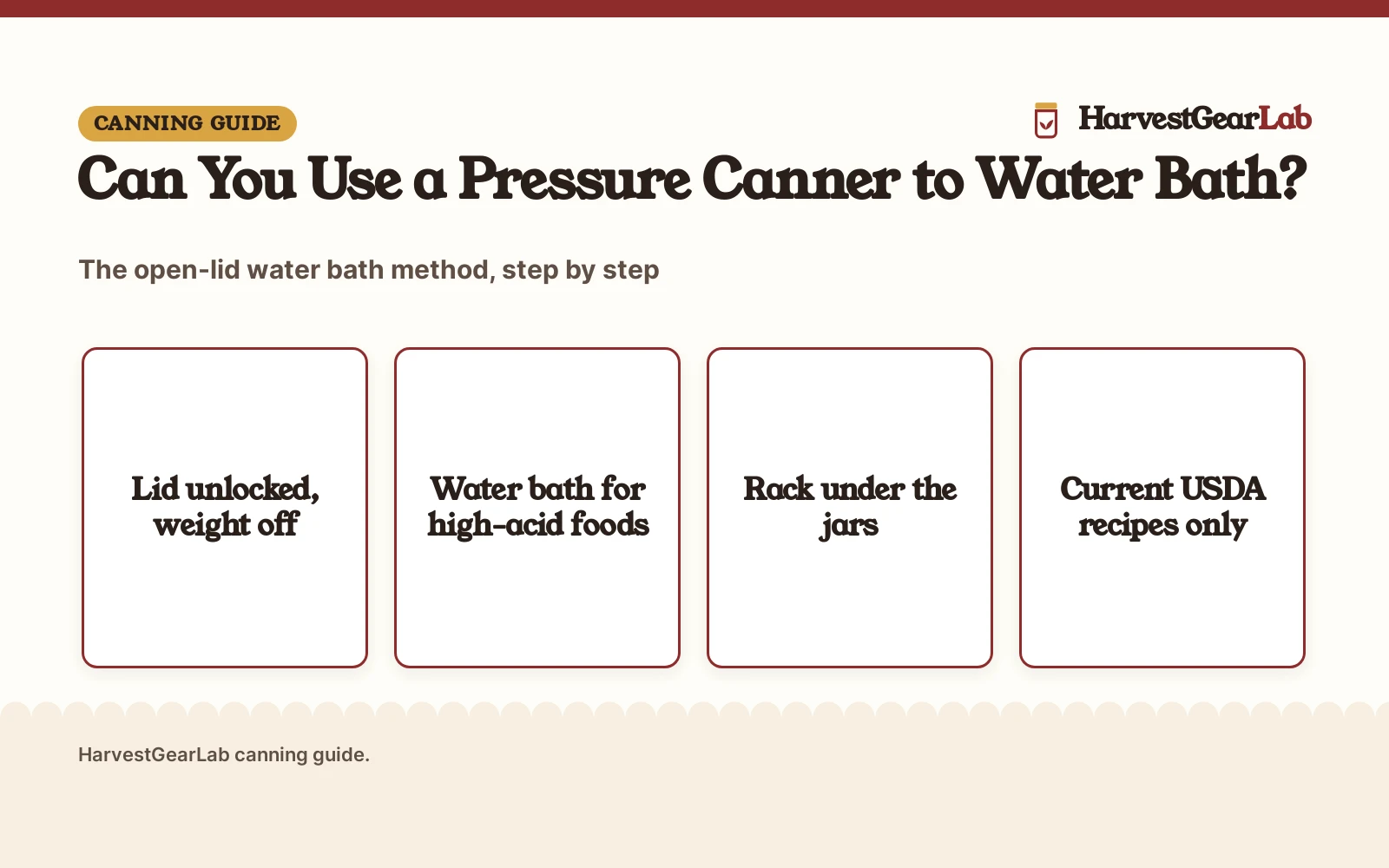
Can you use a pressure canner to water bath? Yes, a pressure canner can stand in as a water bath canner when the lid stays unlocked and the weight stays off, so the pot holds boiling water at normal pressure instead of building pressure. The jars sit in boiling water on a rack, just as they would in a water bath canner, and the method suits high-acid foods with a current USDA recipe. This guide walks through the setup step by step, and through what stays different.
HarvestGearLab earns a commission when you buy through links on this site, at no extra cost to you. As an Amazon Associate I earn from qualifying purchases.
Can you use a pressure canner to water bath: the short answer
Yes, with the lid unlocked. A pressure canner becomes a water bath canner when it works as an open pot: the lid rests on the pot without locking, the weight stays off, and the vent stays open, so steam escapes and the water boils at normal pressure. The jars sit on a rack under boiling water, and the water bath method does the rest. Nothing about the pot changes the food rules: a water bath suits high-acid foods such as jams, jellies, pickles and tomatoes with added acid, while low-acid foods such as plain vegetables, meat and stock still need pressure canning. Follow a current USDA recipe for the food in the jars, and follow it exactly.
How to set the canner up as a water bath
Start with a clean canner and a rack that keeps the jars off the bottom. Set the rack in the pot, set the filled jars on the rack, and add water until it covers the jars. Leave the weight off and leave the lid unlocked, with the vent open, so the pot cannot build pressure. Bring the water to a rolling boil and keep it boiling for the time the recipe gives, then lift the jars out with a jar lifter and set them on clean towels.
Check the fit before the water goes in. The pot must be deep enough for the water to cover the jars with room for a rolling boil, and the rack must hold the jars steady. If the jars sit too high for the water to cover them, use a water bath canner or a deeper pot instead. A lid that locks shut with the weight on is a pressure canner in use, not a water bath, so keep the weight off and the vent open for the whole session.
What stays different
Using a pressure canner as a water bath does not make the water bath stronger or faster. The water still boils at normal pressure, and the jars still need the full time in boiling water that the recipe gives. The heavy pot and locking lid are built for pressure, and none of that strength carries over when the lid stays unlocked. The gauge and the weight sit idle during a water bath, and the canner works as a plain pot with a rack.
The food rules stay the same, too. High-acid foods can go in a boiling water bath with a current USDA recipe. Low-acid foods cannot, even in a pressure canner with the lid unlocked: a water bath does not get hot enough for plain vegetables, meat or stock, and no extra time in boiling water changes that. If the food on the counter is low-acid, lock the lid, fit the weight and pressure can it by the recipe instead.
When to use a water bath canner instead
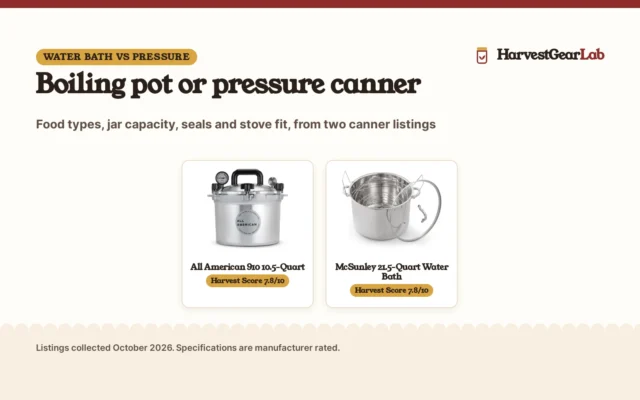
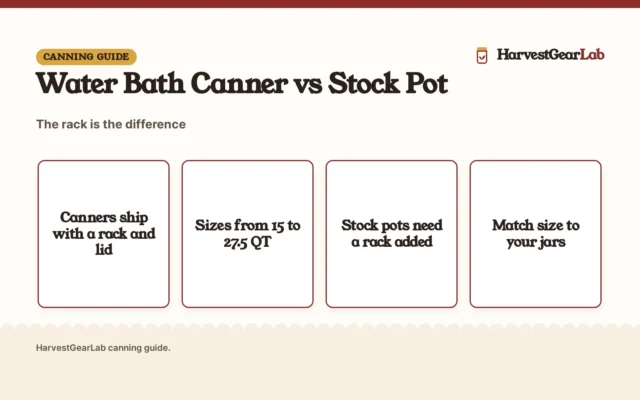
If most of the harvest goes into jams, jellies, pickles and acidified tomatoes, a water bath canner earns its shelf space. A pot made for water bath canning comes with a rack sized to its shape, a lid that fits without locking, and room for the jars with water over the top. Compare the jar count the maker states before you buy, and look for a rack in the box. The best water bath canner guide compares the pots by jar count and rack, and the water bath canner vs pressure canner comparison walks through the difference with a listing of each type.
What not to do
- Do not lock the lid for a water bath recipe: a locked lid with the weight on builds pressure, and a water bath recipe is written for boiling water at normal pressure.
- Do not water bath low-acid foods: plain vegetables, meat, poultry, seafood and stock need a pressure canner, not a water bath.
- Do not use an electric pressure cooker for canning: use it only if the maker states it is made for pressure canning.
- Do not process jars in the oven: dry oven heat is not a safe way to process canning jars.
- Do not reuse flat lids: buy new flat lids for each batch.
FAQ: preserving at home
Can a pressure canner work as a water bath canner?
Yes, with the lid unlocked, the weight off and the vent open, so it holds boiling water at normal pressure. The method suits high-acid foods with a current USDA recipe.
Do I leave the lid on when I water bath in a pressure canner?
The lid can rest on the pot, but it must stay unlocked with the vent open and the weight off. A locked lid with the weight on builds pressure, which is not a water bath.
Can I water bath green beans in a pressure canner?
No. Green beans are a low-acid food, and a water bath does not get hot enough for them, even in a pressure canner with the lid unlocked. Pressure can green beans by a current USDA recipe instead.
Do I need a rack in the pressure canner for a water bath?
Yes. A rack keeps the jars off the bottom of the pot so the water moves around them and the jars stay steady. Check whether the canner already includes a rack before you buy a separate rack.
Should I buy a separate water bath canner?
If most of your canning is jams, jellies, pickles and acidified tomatoes, a water bath canner with a fitted rack is worth having. If you already own a pressure canner and water bath only now and then, the pressure canner with the lid unlocked covers the job.
More preserving guides
See every canning tools guide and all canning guides.
More picks: water bath canners, pressure canners, water bath vs pressure canner and canning tool kits.