
On this page
Top picks at a glance
As an Amazon Associate I earn from qualifying purchases.
- 1
 128-CountView on Amazon
- 2
 Dalzom® 72Pcs Canning Lids Regular MouthView on Amazon
- 3
 Dalzom® 24Pcs Canning Lids with 24Pcs Rings Regular MouthView on Amazon
- 4
 Dalzom® 24Pcs Canning Lids with 24Pcs Rings Wide MouthView on Amazon
- 5
 Dalzom® 72Pcs Canning Lids Wide MouthView on Amazon
- 6
 Kitchen Canning FunnelView on Amazon
Canning vs dehydrating food comes down to what you want on the shelf. Canning heat-seals food in jars for ready-to-eat meals; dehydrating blows warm air over food to remove moisture for lightweight snacks. Canning suits sauces, soups and vegetables you want to open and serve. Dehydrating suits herbs, fruit, jerky and anything you want to store small and light. Many homesteaders end up doing both.
Runners-up to consider
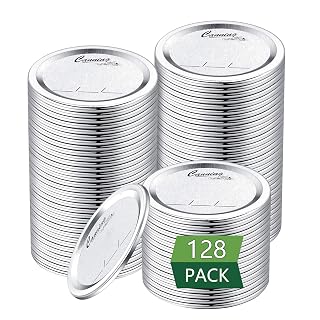 128-CountCheck price on Amazon
 Dalzom® 72Pcs Canning Lids Regular MouthCheck price on Amazon
 Dalzom® 24Pcs Canning Lids with 24Pcs Rings Regular MouthCheck price on Amazon
 Dalzom® 24Pcs Canning Lids with 24Pcs Rings Wide MouthCheck price on Amazon
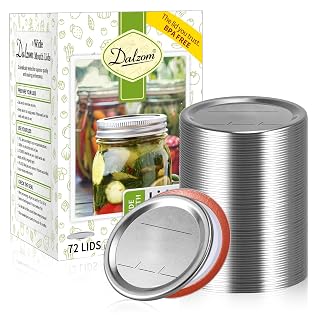 Dalzom® 72Pcs Canning Lids Wide MouthCheck price on Amazon
 Kitchen Canning FunnelCheck price on Amazon
HarvestGearLab earns a commission when you buy through links on this site, at no extra cost to you. As an Amazon Associate I earn from qualifying purchases. Affiliate disclosure.
Canning vs dehydrating food: the short answer
Pick canning if you want jars of finished food: tomato sauce, pickles, green beans, stock. Pick dehydrating if you want ingredients and snacks: dried herbs, apple chips, jerky, fruit leather. Canning needs a canner, jars and hand tools. Dehydrating needs a dehydrator with trays. The table below compares the two methods side by side.
| Method | How it works | Core gear | Best for |
|---|---|---|---|
| Canning | Heat-seals food in jars; water bath for high-acid foods under 4.6 pH, pressure canner for low-acid foods over 4.6 pH | Canner, jars such as a 4 oz 6-pack, funnel such as a 3.54 in stainless 3-pack | Sauces, soups, vegetables, ready-to-eat meals |
| Dehydrating | Warm air removes moisture; a 6-tray unit lists 95 to 167 degrees Fahrenheit and a timer up to 24 hours | Dehydrator such as a 6-tray model with 13 by 12 in trays and 936 sq in of space | Herbs, fruit snacks, jerky, lightweight storage |
When canning wins
Canning gives you finished food in a jar. Open a jar of tomato sauce and dinner is half done. The method splits by acidity: the pH meter listing states that foods under 4.6 pH suit water bath canning and foods over 4.6 pH suit pressure canning. A pH meter that stores up to 1,000 readings helps you check sauces and salsas before you process them. Jars come in many sizes; the Peokuaey listing is a 6-pack of 4 oz jars with a food-grade silicone ring for a leakproof seal. A stainless funnel set, such as the Delove 3-pack with a 3.54 in wide end, keeps food off the jar rim so lids seal.
Canning costs more to start: a canner, jars, lids, bands and tools. But each jar is a meal, and a shelf of jars is the classic pantry. For the gear, see our canning equipment checklist.
When dehydrating wins
Dehydrating gives you compact, lightweight food. The Ivation 6-tray listing runs 600W of heating power with a fan that circulates warm air, six 13 by 12 in trays for 936 sq in of space, a temperature range of 95 to 167 degrees Fahrenheit and a timer that runs up to 24 hours in 30-minute increments. Remove a tray to fit thick slices. Herbs dry in hours, fruit takes longer, and jerky needs the higher end of the range.
Dried food shrinks to a fraction of its fresh volume and weight, which is why preppers like it: the ReadyWise listing offers 120 servings with up to 25 years of shelf life in one bucket. A dehydrator costs less than a full canning setup and needs no jars or lids. Compare machines in our best food dehydrator guide.
Space, time and effort
Canning day is a project: wash jars, prep food, process, cool, check seals. Dehydrating is mostly waiting: prep, load trays, set the timer. Canned jars are heavy and need cool, dark shelf space. Dried food is light and packs small. If your garden gives you a heavy tomato harvest at once, canning turns it into sauce fast. If it gives you herbs and a few apples a week, the dehydrator earns its counter space.
What this guide does not cover
This is a methods comparison. It does not give recipes, processing times, temperatures, pressures or drying times. Take those from current USDA and National Center for Home Food Preservation guidance, or from a current edition of a trusted preserving guide, and follow them exactly for each food. Every drying guide on the site is collected in our food drying section.
FAQ: preserving at home
Which lasts longer, canned or dehydrated food?
Both last when done right. The ReadyWise listing states up to 25 years of shelf life for its 120-serving bucket. Home-canned and home-dried foods vary by food and method, so follow current USDA guidance for each.
Which is cheaper to start, canning or dehydrating?
Dehydrating usually costs less to start: one appliance with trays. Canning needs a canner, jars, lids, bands and hand tools, though the jars and bands are reusable.
Do I need a pH meter for canning?
It helps. The meter listing states that foods under 4.6 pH suit water bath canning and foods over 4.6 pH suit pressure canning, and it stores up to 1,000 readings.
Can I can and dehydrate the same harvest?
Yes. Many gardeners can the tomatoes and dehydrate the herbs and peppers from the same season.
More preserving guides
See every food dehydrator guide and all food drying guides.
More picks: food dehydrators , freeze dryer vs dehydrator.