
On this page
Top picks at a glance
As an Amazon Associate I earn from qualifying purchases.
- 1
 Arrow 2pk Canning Funnel9.7/10View on Amazon
- 2
 Ball Wide Mouth Clear Glass Canning Quart 32 Oz Mason JarsView on Amazon
- 3
 Norpro Canning Essentials Boxed SetView on Amazon
- 4
 SPANLA Mason Jars 8 oz 24 Pack Canning jars 8oz with RegularView on Amazon
- 5
 Mason Jars Variety PackView on Amazon
- 6
 SPANLA Mason Jars Variety PackView on Amazon
- 7
 IMUSA 6 Qt Enamel Stock Pot for CanningView on Amazon
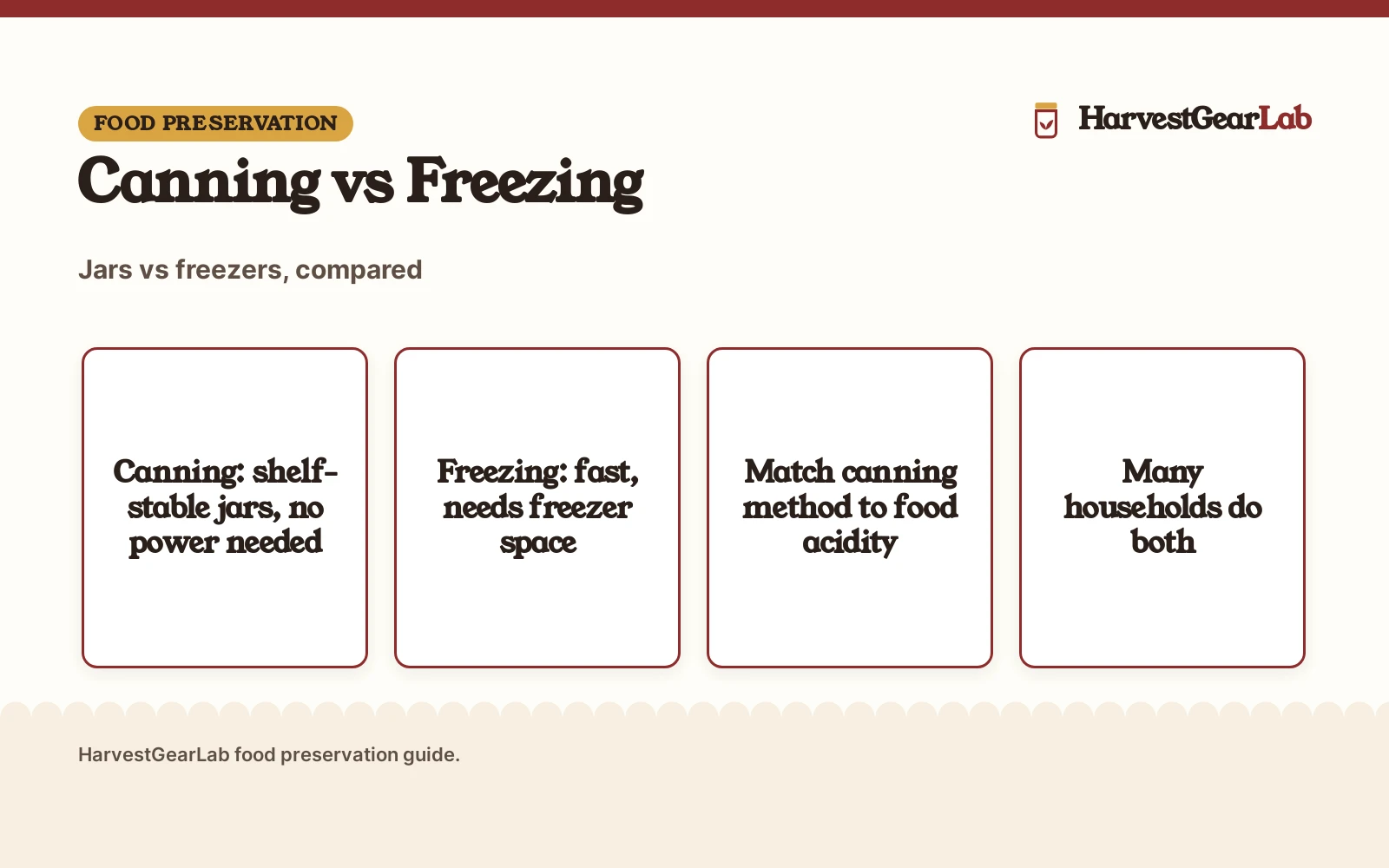
Canning vs freezing is the fork in the road every big harvest reaches: the tomatoes are coming faster than the kitchen can eat them, and something has to give. The short answer: canning seals food in jars that keep at room temperature, while freezing holds food below freezing for as long as the freezer runs. This guide explains each method step by step, using concrete figures only where listings state them.
Runners-up to consider
 Ball Wide Mouth Clear Glass Canning Quart 32 Oz Mason JarsCheck price on Amazon
 Norpro Canning Essentials Boxed SetCheck price on Amazon
 SPANLA Mason Jars 8 oz 24 Pack Canning jars 8oz with RegularCheck price on Amazon
 Mason Jars Variety PackCheck price on Amazon
 SPANLA Mason Jars Variety PackCheck price on Amazon
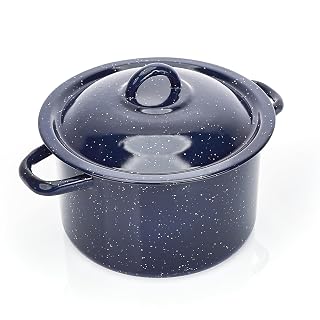 IMUSA 6 Qt Enamel Stock Pot for CanningCheck price on Amazon
HarvestGearLab earns a commission when you buy through links on this site, at no extra cost to you. As an Amazon Associate I earn from qualifying purchases. Affiliate disclosure.
Canning vs freezing: the difference in plain terms
Canning preserves food with heat: jars are processed so they seal and keep on the shelf. Freezing preserves food with cold: low temperature slows the spoilage that heat would otherwise have to stop. The table sums up the split; the sections below explain each method.
| Method | How it preserves | Storage | Needs |
|---|---|---|---|
| Canning | Heat processing seals jars | Room temperature shelf | Jars, lids, a canner, current recipes |
| Freezing | Cold slows spoilage | Freezer | Freezer space and steady power |
How canning preserves food
Canning heats food in sealed jars long enough to make the jars shelf-stable, following a current recipe. High-acid foods such as jams, jellies, pickles and acidified tomatoes go through a water bath or steam canner; low-acid foods such as plain vegetables, meat and stock need a pressure canner. The recipe, not the equipment, sets the method and the time. Once sealed and cooled, jars need no power at all, which is the method’s great strength.
The tradeoff is effort and equipment: jars, lids, a canner and a full processing session. Reference books exist for the learning curve; the Ball Blue Book, subtitled as a guide to home canning and freezing, is one long-standing example, and Freeze Fresh covers 55 fruits and vegetables for the freezer side.
How freezing preserves food
Freezing slows the enzymes and microbes that spoil food, without any heat processing. Preparation is usually simple: wash, trim, pack and freeze, with some vegetables blanched first per the recipe. Texture changes are the main cost; foods with high water content soften when thawed, so frozen produce suits cooking better than fresh eating.
The tradeoff is dependence: a freezer needs steady power and real space, and a long outage puts the whole stock at risk. Packaging matters too, since air exposure causes freezer burn; vacuum sealing before freezing is one common defense, as our vacuum sealer vs water bath canning comparison notes.
Canning vs freezing: how to choose
Choose by the food, the space and the power situation. If the pantry has shelf room and the goal is food that survives an outage, canning wins: jars sit at room temperature indefinitely once sealed. If the freezer has space and the priority is speed, freezing wins: most foods go from harvest to freezer in one session with no special equipment. Many households do both, canning the tomato glut and freezing the berries.
Before you commit to either method, a few low-cost supplies make the work easier, and the listings give concrete starting points. The Mrs. Wages listing is a pack of 6 six-ounce shaker bottles, 36 ounces in total, that prevents browning and preserves color and flavor in fruits like apples, peaches and bananas; the listing calls it ideal for canning, freezing and everyday prep, and notes you can make light, medium or heavy syrup for preserving fruit at home. For canning jars, the Norpro bubble popper and measurer is 1 unit per order: it inserts into jars to remove air bubbles before sealing and measures headspace to avoid overfilling, and its heat-resistant plastic will not scratch jars.
If you want one reference for both methods, the Ball Blue Book is a 96-page guide to home canning and freezing, and Freeze Fresh covers 55 fruits and vegetables for maximum flavor. Start with the foods you actually harvest: match the method to the food, then buy only the supplies that method needs.
One rule never changes: match the method to the food’s acidity when canning, and follow a current recipe either way. For the equipment side, see the best water bath canner roundup and the water bath canner vs pressure canner comparison.
FAQ: preserving at home
Which keeps food longer, canning or freezing?
Both keep food for many months when done right. Canned jars need no power to stay good; frozen food depends on the freezer running steadily.
Can I freeze what I would otherwise can?
Often yes. Most fruits and many vegetables freeze well, though texture softens on thawing. Low-acid foods that need a pressure canner are usually simpler to freeze.
Does freezing need special equipment?
Only a freezer with steady power and airtight packaging. No canner, jars or processing session is involved.
Which is better for a power outage?
Canning. Sealed jars keep at room temperature with no power, while a long outage threatens everything in the freezer.
More preserving guides
See every canning guide and all food storage guides.
More picks: best water bath canners, water bath canner vs pressure canner and vacuum sealer vs water bath canning.