
On this page
Top picks at a glance
As an Amazon Associate I earn from qualifying purchases.
- 1
 Magic Mill Pro Food Dehydrator Machine9.7/10View on Amazon
- 2
 Cosori Food Dehydrator9.7/10View on Amazon
- 3
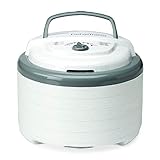 NESCO FD-75A Snackmaster Pro Food Dehydrator9.7/10View on Amazon
Food dehydrator pros and cons come down to this: a dehydrator turns surplus fruit, vegetables, herbs and meat into snacks you control, with no preservatives and simple hands-off running, but it works slowly, takes real counter space, and leaves you a stack of trays to wash. The short answer: it is worth it if you dry batches through the harvest season and have the counter to spare; it is not worth it if you dry one tray of apple slices a year.
HarvestGearLab earns a commission when you buy through links on this site, at no extra cost to you. As an Amazon Associate I earn from qualifying purchases. Affiliate disclosure.
Food dehydrator pros and cons: the short list
The table lines up the main upsides against what each one costs you, with figures from current listings.
| Pro | What it means | Con | What it costs you |
|---|---|---|---|
| Puts up the harvest | Turns surplus produce and meat into jerky, chips and dried fruit | Slow batches | Timers run up to 48 hours on the Deegureet |
| You control the ingredients | No preservatives; you season the batch yourself | Counter space | A 12-tray unit is 12.2 by 11.81 by 16.14 in and weighs 20 lb |
| Big batches at once | The Cosori lists 7.4 ft² of drying space and 10 trays | Noise | The Cosori runs under 48 dB, per the listing |
| Simple to run | Presets, a dial and timers do the work | Trays to clean | 10 to 12 trays per load on the larger units |
| Stainless steel options | The Cosori and Deegureet list stainless steel trays | Power draw | Listings state 350 to 800 watts |
The pros, in detail
It puts up the harvest
A dehydrator is a way to keep the part of the harvest you cannot eat fresh. Sliced fruit becomes chips, vegetables become soup-ready pieces, herbs dry for the spice shelf, and meat becomes jerky. Batch size scales with trays: the Elite Gourmet lists 5 trays at 11.4 in each, the Cosori lists 10 stainless steel trays with 7.4 ft² of drying space, and the Deegureet lists 12 stainless steel trays. The Cosori says its 7.4 ft² fits up to 5.5 lbs of beef sliced to 5 mm, which shows how tray area translates into real food.
You control what goes in
Store-bought dried snacks carry preservatives and added sugar to survive the shelf. At home you decide the seasoning or skip it entirely, which is the whole point for many buyers. The Elite Gourmet listing pitches preservative-free fruit chips, veggie crisps, beef jerky and fruit rolls for exactly this reason. If anyone in the house avoids certain ingredients, home drying removes the label reading.
It runs itself
Once the trays are loaded, a dehydrator needs little attention. The Cosori lists 10 presets, a 48H timer and auto-shutoff; the Deegureet lists a 48-hour timer; the Elite Gourmet uses a temperature dial from 95 to 158°F. Load it, set the temperature and timer, and come back when it finishes. Our digital vs analog food dehydrator comparison walks through the control styles.
The cons, in detail
It is slow
Dehydrating is measured in hours, not minutes. The 48-hour timers on the Cosori and Deegureet exist because thick cuts and high-moisture foods genuinely take that long. Plan around it: start a batch in the evening or morning and let the timer handle the rest. If you need dried food today, a dehydrator is the wrong tool.
It takes counter space
These are not small appliances. The Deegureet is 12.2 by 11.81 by 16.14 in and weighs 20 lb; the Cosori is 14.8 by 12.3 by 13 in and weighs 17 lb. Even the compact Elite Gourmet is 11.61 by 11.61 by 8.58 in and stacks from 8.5 to 10.75 in tall. Measure the counter or the shelf where it will live before you buy, and check the best compact food dehydrator for RV guide if space is tight.
It makes noise and dishes
A fan runs the whole time. The Cosori lists under 48 dB, which the maker calls quiet, but you will hear it in a small kitchen. And every batch ends with trays to wash: 10 on the Cosori, 12 on the Deegureet, 5 on the Elite Gourmet. Dishwasher-safe trays help; the Cosori and Elite Gourmet both state theirs are dishwasher safe.
It uses real power
Listings state 350 watts on the Elite Gourmet, 640 watts on the Cosori and 800 watts on the Deegureet, running for hours at a time. That is the price of low-and-slow drying. If energy use is a concern, smaller batches in a smaller unit draw less.
Who should buy one, and who should skip it
- Buy one if you dry produce or jerky through the season, want preservative-free snacks, or put up a garden that outgrows the freezer.
- Buy stainless if you dry acidic fruit often or want trays that take scrubbing; the Cosori and Deegureet list stainless steel trays. See our stainless steel vs plastic food dehydrator comparison.
- Skip it if you dry food a few times a year, have no counter or storage space, or only need a handful of dried herbs. A herb drying rack handles small herb batches with no power at all.
- Consider a freeze dryer instead if you want near-fresh texture and much longer storage.
FAQ: preserving at home
Does a dehydrator cook food?
No. A dehydrator dries food with warm air at low temperatures; current listings top out at 158 to 167°F, which removes moisture without cooking. Follow a current food safety source for jerky and meat handling.
Is a food dehydrator the same as a freeze dryer?
No. A dehydrator uses warm air and takes hours; a freeze dryer freezes food, then removes ice under vacuum, which takes much longer and costs far more. See our freeze dryer vs dehydrator comparison for the full breakdown.
How much does a food dehydrator cost?
Prices move with tray count, materials and controls, so check current listings. As a rule, plastic stackable units with a dial cost less than stainless steel shelf units with digital controls. Our best food dehydrator guide lines up current options by tray area.
What size dehydrator is good for a family?
Match trays to the batch you will actually fill. Five 11.4 in trays suit small households and herbs; 10 to 12 trays suit garden-scale batches and jerky. The Cosori lists 10 trays and the Deegureet lists 12.
Do I need stainless steel trays?
Not to start. Plastic or BPA-free trays dry food fine, and the Elite Gourmet lists BPA-free trays. Stainless steel trays, as listed on the Cosori and Deegureet, stand up better to scrubbing and acidic fruit. Our stainless steel vs plastic dehydrator trays comparison goes deeper.
More preserving guides
See every food dehydrator guide and all food drying guides.
More picks: best food dehydrator, best food dehydrator for jerky, horizontal vs vertical flow and freeze dryer vs dehydrator.