
On this page
A kitchen counter in late summer holds a crate of apples and a shelf of empty jars, and home brewing kits for beginners turn that harvest into a first batch of beer, cider or root beer. A kit is a box with the gear and the recipe for that first batch, so a new brewer can start without hunting down each piece separately. This guide explains what a first kit holds, which batch size fits a first brew, and how to pick between a manual kit and a machine that runs the brew for you.
HarvestGearLab earns a commission when you buy through links on this site, at no extra cost to you. As an Amazon Associate I earn from qualifying purchases. Affiliate disclosure.
Home brewing kits for beginners: the short list
Most first kits fall into a small set of types. The table shows the batch size and the gear each type brings, using figures the makers state.
| Kit type | Batch size | What it includes | Note |
|---|---|---|---|
| 1 gallon beer starter kit | 1 gallon | Glass fermenter, recipe kit, capper and caps | Needs 12 bottles and a 2 gallon kettle |
| 5 gallon beer starter kit | 5 gallons | 6.5 gallon fermentor, 5 gallon kettle, hydrometer, capper and 60 caps | Yields 5 gallons, filling 50 12 ounce bottles |
| 1 gallon root beer kit | 1 gallon | Botanicals, sugar, yeast, steeping bag, funnel, 2 carbonation caps | Makes a small batch of root beer, non-alcoholic |
| 1 gallon hard cider kit | 1 gallon | Glass carboy, auto-siphon, hydrometer, yeast, nutrient | Needs 1 gallon of apple juice |
| 9.2 gallon electric system | 9.2 gallons | All-in-one brewer, 7-step mashing, 10 recipe memory | Produces 8-gallon batches |
| Automated brewer | Countertop machine | One-touch brewing, manages temperature and pressure | Keeps drinks fresh up to 30 days |
| 1 liter whiskey barrel kit | 1 liter | Oak barrel, stand, bung, spigot, essence | Ages and flavors spirits, not a beer kit |
Start with the drink, not the kit
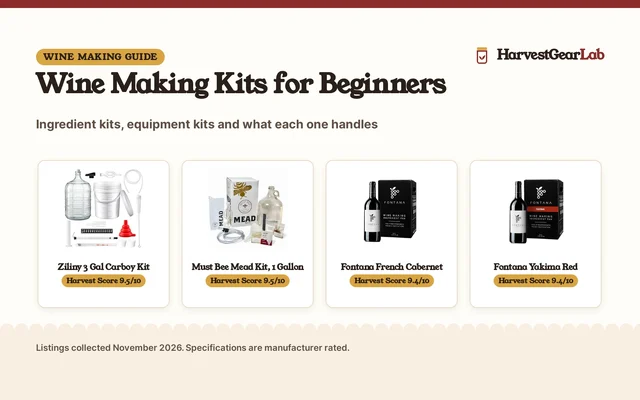
Beer kits dominate the beginner shelf, and the Northern Brewer sets pair the gear with a named recipe, Hank’s Hefeweizen or Block Party Amber. A cider kit starts from apple juice instead of grain, and the MUST BEE set includes the yeast, nutrient and spice for a 1 gallon batch. A root beer kit is a different drink entirely: the Craft A Brew set is non-alcoholic and carbonates with yeast in capped bottles. A whiskey barrel kit does not brew at all; the Man Can set ages and flavors spirits in a 1 liter oak barrel. Kombucha, mead, wine and kefir need their own cultures and vessels, and the iGulu machine lists all of them among the drinks it brews. Pick the drink before the kit, then check that the kit names it. The beer brewing kit vs wine making kit comparison and the cider kit vs wine making kit comparison lay out the split between the main kit types, and the wine making kits for beginners guide covers a first wine kit in the same style.
Pick a batch size
Batch size sets how much gear and space a first brew needs. A 1 gallon kit fits a countertop and a small shelf of bottles, and the Northern Brewer 1 gallon set asks for 12 bottles and a 2 gallon kettle on top of the box. A 5 gallon kit brews a larger batch: the Northern Brewer 5 gallon sets yield 5 gallons of finished beer, filling 50 12 ounce bottles, and the 6.5 gallon fermentor leaves headroom above the batch. The FOHERE electric system scales up again, with a 9.2 gallon vessel that produces 8-gallon batches. Match the batch to the shelf space and the number of bottles you are willing to clean and fill, and compare current beginner sets in the best beer brewing kit for beginners guide.
What comes in the box
A complete beginner beer kit should hold the fermentor, the kettle, a hydrometer, a capper with caps, tubing and a spoon, plus cleaner and sanitizer. The Northern Brewer 5 gallon set lists a 6.5 gallon fermentor with spigot, lid and airlock, a bottling bucket with spigot, a bottle filler, a 5 gallon stainless kettle, a 21 inch spoon, 5 ft of tubing, a hydrometer, a thermometer, a bottle brush and a capper with 60 caps. Check the box list before ordering, since a 1 gallon set may leave out the kettle and the bottles: the Northern Brewer 1 gallon set asks for a 2 gallon kettle and 12 bottles. The best hydrometer for home brewing and best airlock for home brewing guides compare those pieces, and the best home brewing bucket guide covers the fermentor and bottling bucket.
Manual kit or automated brewer
A manual kit gives you the vessels and the recipe and leaves each step to you, while an electric system and an automated brewer add controls. The FOHERE all-in-one system runs on power from 100 to 1,800W, holds temperature from 25 to 100°C, and runs a timer from 1 to 180 min, with 7-step mashing and memory for 10 recipes. The iGulu F1 manages temperature from 35 to 104°F and pressure from 0 to 24 PSI, and it keeps drinks fresh up to 30 days in a sealed chamber. A manual kit leaves each step to the brewer, while a machine follows the settings you enter. Compare machines in the best home brewing machine guide.
What to skip or double-check
- A whiskey barrel kit is not a beer kit: the Man Can set flavors and ages spirits in a 1 liter barrel, so it does not brew a batch of beer.
- A root beer kit is not beer: the Craft A Brew set is non-alcoholic, so it suits a family batch rather than a beer brew.
- Check what is not in the box: a 1 gallon beer set may need a 2 gallon kettle and 12 bottles, and a cider set needs 1 gallon of apple juice.
- Check the size against the space: the FOHERE system measures 18 inches in diameter, so it needs a clear stretch of counter.
- Check the recipe card: the iGulu brewer reads its own kit cards for one-touch brewing, so a custom recipe runs on manual settings.
What this guide does not cover
This is an equipment guide. It does not give recipes, fermentation schedules or carbonation steps. Take those from the instructions that come with the kit and from current home brewing guidance, and follow them exactly for each batch. Every home brewing guide on the site is collected in the home brewing section.
FAQ: preserving at home
What size home brewing kit should a beginner start with?
A 1 gallon kit suits a first batch on a countertop, while a 5 gallon kit suits a brewer who wants 50 12 ounce bottles from a batch. Start with the batch size that fits the space and the bottles you will fill.
What does a 5 gallon beer kit yield?
The Northern Brewer 5 gallon sets yield 5 gallons of finished beer, filling 50 12 ounce bottles, with a 6.5 gallon fermentor and a capper with 60 caps in the box.
Are bottles and a kettle needed with a 1 gallon kit?
Yes, for the Northern Brewer 1 gallon set: it asks for 12 pry off cap beer bottles and a 2 gallon kettle, since neither is in the box.
Can a machine brew more than beer?
Yes. The iGulu F1 lists beer, wine, cider, mead, kombucha, kefir, hard seltzer and cold brew among the drinks it brews from a countertop machine. A manual beer kit brews beer, so pick the machine when the drink list matters.
What is the difference between a manual kit and an electric system?
A manual kit holds the vessels and the recipe, while the FOHERE electric system adds power from 100 to 1,800W, temperature from 25 to 100°C and a timer from 1 to 180 min, with 7-step mashing and memory for 10 recipes.
More preserving guides
See every beer brewing guide and all home brewing guides.
More picks: beer brewing kits for beginners, home brewing kits for beer and wine, cider making kits and home brewing carboys.