
On this page
Top picks at a glance
As an Amazon Associate I earn from qualifying purchases.
- 1
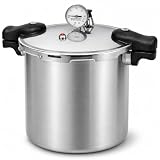 Siftary 24 Quart Pressure Canner for Induction and Gas9.7/10View on Amazon
- 2
 EWPJDK 56PCS Canning Lids with Rings9.6/10View on Amazon
- 3
 lenpestia Canning Lids with Rings9.6/10View on Amazon
How long does canning take? It depends on the food, the jar size and the method, and the time the recipe gives covers the whole job: prep, processing and cooling. A batch of jam moves faster than a batch of plain vegetables, and a water bath batch moves faster than a pressure batch, but the recipe is the only source for the processing time. This guide breaks the day into parts so you can see where the time goes.
HarvestGearLab earns a commission when you buy through links on this site, at no extra cost to you. As an Amazon Associate I earn from qualifying purchases.
How long does canning take: the short answer
There is no set time for canning. The recipe gives the processing time for the food, the jar size and the method, and that time is only the middle part of the day. Prep comes before it: washing, peeling, cutting and packing the jars. Cooling comes after it: the jars sit until they reach room temperature and the lids seal. Add prep and cooling to the processing time, and you have the length of a canning day.
The parts of a canning day
Prep is the work before the jars go in the pot: wash the produce, peel and cut it, pack the jars, add the liquid the recipe calls for and leave the headspace the recipe gives. Processing is the time the jars spend in boiling water or under pressure, and the clock for it starts when the water returns to a rolling boil or when the canner reaches the pressure the recipe gives. Cooling is the wait after the jars come out: the jars sit on towels until they reach room temperature, and the lids seal as they cool.
What changes the time
The food decides the method, and the method decides the shape of the day. High-acid foods such as jams, jellies, pickles and acidified tomatoes can in a boiling water bath. Low-acid foods such as plain vegetables, meat and stock need a pressure canner, and a pressure batch adds venting and cooling around the processing time. Jar size matters, too: the recipe gives a different time for each jar size, so check the size on the recipe against the jars on the counter. Altitude matters as well: the recipe accounts for it, so follow the recipe for your altitude.
Batch size matters as well. A pot that holds the jars for the batch you plan to fill in an afternoon saves another round. The HOMKULA pot holds 27.5 qt and holds 8 jars of 32 oz and 10 jars of 16 oz. The Supa Ant pot (on Amazon) holds 24 qt. The WantJoin electric canner (on Amazon) holds 33 qt, runs at 1800W and holds 11 quart jars. Pick the pot by the jars it holds, and compare the pots in the best water bath canner guide.
The clock starts when the water boils
For a water bath, the processing time starts when the water returns to a full rolling boil after the jars go in, not when the pot goes on the stove. If the boil drops when cold jars go in, wait for it to come back before the clock starts. For a pressure canner, the time starts when the canner reaches the pressure the recipe gives. Keep the heat steady so the water stays at a rolling boil or the pressure stays where the recipe puts it, and do not shorten the time: the recipe time is what makes the food safe to store.
Ways to keep the day short
- Prep before the pot goes on: wash, peel and cut the produce, and set out the jars, lids, bands and tools, so the jars go in as soon as the water boils.
- Match the pot to the batch: a pot that holds the jars for the batch saves another round in the pot.
- Keep the tools close: a jar lifter, funnel and bubble remover in reach means less time hunting for tools with hot jars on the counter.
- Use the drain valve: the WantJoin electric canner has a drain valve that empties the pot without heavy lifting, which speeds cleanup.
- Cool where the jars sit: set the jars on towels and leave them alone while they cool, instead of moving them around the kitchen.
FAQ: preserving at home
How long does water bath canning take?
It depends on the food and the jar size, and the recipe gives the time. The clock starts when the water returns to a rolling boil, and the jars still need time to cool after they come out.
Does pressure canning take longer than water bath canning?
It can. A pressure batch adds venting before the time starts and cooling before the jars come out, while a water bath batch only needs the water to return to a boil. The recipe gives the time for each method.
Do I count the time the water heats up?
No. The processing time starts when the water returns to a full rolling boil after the jars go in. The heat-up time is prep, not processing.
How long do jars need to cool?
Leave the jars on towels until they reach room temperature, and check the seals after they cool. A sealed lid stays down when pressed, and jars that did not seal go in the fridge.
Can I shorten the processing time?
No. The recipe time is set for the food, the jar size and the method, and shortening it risks food that is not safe to store. Follow a current USDA recipe exactly.
More preserving guides
See every canning tools guide and all canning guides.
More picks: water bath canners, pressure canners, water bath vs pressure canner and canning tool kits.