
On this page
Top picks at a glance
As an Amazon Associate I earn from qualifying purchases.
- 1
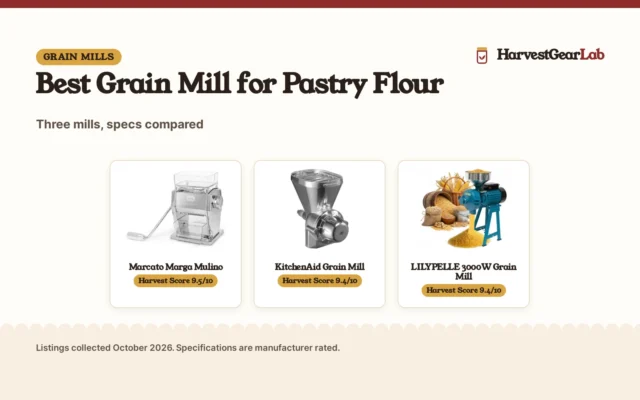
 Marcato Marga Mulino Grain Mill and Flaker9.5/10View on Amazon
- 2
 KitchenAid Grain Mill9.4/10View on Amazon
- 3
 LILYPELLE 3000W Electric Grain Mill Grinder9.4/10View on Amazon
How to mill flour is a short process: pour whole grain into a mill, grind it to the fineness the recipe needs, and sift out any coarse bits before baking. A hand mill grinds a small batch at a time, while a mill with a motor grinds faster for larger batches. This guide walks through the steps in order: picking the grain, setting the grind, milling, sifting and storing the flour.
HarvestGearLab earns a commission when you buy through links on this site, at no extra cost to you. As an Amazon Associate I earn from qualifying purchases. Affiliate disclosure.
How to mill flour: the short list
Most home milling needs dry whole grain, a mill that adjusts from coarse to fine, a sifter for the coarse bits, and a container for the flour. The table below lines up common grains with the use each one suits.
| Grain | Use |
|---|---|
| Wheat | Bread and baking |
| Rye | Dense loaves |
| Corn | Cornmeal |
| Rice | Rice flour |
Pick the grain
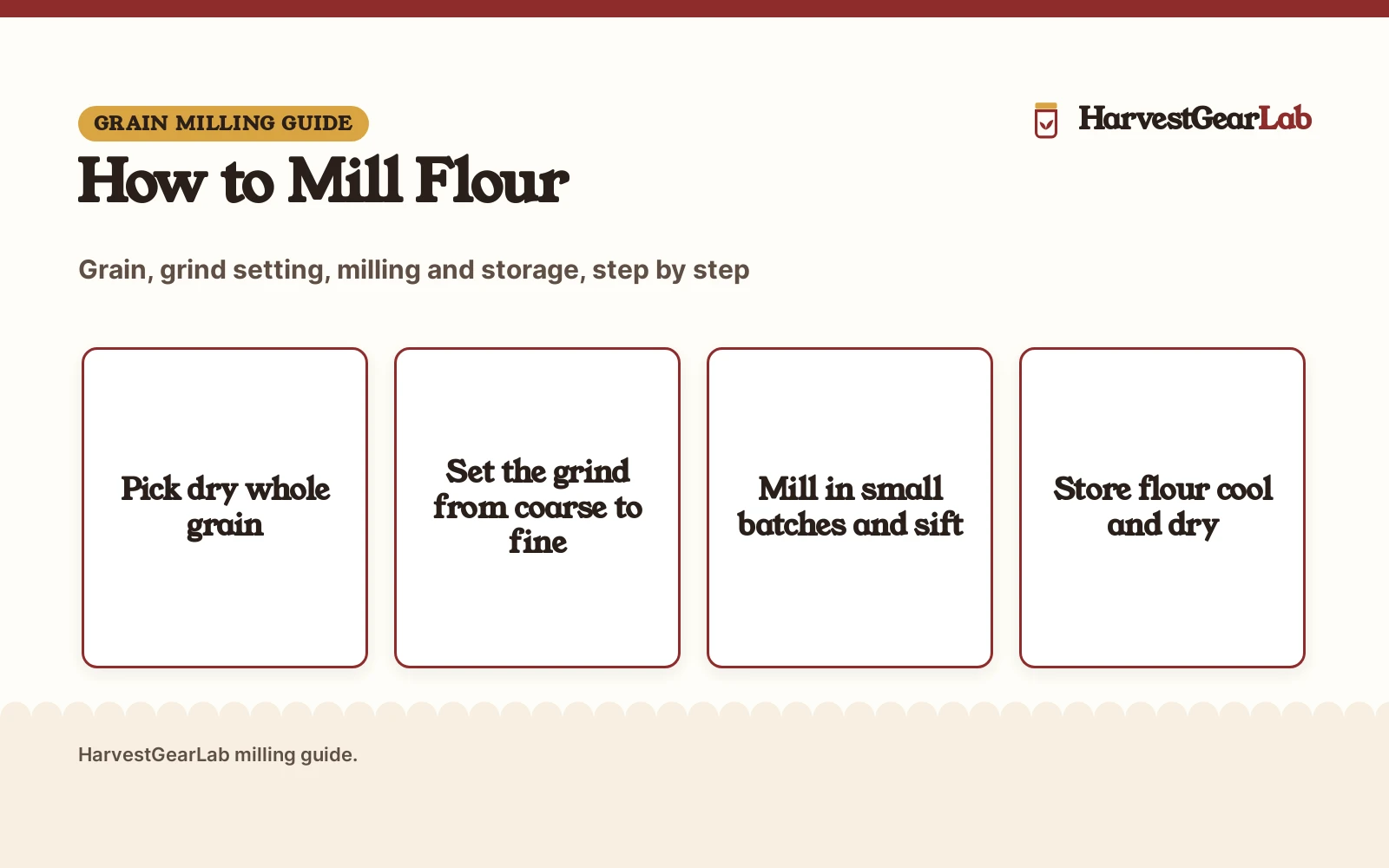
Start with whole grain that is clean and dry. Wheat suits bread and everyday baking, rye suits dense loaves, corn grinds into cornmeal, and rice grinds into rice flour. Buy grain sold for milling or for food use, and check it for stones or debris before it goes into the mill. Store the grain in a dry place in a closed container, and keep it away from damp.
Grain that is damp or dirty mills unevenly and can clog the mill, so pass on any grain that looks damp, smells musty or feels soft. Hard, dry kernels mill cleanly and give an even flour. If the grain comes from a farm store or a bulk bin, check the label for the grain name and the harvest lot, and ask the seller how the grain was stored.
Set the grind
Set the mill to the fineness the recipe needs before pouring in the grain. A coarse setting cracks the grain for cereal and coarse meals, a medium setting suits dense loaves, and a fine setting grinds flour for bread and baking. The Country Living Hand Grain Mill adjusts from cracked grain to cake flour, so one mill covers the full range from coarse to fine. Turn the adjustment a little at a time and grind a small handful to check the fineness before milling the full batch.
Grind a little finer than the recipe asks for when the flour will be sifted, since sifting takes out the coarse bits and leaves the fine flour behind. Grind coarser when the recipe wants texture, such as cornmeal or cracked grain for cereal. Write the setting down with the grain name, so the next batch starts from the same place.
Hand mill or electric mill
A hand mill suits a small batch and a quiet kitchen, and it needs no outlet; see our hand crank grain mill picks. The Country Living Hand Grain Mill is a hand mill with a lifetime warranty, and it weighs 16.0 pounds. An electric mill grinds faster for larger batches. Pick the mill that matches the amount of flour the household bakes with, and check the mill manual for the grains it accepts.
Mill in batches and sift
Pour a small amount of grain into the hopper and mill it through, then add more. Milling in small batches keeps the mill turning freely and the flour even. Sift the flour after milling and set aside any coarse bits, then run the coarse bits through the mill again on a finer setting. Keep milling and sifting until the flour feels even and no coarse bits remain.
Let the mill rest between batches when the flour feels warm, since grinding warms the flour and the mill. Brush out the hopper and the grinding plates after milling, and wipe the outside with a dry cloth. A clean mill starts the next batch without old flour mixing into the new grain.
Store the flour
Fresh flour loses flavor as it sits, so mill only what the next baking needs and use the flour soon. Store any flour that remains in a closed container in a cool, dry place, away from damp and strong smells; see our flour storage container picks. Label the container with the grain and the grind, so the next batch starts from the same setting.
What to skip or double-check
- Damp grain: skip it. Damp grain clogs the mill and mills unevenly, so dry the grain fully before milling.
- Non-grain items: do not mill anything the mill manual does not name as safe for the mill.
- Oily seeds and nuts: check the mill manual before milling them, since oil can clog the grinding plates.
- Running the mill empty: do not run the mill with no grain in it, since the plates can wear against each other.
- Skipping the sift: sift the flour, since coarse bits change how the dough handles.
What this guide does not cover
This guide covers milling flour at home. It does not give recipes, baking times or temperatures, or ratios for substituting fresh flour in a recipe. Take those from the recipe you follow, and follow it exactly for each bake. Every grain mill guide on the site is collected in our harvest and processing section.
FAQ: preserving at home
What grain makes the best flour for bread?
Wheat makes the standard flour for bread, ground fine for loaves and baking. Rye suits dense loaves, and corn grinds into cornmeal rather than bread flour.
Do I need to sift flour after milling?
Sifting catches coarse bits that the mill leaves behind, so sift the flour and run the coarse bits through the mill again. A fine grind needs less sifting than a coarse grind.
Can I mill flour with a hand mill?
Yes. A hand mill grinds a small batch at a time, and the Country Living Hand Grain Mill adjusts from cracked grain to cake flour with a lifetime warranty. The mill weighs 16.0 pounds.
How do I store fresh flour?
Mill only what the next baking needs and use the flour soon. Store any flour that remains in a closed container in a cool, dry place, away from damp and strong smells.
Can I mill rice into flour?
Yes. Rice grinds into rice flour on a fine setting, and the flour suits baking that calls for rice flour. Sift after milling and run any coarse bits through again.
More preserving guides
See every grain mills guide and all harvest and processing guides.
More picks: small grain mills, grain mill vs food processor for flour, grain mills for bread and food mills.