
On this page
Top picks at a glance
As an Amazon Associate I earn from qualifying purchases.
- 1
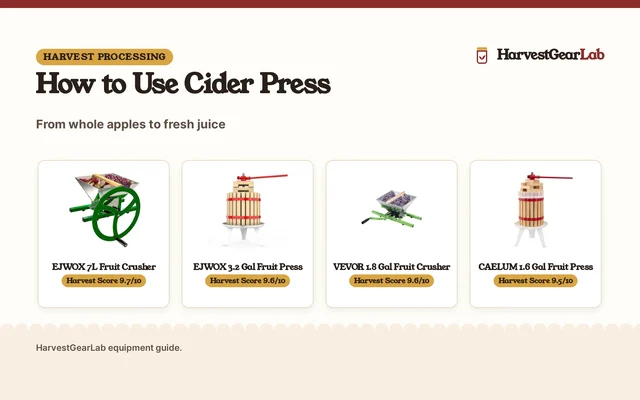
 EJWOX 3.2 Gallon Fruit and Wine Press9.6/10View on Amazon
- 2
 EJWOX 7L Stainless Steel Manual Fruit and Apple Crusher with9.7/10View on Amazon
- 3
 VEVOR 1.8 Gal Stainless Steel Manual Fruit and Apple Crusher9.6/10View on Amazon
- 4
 3.2 Gallon Fruit and Wine PressView on Amazon
- 5
 VEVOR Fruit Wine PressView on Amazon
- 6
 Fruit Wine Press and CrusherView on Amazon
A pile of apples from the fall harvest waits on the porch, ready for the press. A manual apple cider press turns that fruit into fresh cider with no motor and no cord, and the press you pick depends on how much fruit you press, how much help you want from a jack, and whether you crush the fruit first. Screw presses, hydraulic presses and crushers each handle one part of the job, and this guide walks through each one so you can match the press to the harvest.
Runners-up to consider
 3.2 Gallon Fruit and Wine PressCheck price on Amazon
 VEVOR Fruit Wine PressCheck price on Amazon
 Fruit Wine Press and CrusherCheck price on Amazon
HarvestGearLab earns a commission when you buy through links on this site, at no extra cost to you. As an Amazon Associate I earn from qualifying purchases. Affiliate disclosure.
Manual apple cider press: the short list
Every press in this guide fits one of the types in the table. Read the row that matches the harvest you press, then read its section below.
| Press type | How it works | Basket size | Power |
|---|---|---|---|
| Screw press | A screw drives a plate down on crushed fruit | 1.6 gallon to 4.75 gallon | Hand power |
| Hydraulic press | A jack drives the plate with far less effort | 2.6 gallon to 10.6 gallon | Hand pumped jack |
| Crusher | A crank feeds fruit past teeth that pulp it | 1.8 gallon | Hand crank |
Screw presses
A screw press is the classic cider press: a basket, a screw shaft and a plate, with a handle you turn by hand. You load crushed fruit into the basket, turn the T-handle, and the plate presses the juice out through the slats while the pulp stays behind. The EJWOX screw press the site lists holds 1.6 gallons, with a solid beech wood basket, a heavy-duty stand and a built-in pour spout for easy juice collection, and each foot has a screw hole for mounting the stand. The larger EJWOX screw press holds 4.75 gallons for bigger batches. The CAELUM press (on Amazon) the site lists also holds 1.6 gallons, with 6 pressing blocks that adjust to different fill levels and a filter bag that holds the pulp and makes cleanup quick. Screw presses suit small batches and kitchens where the harvest comes in by the basket rather than by the truckload, and they ask for arm work in exchange for a quiet press with no cord. See the best cider press for home comparison for current listings, and the how to use cider press guide for the pressing steps.
Hydraulic presses
A hydraulic press swaps the screw for a jack, and the jack does the hard pushing while you work the handle. The Mosakar hydraulic press (on Amazon) the site lists holds 10.6 gallons, with a jack that gives 5 tons of pressure and juice contact parts in AISI 304 stainless steel, and the beam turns 90 degrees so the basket stands bare for loading. The NKLOKSD press (on Amazon) the site lists holds 2.6 gallons, with a jack that gives 3 tons of pressure, a 12L outer bucket and a 6L perforated inner bucket that keeps juice and pomace apart. The Fobuaggc press (on Amazon) the site lists holds 5.8 gallons, with a jack rated at 6614 LBS of max pressure and a frame built for loads up to 330.69 lbs. Hydraulic presses suit larger harvests and anyone who wants the jack to carry the effort, and they still need no power connection. See the hydraulic vs screw cider press comparison for the trade-offs, and the best cider press stainless steel guide for steel options.
Crushers and scratters
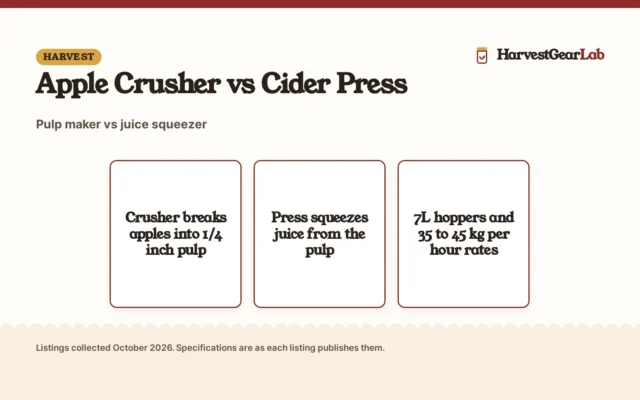
A press squeezes juice from crushed fruit, and a crusher makes the crushed fruit. The EJWOX crusher the site lists holds 1.8 gallons, with a food-grade nylon hopper and teeth and a crank handle that pulps apples, grapes and other fruit for the press. Crushing first matters because whole fruit presses poorly: the juice stays locked in unbroken flesh, while pulp gives up its juice under the plate. Hard fruit needs chopping before it goes in the crusher, as the CAELUM listing notes for apple and pear, so chop hard fruit and feed it through in small loads. A crusher suits any press owner who presses more than a basket at a time, and it rinses clean with a hose after use. See the apple crusher vs cider press comparison if you are weighing a crusher against a press alone.
How to choose the right press for your harvest
Start with the harvest: a 1.6 gallon basket suits a small batch from a backyard tree, a 4.75 gallon or 5.8 gallon basket suits a season of weekend pressing, and a 10.6 gallon basket suits an orchard harvest. Then weigh the drive: a screw press asks for arm work, a hydraulic press asks for pumping, and each asks for a crusher if the fruit goes in whole. Check the basket material in the listing, since beech wood suits a classic press and stainless steel suits a press that rinses clean after each use, and check the weight and size before you buy, so the press fits the spot where it will live. The Mosakar hydraulic press the site lists weighs 85.0 pounds, which shows why a fixed spot matters for a large press.
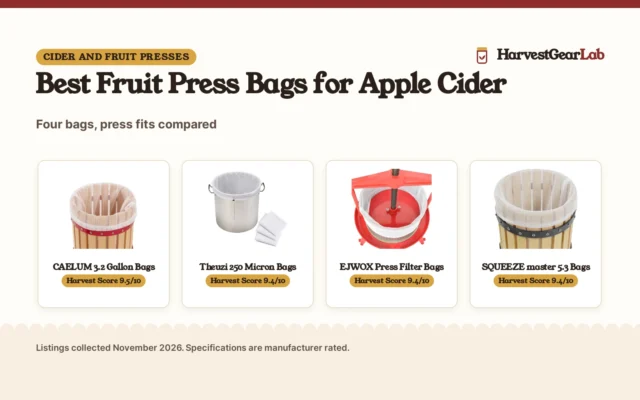
Cleaning and storage matter as much as the press. Rinse the basket, plate and spout with water after pressing, dry each part, and store the press where air moves around the wood and steel. Keep the filter bag and pressing blocks with the press, so the next batch starts without a hunt for parts. See the small vs large cider press guide for sizing help, and the best fruit press bags for apple cider guide for spare bags.
What this guide does not cover
This guide compares press types and how to choose one. It does not give recipes, pressing times or storage times, and it does not cover commercial presses for an orchard business or a juice stand. For recipes and handling guidance, use a current edition of a trusted cider guide and follow current USDA guidance for juice.
FAQ: preserving at home
Do I need a crusher before a cider press?
Yes. A press squeezes juice from crushed fruit, and whole fruit gives up little juice under the plate. A crusher pulps the fruit first, and hard fruit such as apple and pear needs chopping before it goes in the crusher.
What size cider press do I need?
Match the basket to the harvest. A 1.6 gallon basket suits a small batch from a backyard tree, a 4.75 gallon or 5.8 gallon basket suits a season of weekend pressing, and a 10.6 gallon basket suits an orchard harvest. A crusher and a filter bag help at any size.
Is a hydraulic press better than a screw press?
It depends on the harvest and the effort you want to give. A hydraulic jack gives more pressure with less pumping effort, with the Mosakar jack rated at 5 tons and the NKLOKSD jack at 3 tons, while a screw press has fewer parts to care for. Pick the jack for a large harvest and the screw for a small one.
Can a cider press handle grapes and berries?
Yes. The EJWOX and CAELUM presses the site lists handle apples, grapes and berries, and the same presses suit homemade wine as well as cider. Check the listing for the fruit you plan to press, since some presses suit soft fruit only.
How do I clean a cider press after pressing?
Rinse the basket, plate and spout with water, dry each part, and store the press where air moves around the wood and steel. Removable parts rinse clean on their own, and the filter bag washes out and dries before the next batch.
More preserving guides
See every cider presses guide and all harvest and processing guides.
More picks: cider presses, cider presses for small orchards, cider press vs wine press and cider making kits.