
On this page
Top picks at a glance
As an Amazon Associate I earn from qualifying purchases.
- 1
 Wisesorb 1/2 Pint 30 Packs Mylar Bags For Food Storage9.8/10View on Amazon
- 2
 Wevac Vacuum Sealer Bags for Food 8x50 2 RollsView on Amazon
- 3
 Wevac Vacuum Sealer Bags for Food 11x50 2 RollsView on Amazon
- 4
 Vacuum Sealer Bags For Food 6 PackView on Amazon
- 5
 Mylar Bags with Zipper Seal 4" x 6"View on Amazon
- 6
 Mylar Bags with Zipper SealView on Amazon
- 7
 Wevac Vacuum Sealer Bags for FoodView on Amazon
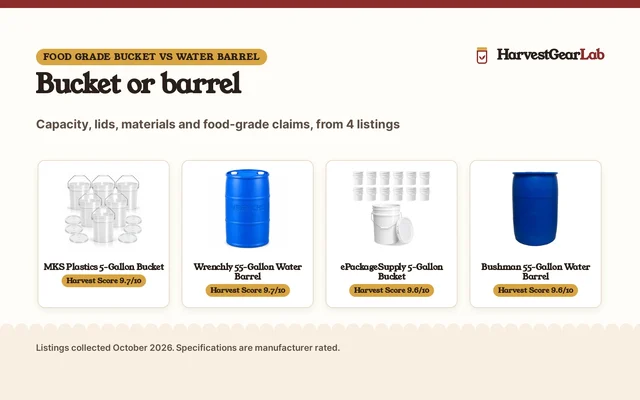
In the mylar bags vs food grade buckets debate, use both: mylar bags with oxygen absorbers for the airtight seal, and food grade buckets as the hard outer shell. A 5-gallon mylar bag at 20 by 30 inches with a 2000cc absorber, heat sealed and dropped inside a 5-gallon bucket, is the standard long-term setup the listings describe. Buckets alone do not block oxygen; bags alone puncture. This guide walks through the choice step by step.
Runners-up to consider
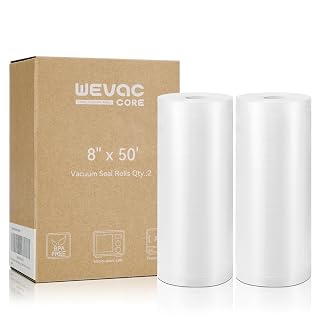 Wevac Vacuum Sealer Bags for Food 8x50 2 RollsCheck price on Amazon
 Wevac Vacuum Sealer Bags for Food 11x50 2 RollsCheck price on Amazon
 Vacuum Sealer Bags For Food 6 PackCheck price on Amazon
 Mylar Bags with Zipper Seal 4" x 6"Check price on Amazon
 Mylar Bags with Zipper SealCheck price on Amazon
 Wevac Vacuum Sealer Bags for FoodCheck price on Amazon
HarvestGearLab earns a commission when you buy through links on this page, at no extra cost to you. As an Amazon Associate I earn from qualifying purchases. Affiliate disclosure.
Mylar bags vs food grade buckets: the short answer
Mylar bags block oxygen, light and moisture; buckets block teeth, claws and stacks. For grains, beans, rice and flour stored for years, pair them: a heat-sealed mylar bag with the right absorber inside a food grade bucket with a lid. For pantry staples you open weekly, a bucket alone or a resealable mylar bag is enough. The rest of this guide covers sizes, absorbers, thickness and what to check on the listing.
If you are choosing between sealing methods, read our vacuum sealing vs mylar bags comparison as well.
Mylar bags and buckets compared
| Container | Example listing | Stated size | Oxygen barrier |
|---|---|---|---|
| Mylar bag, 5-gallon | PackFreshUSA 5-gallon mylar bags | 20 x 30 in, 5.5 mil per side | Yes, with heat seal and absorber |
| Mylar bag, 1-gallon | BELLE KR 1-gallon mylar bags | 10 x 14 in, 9.5 mil total | Yes, with heat seal and absorber |
| Bucket liner, 5-gallon | Xsourcer 5-gallon bucket liners | 30 x 21 in, 4 mil | No, liner only |
| Food grade bucket | Referenced as 5-gallon buckets in liner listings | 5 gallons | No, needs a mylar bag inside |
What mylar bags do best
Mylar is a laminate, usually PET, aluminum foil and PE, that blocks oxygen, light and moisture when heat sealed. The listings range from 5-gallon bags at 20 by 30 inches down to 1-quart bags at 7 by 10 inches, so you can seal a year’s rice or a week’s coffee. Thickness runs from 5.5 mil per side to 16 mil total (8 mil per side) on the thickest 1-gallon bags.
The seal is the weak point: a zipper alone is for pantry use, while long-term storage needs a heat seal above the zipper. The FoodVault listing pairs an absorber plus heat seal with 25 to 30 years of storage for dehydrated or freeze-dried food. Rounded corners, as on the PackFreshUSA bags, reduce puncture risk at the folds.
What buckets do best
Buckets provide the armor. A 5-gallon food grade bucket stacks, resists rodents and keeps a sealed mylar bag from being crushed or chewed. The liner listings reference 5-gallon buckets and 5 to 7 gallon buckets, plus 22-quart food storage containers, which tells you the standard sizes to shop for.
Bucket liners are a separate product: the Xsourcer 12-pack liners at 30 by 21 inches and 4 mil hold 50 lbs wet or 75 lbs dry, and the 30-pack at 1.6 mil holds 25 lbs wet or 50 lbs dry. Liners keep the bucket clean for brining and marinating, but they are not an oxygen barrier, so they do not replace mylar for long-term dry storage.
Oxygen absorbers: the 500cc and 2000cc figures
Absorbers eat the oxygen left in the bag after sealing. The Wallaby listing sizes 500cc absorbers for 1-gallon mylar bags, and the 5-gallon kits include 2000cc absorbers, with one listing also offering 2500cc and 400cc sizes. Match the absorber to the bag volume; too small leaves oxygen behind.
One useful figure from the Wallaby listing: absorbers remove oxygen, which is only 21 percent of air, so the bag will not shrink like a vacuum bag. About one fifth of the air volume leaves and four fifths remains no matter how many absorbers you add. Do not judge the seal by how tight the bag looks.
Using them together
The standard method the listings describe: fill a mylar bag, add the right absorber, heat seal it, then place the sealed bag inside a food grade bucket with a lid. The Three Way Cut listing states its 5-gallon bags can be placed inside food storage buckets of the same capacity for doubled protection. The bucket guards against punctures and pests; the bag guards against oxygen and moisture.
For food you open often, skip the heat seal and use the resealable zipper, or store in the bucket alone with a liner. Reserve the full bag-plus-absorber-plus-bucket routine for the deep pantry: grains, beans, flour, sugar and dried goods you will not touch for a year or more.
What to check on the listing
Check thickness in mils and whether it is per side or total; the listings state both conventions. Check that absorbers are included and sized to the bag, 500cc for 1-gallon and 2000cc for 5-gallon in these listings. Check the bag dimensions against your bucket: a 20 by 30 inch bag fits a 5-gallon bucket, while a 10 by 14 inch bag suits smaller containers. And confirm food-grade material claims rather than assuming them.
What this guide does not cover
This is a container guide. It does not give storage times for specific foods, moisture content targets or any food-safety advice. Take those from current USDA and National Center for Home Food Preservation guidance, and follow them exactly for each food.
FAQ: preserving at home
Do I need both mylar bags and buckets?
For long-term storage, yes. The bag blocks oxygen and moisture; the bucket blocks pests and crushing. For weekly pantry use, either alone works.
What size oxygen absorber do I need?
The listings size 500cc absorbers for 1-gallon bags and 2000cc absorbers for 5-gallon bags. Match the absorber to the bag volume.
How thick should mylar bags be?
The listings range from 5.5 mil per side to 16 mil total. Thicker bags resist punctures better; 5.5 mil per side is the common 5-gallon standard here.
Can I use bucket liners instead of mylar?
Not for oxygen-sensitive storage. Liners at 4 mil or 1.6 mil keep buckets clean for brining, but they are not an oxygen barrier like heat-sealed mylar.
More preserving guides
See every food storage guide and all food drying guides.
More picks: mylar bags for coffee, mylar bags for food and food grade buckets.