
On this page
Top picks at a glance
As an Amazon Associate I earn from qualifying purchases.
- 1
 Zeefpod 500cc Oxygen Absorbers9.7/10View on Amazon
- 2
 Midukit 500cc Oxygen Absorbers9.7/10View on Amazon
- 3
 NKLEI 500cc Oxygen Absorbers9.7/10View on Amazon
When the dehydrator trays are finally empty and the pantry shelves are lined with labeled jars, oxygen absorbers vs desiccant packets is the question that decides how those dry goods hold up. The short answer: oxygen absorbers remove oxygen to slow oxidation during long-term dry storage, while desiccant packets remove moisture to keep foods crisp. They do different jobs, so the right choice depends on whether air or dampness threatens what you packed.
HarvestGearLab earns a commission when you buy through links on this page, at no extra cost to you. As an Amazon Associate I earn from qualifying purchases. Affiliate disclosure.
Oxygen absorbers vs desiccant packets: the short answer
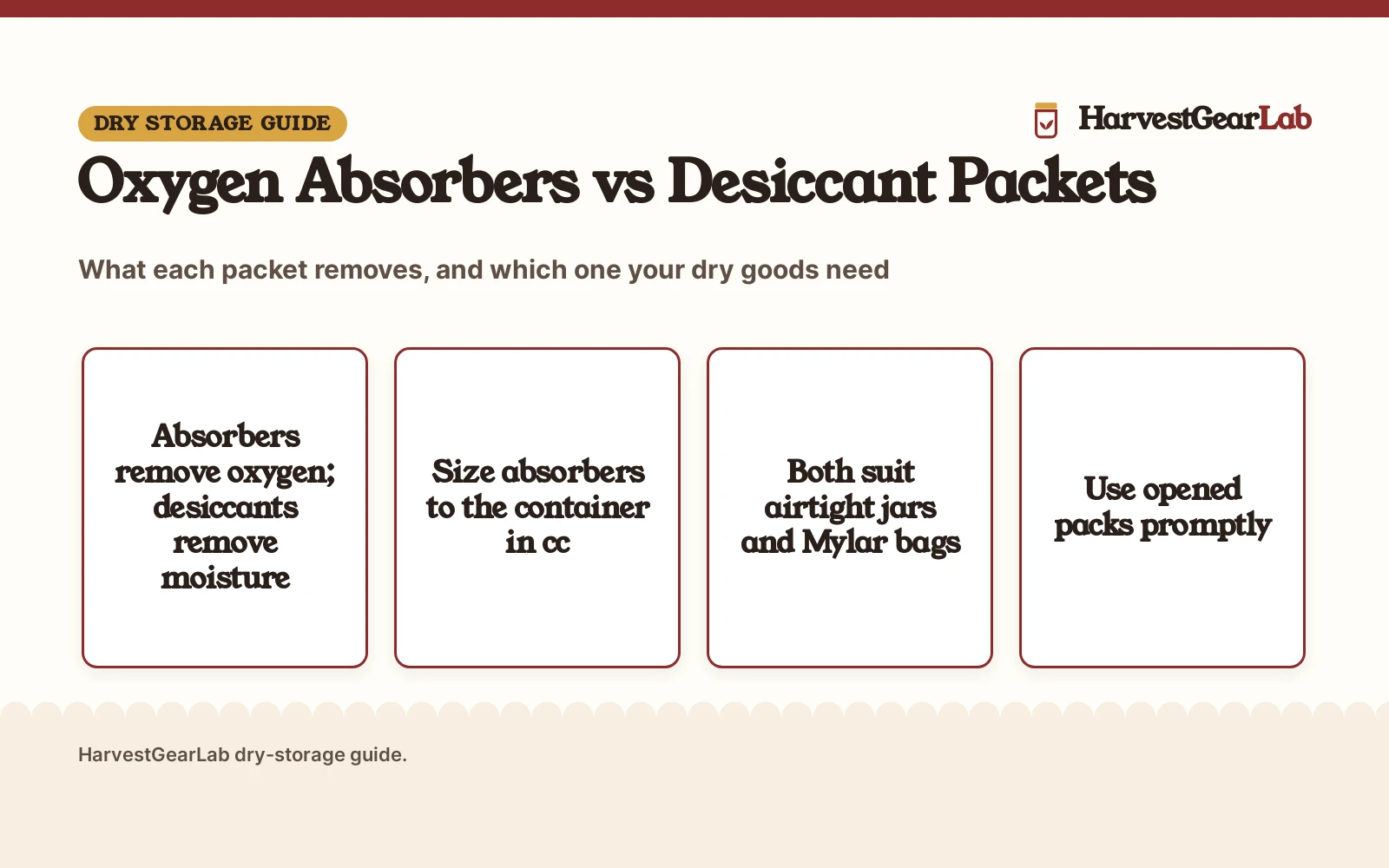
An oxygen absorber is a small packet that pulls oxygen out of a sealed container. Listings describe them for long-term storage of dry goods such as grains, beans, pasta, cereal, and dehydrated or freeze-dried foods, in Mylar bags, mason jars and other airtight containers. A desiccant packet instead pulls moisture out of the air inside the container, which keeps dried foods crisp and helps powders resist clumping. Neither one replaces the other: absorbers target oxygen, desiccants target moisture. One Hombao listing notes its absorber packets also reach up to 30% moisture absorption, but oxygen removal is their stated job.
Expectations matter too. Several listings note that bags may not shrink like a vacuum bag, because absorbers remove oxygen, not air: oxygen is about 20% of air (one listing says 21%), so about 1/5 of the air volume leaves and 4/5 remains no matter how many absorbers are used.
| Packet | Removes | Use it for | Listed sizing |
|---|---|---|---|
| Oxygen absorber | Oxygen | Long-term dry storage: grains, beans, pasta, dehydrated foods | 100cc to 1000cc; 400cc or 500cc listed for 1-gallon Mylar bags |
| Desiccant packet | Moisture | Keeping dried foods crisp and powders free-flowing | Follow the packet maker’s guidance for the container |
Sizing oxygen absorbers from the listings
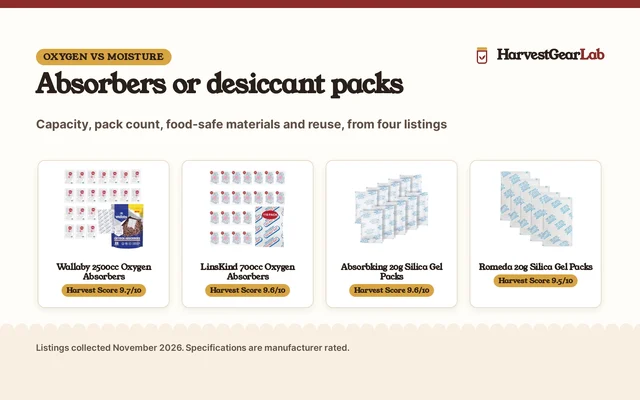
Oxygen absorbers are sized in cc, the volume of oxygen one packet absorbs. Reference listings range from 100cc (LinsKind) up to 1000cc on one maker’s size chart. Hombao’s chart pairs sizes to containers: 0.25 gallon with 100cc, 0.5 gallon with 200cc, 0.75 gallon with 300cc, 1 gallon with 400cc, 1.5 gallon with 500cc, 2 gallon with 700cc, and 3 gallon with 1000cc. For the common 1-gallon Mylar bag, listings variously recommend 400cc (ZRLEI) or 500cc (Wallaby, NIKUY).
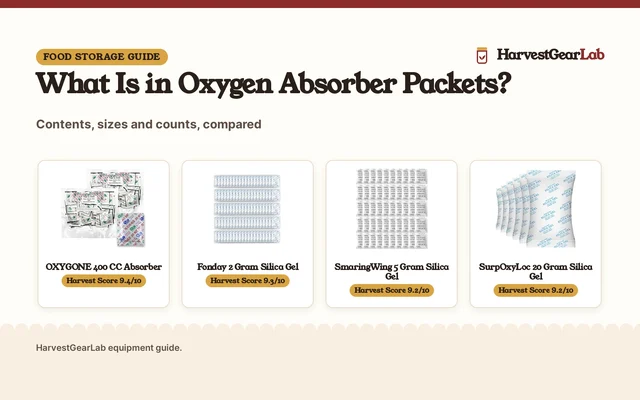
Packaging varies. O2frepak sells 200cc packets in a 100-count bag with an oxygen indicator; LIFJOY packs 500cc absorbers ten to a vacuum bag with an indicator that reads pink when the packet is good; LinsKind sells 100cc absorbers in eleven packs of ten; Midukit sells fifty individually sealed 500cc packs, 25,000 cc in total. Makers stress using packs promptly: ZRLEI and Wallaby heat-seal sets of five or ten right after production and warn against repackaging, since exposure starts the absorption.
What desiccant packets do
Desiccants, usually silica gel, pull water vapor out of the air inside a sealed container. That keeps crackers crisp, spices and powders from clumping, and dried fruit from turning sticky. Unlike oxygen absorbers, they do nothing about oxygen, so they will not slow oxidation or keep fats from going rancid. Use them where dampness is the enemy: a jar of dried herbs in a humid kitchen, or home-dried fruit that keeps softening between openings.
Can you use both together?
Yes, when a food faces both threats. A jar of home-dried vegetables in a damp climate benefits from an absorber handling the oxygen and a desiccant handling the moisture. The reference listings describe absorbers for airtight containers such as Mylar bags and mason jars, which suit desiccants too. Do not expect either packet to rescue food that was packed damp or a container that leaks; the listings assume airtight containers.
Handling and storage of the packets
Absorbers start working the moment air reaches them, so makers package them to limit exposure: heat-sealed sets of five or ten, ten to a vacuum bag, or individually sealed packs. Once you open a pack, use the absorbers promptly and reseal the rest; Wallaby’s outer bag uses a zipper seal for the vacuum-sealed absorbers inside. An oxygen indicator helps: LIFJOY’s reads pink when the packet is good to use. Keep unopened packs sealed until the jars are filled and ready to close. Compare bag options in our best Mylar bags for dehydrated vegetables and best mason jars for dehydrated food guides.
FAQ: preserving at home
Do oxygen absorbers vacuum-seal the bag?
No. They remove oxygen only, about 20% of air, so about 1/5 of the air volume leaves and 4/5 remains; several listings say bags may not shrink like a vacuum bag.
What size absorber fits a 1-gallon Mylar bag?
Listings recommend 400cc (ZRLEI) or 500cc (Wallaby, NIKUY) for 1-gallon Mylar bags.
Can a desiccant packet replace an oxygen absorber?
No. Desiccants remove moisture and absorbers remove oxygen; they solve different problems and are sometimes used together.
More preserving guides
See every produce storage guide and all food storage guides.
More picks: Mylar bags vs vacuum sealer bags, small vs large food dehydrator, Mylar bags for dried fruit.