
On this page
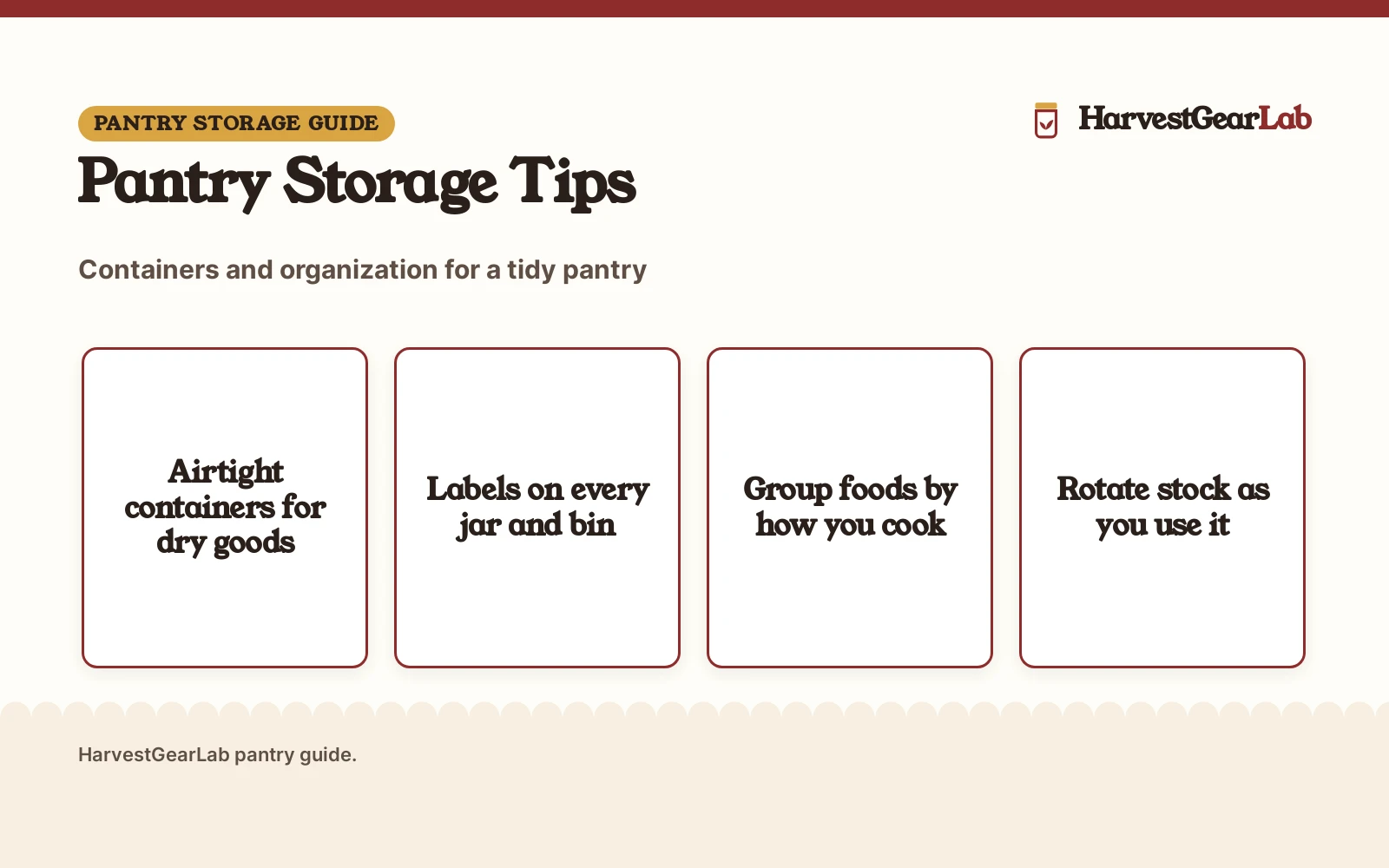
A pantry after a big harvest weekend tells the story at a glance: jars of tomatoes line the counter, bags of dried beans wait for a home, and the shelves already look full before the season is done. Pantry storage tips start with that moment, and the short answer is simple: give every food a sealed container, a clear label, and a set spot on the shelf, then keep the layout steady so cooking stays easy all year. This guide walks through each step, from containers and labels to shelf layout and stock rotation.
HarvestGearLab earns a commission when you buy through links on this site, at no extra cost to you. As an Amazon Associate I earn from qualifying purchases. Affiliate disclosure.
Pantry storage tips: the short list
Most home pantries fall into the same handful of zones. The table shows what belongs in each zone and the kind of container that suits it.
| Pantry zone | What goes there | Container that suits it |
|---|---|---|
| Everyday cooking staples | Flour, sugar, salt, rice, pasta, cooking oil | Airtight canister with a wide mouth |
| Baking supplies | Baking powder, baking soda, cocoa, yeast, chocolate chips | Small sealed jar or canister |
| Canned and jarred goods | Home canned jars, canned beans, sauces, pickles | The jar itself, kept upright |
| Bulk grains and dry goods | Dried beans, lentils, oats, bulk rice, bulk flour | Large airtight bin with a scoop |
Start with airtight containers
An airtight seal is the heart of pantry storage. Dry goods kept in open bags pick up moisture and pantry pests, and they spill at the worst moment. A container with a lid that seals firmly keeps flour, rice, beans, pasta and sugar dry, and it keeps the smell of strong foods, such as coffee and spices, from drifting into everything else on the shelf.
Match the container to the food and to how often you reach for it. Wide-mouth canisters suit flour and sugar, since a scoop or measuring cup fits inside, while tall, slim canisters suit pasta and cereal, since they use shelf height instead of shelf depth. Our best pop top pantry storage containers comparison lines up sets by lid style and shape, and the best clear plastic pantry storage bins guide covers bins for larger groups of food.
Label everything you store
A label turns a row of look-alike jars into a pantry you can actually cook from. Write the contents in plain words, and add the date the container was filled or opened, so you always know which jar to open next. Labels matter most for foods that look alike after they leave the packet: flour and powdered sugar, salt and sugar, white rice and barley
Keep labels simple and in the same place on every container, so your eye finds them without hunting. A label on the front of the jar beats a label on the lid, since lids move between jars and get swapped by mistake. Label the shelf, too, when a zone holds food for someone else in the house: a small tag that says baking, breakfast, or lunch supplies tells the rest of the family where things live. Our best pantry organization labels comparison lines up label styles by material and how they hold up on glass and plastic.
Group foods by use, not by shape
The easiest pantries are grouped by the meal or the job, not by the shape of the packet. Keep everything for breakfast together: oats, cereal, honey, peanut butter and dried fruit in the same stretch of shelf. Keep baking supplies together: flour, sugar, baking powder, cocoa and chocolate chips in the same zone, so a baking afternoon needs no hunting.
Grouping by use also shows you what is missing before you shop. Put the foods you use every day at eye level and within easy reach, and reserve the top shelf for light, bulky items you reach for rarely. A lazy susan or a small turntable helps in a deep corner, where jars tend to hide behind each other.
Use the whole shelf, top to bottom
Shelves waste space when tall jars stand next to short ones with a gap above them. A shelf riser or a small stackable shelf turns that dead air into an extra row for short jars and cans, while a set of stackable bins turns a deep shelf into tidy layers. Baskets help, too: a basket holds a group of small packets together, so you can lift the whole group out, take what you need, and slide it back in place.
Leave a little breathing room on every shelf. A shelf packed edge to edge looks full but cooks badly, since you cannot see what sits behind the front row. Our best stackable pantry storage guide compares bins and shelves by shape and stacking, and the pantry organization guides collect more layout ideas for small and crowded pantries.
Keep the pantry dry and steady
Dry goods keep best in a pantry that stays dry, dark and steady, away from the heat of the stove and the steam of the dishwasher. Heat and damp shorten the life of flour, spices and dried goods, and light fades the color and flavor of foods stored in clear jars. A pantry near the kitchen is handy, but the shelf above the stove or beside the dishwasher is the worst spot in the room, since it swings between warm and damp through the day.
Check the pantry now and then for damp or spills, and wipe a shelf clean before it becomes a sticky mess. Keep strong smells apart from gentle ones: coffee, spices, onions and garlic can lend their smell to flour and sugar when they share a sealed shelf, so give them their own corner and keep spice jars sealed tightly.
Rotate stock as you cook
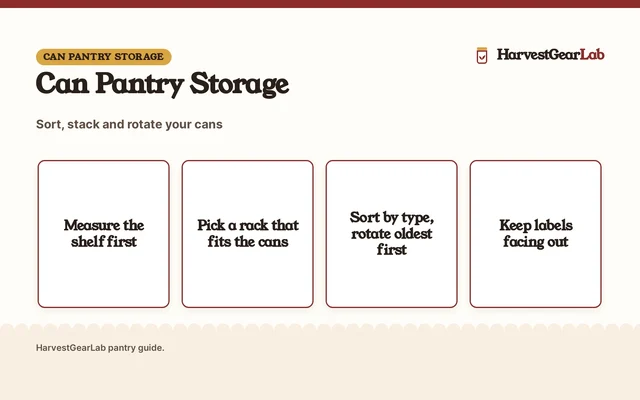
Rotation is the quiet habit that keeps a pantry working. When a new bag of rice or a new jar of sauce comes home, put it behind the jar already on the shelf, and cook from the front. The label date tells you which container to open next, and the front row stays fresh because nothing sits there forgotten while a newer jar gets used instead.
When you find a jar or a bag you cannot name, or a container with no date, treat it with care: if you cannot tell what it is or when it went in, it is not worth the risk of cooking with it, so compost it or throw it away and label the next batch properly.
What this guide does not cover
This is a storage and organization guide. It does not give recipes, processing times, pressures, headspace figures or altitude changes. Take those from current USDA and National Center for Home Food Preservation guidance and follow them exactly for each food. Every pantry and cold storage guide on the site is collected in the pantry and cold storage section.
FAQ: preserving at home
What is the best way to organize a pantry?
Group foods by how you use them, keep everyday staples at eye level, and give every food a sealed container with a clear label.
Should pantry food be stored in airtight containers?
Yes, for dry goods such as flour, rice, beans, pasta and sugar. An airtight lid keeps out moisture and pests and keeps strong smells from drifting.
How should I label pantry containers?
Write the contents in plain words on the front of the container, and add the date it was filled or opened. The date tells you which container to use next.
Where should canned and jarred goods go in the pantry?
Keep jars upright on a cool, dry shelf away from the stove and dishwasher, with the label facing out. Keep home canned jars where every label shows.
How do I keep a small pantry organized?
Use the whole shelf with risers and stackable bins, group small packets into baskets that lift out as a group, and keep only the foods you cook with regularly.
More preserving guides
See every pantry organization guide and all pantry and cold storage guides.
More picks: clear pantry storage bins, pop top pantry containers, where to buy food storage containers and bread boxes.