
On this page
Top picks at a glance
As an Amazon Associate I earn from qualifying purchases.
- 1
 Cuisipro Deluxe Stainless Steel Food Mill9.7/10View on Amazon
- 2
 OXO Good Grips Potato Ricer Soft Handles Absorb PressureView on Amazon
- 3
 Joseph Joseph Helix Ergonomic Twist-Action Potato Ricer &View on Amazon
- 4
 RSVP InternationalView on Amazon
- 5
 SPEENSUN Heavy Duty Potato RicerView on Amazon
- 6
 LHS Stainless Steel Potato Ricer and MasherView on Amazon
- 7
 Zulay Kitchen Large 15oz Potato RicerView on Amazon
Potato ricer vs food mill: a potato ricer presses cooked potatoes through small holes to make fluffy mash, while a food mill grinds food through a perforated plate and strains out skins and seeds. Choose a potato ricer for smooth mashed potatoes. Choose a food mill for purees, sauces and baby food where straining matters. The PriorityChef ricer holds 15oz with 3mm holes. The Zulay ricer holds 15oz with 3mm holes and states a lifetime warranty.
Runners-up to consider
 OXO Good Grips Potato Ricer Soft Handles Absorb PressureCheck price on Amazon
 Joseph Joseph Helix Ergonomic Twist-Action Potato Ricer &Check price on Amazon
 RSVP InternationalCheck price on Amazon
 SPEENSUN Heavy Duty Potato RicerCheck price on Amazon
 LHS Stainless Steel Potato Ricer and MasherCheck price on Amazon
 Zulay Kitchen Large 15oz Potato RicerCheck price on Amazon
HarvestGearLab earns a commission when you buy through links on this page, at no extra cost to you. As an Amazon Associate we earn from qualifying purchases. Affiliate disclosure.
How a potato ricer works
A potato ricer is a hand press with a basket and a perforated plate. You load cooked potato chunks into the basket and squeeze the handles. The potato extrudes through the holes as fine strands, which break apart into fluffy mash. Because the potato is pressed rather than beaten, the starch granules stay intact, and the result is light rather than gummy.
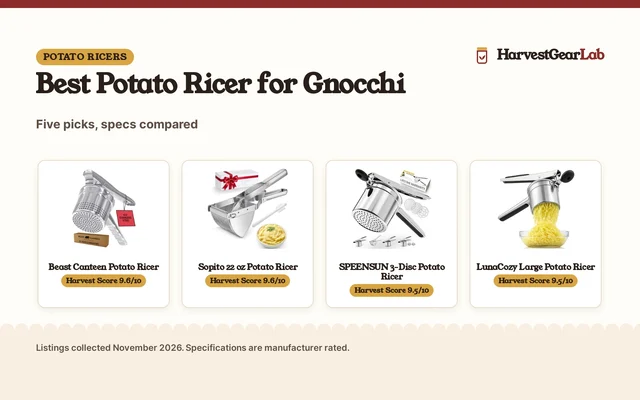
Ricers come with different hole sizes. The PriorityChef lists 3mm ricer holes and a 15oz basket. The Zulay lists 3mm holes and a 15oz basket. The SPEENSUN includes 3 interchangeable discs for thin, medium and thick output. The OXO 3-in-1 includes fine, medium and coarse disks that rotate to change consistency. The RSVP includes medium and coarse plates.
Size and weight vary. The OXO measures 11.5 inches by 4.5 inches and weighs 0.55 kg. The Joseph Joseph measures 10.43 inches by 3.7 inches and weighs 0.48 kg. The RSVP measures 13.5 inches by 4.8 inches and weighs 1.2 pounds. The SPEENSUN measures 11.61 inches by 3.54 inches and weighs 1.4 pounds. The LHS measures 12 inches by 5 inches, weighs 1.3 pounds and holds nearly 3 cups. The Zulay measures 12.7 inches by 4 inches. The OXO 3-in-1 measures 16.62 inches by 5.5 inches and weighs 1.4 pounds. The Beast Canteen measures 12 inches by 3 inches and weighs 438 g.
How a food mill works
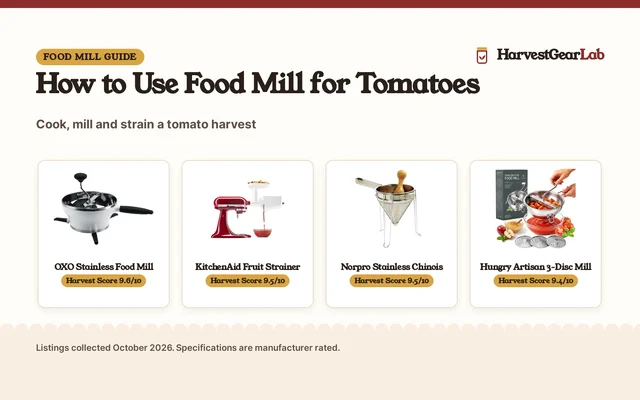
A food mill is a bowl with a perforated bottom plate and a hand crank. You put cooked food in the bowl and turn the crank. A blade sweeps the food across the plate, pressing the soft pulp through while skins, seeds and stems stay behind. The result is a smooth puree without the bits you do not want.
Food mills suit tasks a ricer cannot do. A ricer only presses what you load; it does not separate skins or seeds. A food mill strains as it purees, so it handles tomatoes for sauce, berries for seedless puree and apples for applesauce. For plain mashed potatoes, the straining step is unnecessary, which is why a ricer is the simpler tool for that job.
Food mills are bulkier than ricers and take longer to clean, with more parts to wash. A ricer is a single press with a basket that rinses clean. If your main goal is mashed potatoes, the ricer wins on speed and simplicity.
Potato ricer vs food mill: key differences
| Feature | Potato ricer | Food mill |
|---|---|---|
| Action | Presses through holes | Grinds and strains |
| Skins and seeds | Stay in the mash | Strained out |
| Best for | Fluffy mashed potatoes | Purees and sauces |
| Speed | Fast, single press | Slower, crank by crank |
| Cleanup | Basket rinses clean | More parts to wash |
| Size | Compact hand tool | Bulky bowl and crank |
The table reflects the designs described above. Ricer figures come from the listings: 15oz baskets, 3mm holes, 3 discs or plates on several models.
When to choose a potato ricer
Choose a ricer when mashed potatoes are the goal. The press action gives the fluffiest texture with the least effort, and the tool stores in a drawer. The Chef’n states its dual gear mechanism is up to 65 percent more efficient than conventional presses. The PriorityChef states a 1 Year Warranty. The Joseph Joseph states a 1 year warranty against manufacturing defects and BPA free construction. The Beast Canteen states 18/8 stainless steel and a 10 year guarantee. The Zulay states a lifetime warranty.
A ricer also handles other soft vegetables. The listings mention carrots, turnips, yams, cauliflower, sweet potatoes and baby food. The Joseph Joseph twists rather than squeezes, which some find easier on the hands. The OXO has soft handles that absorb pressure and a nonslip knob that holds the ricer over a bowl.
When to choose a food mill
Choose a food mill when you need straining. Tomato sauce without skins, seedless berry puree and smooth applesauce all need the mill’s perforated plate and blade. A ricer cannot remove skins or seeds; it presses everything through together.
A food mill also processes larger batches in its bowl, while a ricer works basket by basket. The LHS ricer holds nearly 3 cups, which is generous for a ricer, but a mill’s bowl still holds more per load. If you preserve harvests in quantity, the mill’s capacity matters.
For baby food, either tool works, but the mill strains out skins and seeds that a ricer would leave in. Several ricer listings mention baby food as a use, including PriorityChef, SPEENSUN and LHS, so a ricer suffices when the ingredients are already peeled and soft.
FAQ: preserving at home
Can a food mill make mashed potatoes?
Yes, but a ricer gives fluffier results with less effort. The mill’s straining step is unnecessary for peeled potatoes.
Can a potato ricer make tomato sauce?
Not well. A ricer presses skins and seeds through with the pulp. A food mill strains them out, which is what sauce needs.
Which is easier to clean?
The ricer. Its basket rinses clean, and most listings state dishwasher safe. A food mill has a bowl, plate, blade and crank to wash.
Which should I buy first?
If you make mashed potatoes often, buy the ricer first. If you make sauces and purees from unpeeled produce, buy the food mill first.
Do I need both?
Not necessarily. They overlap on purees but each has a job the other cannot do: the ricer for the fluffiest mash, the mill for straining.
More preserving guides
See every food mill guide and all harvest processing guides.
More guides: victorio strainer vs food mill.