
On this page
Top picks at a glance
As an Amazon Associate I earn from qualifying purchases.
- 1
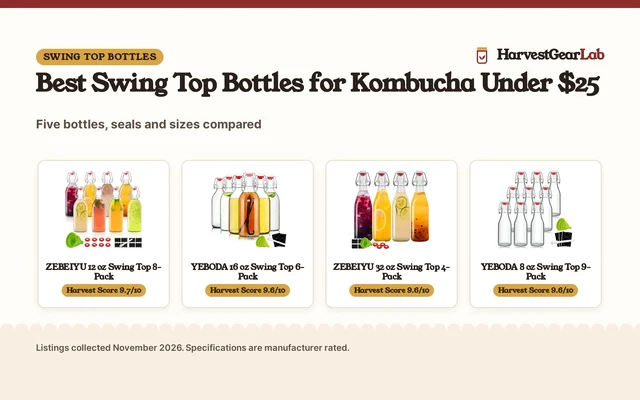
 ZEBEIYU 12 oz Swing Top Glass Bottles9.7/10View on Amazon
- 2
 STARSIDE Wide Mouth Mason Jars 32oz 12-Pack9.7/10View on Amazon
- 3
 Ball Regular Mouth Mason Jars with Lids & BandsView on Amazon
- 4
 Ball Regular Mouth Glass Mason Jars with Lids and BandsView on Amazon
- 5
 Ball Regular Mouth Lids for Glass Mason JarsView on Amazon
- 6
 Ball Glass Mason Jars Wide Mouth 16ozView on Amazon
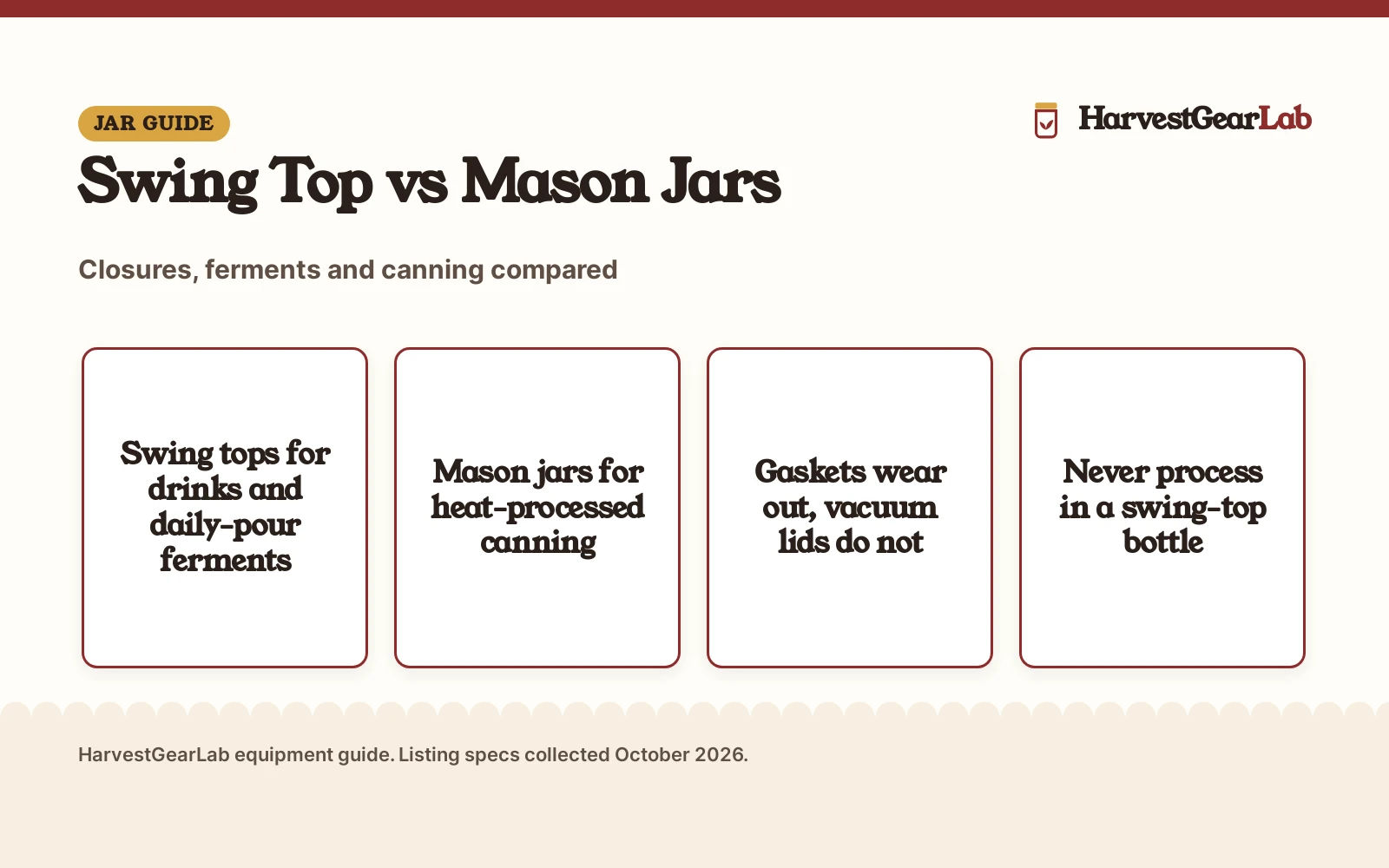
Swing top vs mason jars comes down to what you seal inside: swing-top bottles with their hinged wire closures are made for drinks and ferments you open often, while mason jars with two-piece metal lids are made for canning that must hold a vacuum for months. Pick swing tops for kombucha, kefir and infused oils. Pick mason jars for pressure canning, water-bath canning and anything stored on the shelf long term. Neither replaces the other, and most preserving kitchens keep both.
Runners-up to consider
 Ball Regular Mouth Mason Jars with Lids & BandsCheck price on Amazon
 Ball Regular Mouth Glass Mason Jars with Lids and BandsCheck price on Amazon
 Ball Regular Mouth Lids for Glass Mason JarsCheck price on Amazon
 Ball Glass Mason Jars Wide Mouth 16ozCheck price on Amazon
HarvestGearLab earns a commission when you buy through links on this site, at no extra cost to you. As an Amazon Associate I earn from qualifying purchases. Affiliate disclosure.
Swing top vs mason jars: the closures
A swing-top bottle closes with a glass or ceramic stopper on a wire bail, pressing a rubber gasket against the mouth. You open it with a flick of the lever and close it the same way, which makes it perfect for drinks you pour daily. The seal is good but not a vacuum seal: it keeps a bottle fizzy for a few days, not a jar safe for a year.
A mason jar closes with a flat metal lid and a screw band. During canning, heat drives air out and the lid seats as the jar cools, forming the vacuum that keeps food safe. The band comes off for storage, and the lid stays down by vacuum alone. That single-piece lid with no rubber gasket to wear out is why canners trust mason jars. For lid options, see our best canning lids for ball jars guide.
When swing tops win
Swing tops are at home with ferments and drinks. Kombucha, water kefir, ginger bug and homemade soda need a bottle that burps or holds mild pressure and opens daily without fuss. The wire bail does that with one hand, and the sturdy glass handles repeated opening. They also suit infused oils and vinegars: easy pour, tight enough closure for a pantry shelf.
For true fermentation work, see fermentation kit vs fermentation crock and fermented vs vinegar pickles to pick the right vessel for the job.
When mason jars win
Mason jars are the canning standard. Pressure canning and water-bath canning both depend on the two-piece lid system: the flat lid seals, the band holds it during processing, and the vacuum tells you it worked. No swing-top gasket can do this. If you can beans, tomatoes, relish or jam for the shelf, mason jars are the only choice here.
Mason jars also win on sizes and availability. From tiny jelly jars to the largest jars, the range covers every preserving task, and replacement lids are sold everywhere. Swing-top bottles come in fewer sizes and cost more per vessel, which adds up when you bottle a whole batch. See best canning jars for cider for drink-friendly jar options.
Can you swap them?
Sometimes, with care. You can store dry goods, refrigerator pickles and short-term leftovers in either one. But never water-bath or pressure-can in a swing-top bottle: the gasket closure is not made for processing, and a failed seal on the shelf is food waste at best. Likewise, do not bottle carbonated drinks in a standard mason jar: the two-piece lid is not made to hold pressure, and the jar can vent or worse.
The rule is simple: heat-processed shelf food goes in mason jars, fizzy drinks and daily-pour ferments go in swing tops, and short-term fridge storage goes in whichever is clean.
Care and lifespan
Swing-top gaskets are the weak point. The rubber hardens with age, heat and acid, and a hardened gasket no longer seals. Check the gasket before each use: press it flat against the stopper and look for cracks or permanent dents. Keep spare gaskets in the preserving drawer so a worn one never sidelines a bottle mid-batch. The wire bails themselves last for years, but a bail that no longer clamps tight is a bottle for dry storage only.
Mason jars age more gracefully. The glass lasts for decades if it never chips or cracks, and the screw bands are reusable until they rust. Only the flat lids are single-use: once a lid has sealed, its sealing compound has done its job, and reusing it risks a failed vacuum. Budget a fresh box of lids each canning season and the jars themselves will outlast the pantry shelves.
FAQ: preserving at home
Are swing-top bottles safe for canning?
No. The wire-bail gasket closure is not made for water-bath or pressure processing. Use mason jars with two-piece lids for any heat-processed canning.
Can I use mason jars for kombucha?
For a first ferment, yes, with a cloth cover. For a carbonated second ferment, swing-top bottles are the better pick: the two-piece mason lid is not made to hold pressure.
Do swing-top gaskets wear out?
Rubber gaskets harden with age and use. Keep spare gaskets on hand and replace any that look cracked or no longer sit flat.
More preserving guides
See every canning jar guide and all canning guides.
More picks: canning lids for ball jars, canning jars for relish and canning jars for pie filling.