
On this page
Top picks at a glance
As an Amazon Associate I earn from qualifying purchases.
- 1
 imarku 7.5 Inch Cleaver9.7/10View on Amazon
- 2
 DRGSKL Hand Forged Cleaver9.6/10View on Amazon
- 3
 Utopia Kitchen 7 Inch Cleaver9.6/10View on Amazon
- 4
 Sunnecko 7 Inch Nakiri9.5/10View on Amazon
What is meat cleaver? A meat cleaver is a heavy, wide-bladed knife made to cut through bone and joints, and to chop meat and vegetables. It differs from a chef knife in its wide, heavy blade and its straight, chopping edge. This guide explains what a cleaver is and how to choose one.
HarvestGearLab earns a commission when you buy through links on this page, at no extra cost to you. As an Amazon Associate I earn from qualifying purchases. Affiliate disclosure.
| # | Product | Harvest Score | Buy |
|---|---|---|---|
| 1 | imarku 7.5 Inch Cleaver | 9.7/10 | Buy on Amazon |
| 2 | DRGSKL Hand Forged Cleaver | 9.6/10 | Buy on Amazon |
| 3 | Utopia Kitchen 7 Inch Cleaver | 9.6/10 | Buy on Amazon |
| 4 | Sunnecko 7 Inch Nakiri | 9.5/10 | Buy on Amazon |

imarku 7.5 Inch Cleaver
A 7.5 inch cleaver in Japanese high carbon steel at 59±2 HRC, with a 15° edge and a Pakkawood handle.
Pros
- 59±2 HRC Japanese high carbon steel
- 15° double-side edge on a 2.3 mm blade
- FSC-certified Pakkawood handle, lifetime coverage
Cons
- Heavier than the 0.48 lb Sunnecko
- Hand wash only, wipe dry after use
- No sheath is stated
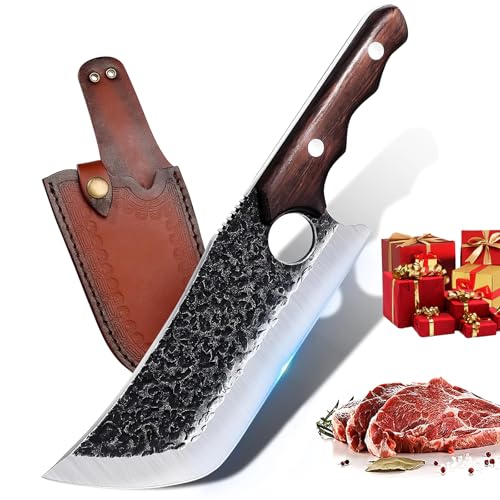
DRGSKL Hand Forged Cleaver
A hand forged cleaver in Japanese ATS-34 steel with a full tang, a wood handle, a finger hole and a belt sheath, for mincing, slicing, detaching chicken and separating ribs.
Pros
- Hand forged ATS-34 steel, full tang
- Finger hole for control, belt sheath included
- 365-day warranty and 30-day free return
Cons
- Not dishwasher-safe
- High carbon steel needs drying after each use
- No blade length is stated

Utopia Kitchen 7 Inch Cleaver
A 7 inch stainless steel bone chopper at 0.88 pounds, for chopping bone, meat and vegetables.
Pros
- 7 inch stainless steel bone chopper
- Ergonomic grip for controlled use
- Multipurpose: meat, vegetables and bone
Cons
- No warranty term is stated
- No edge angle is stated
- No handle material is stated

Sunnecko 7 Inch Nakiri
A 7 inch nakiri in high carbon steel with a 12° edge and a Pakkawood handle, for vegetables and boneless meat, not bone.
Pros
- 12° double-bevel edge
- Light at 0.48 lb
- Sheath included for safe storage
Cons
- Made for boneless meat and vegetables, not bone
- No warranty term is stated
- No blade thickness is stated
As an Amazon Associate I earn from qualifying purchases.
What is meat cleaver: the short list
The table shows what each cleaver does and what to watch for.
| Cleaver | What it does | Best for | Watch for | Amazon |
|---|---|---|---|---|
| Bone cleaver | Cuts through bone and joints | Bone and joints | Weight and edge angle | |
| Vegetable cleaver (nakiri) | Slices vegetables and boneless meat | Vegetables, boneless meat | Not for bone | |
| Multipurpose cleaver | Chops meat, bone and vegetables | Mixed prep | Handle and balance | |
| Forged cleaver | Heavy chopping with a full tang | Bone and ribs | Care and storage |
What a cleaver is
A meat cleaver is a wide, heavy knife with a straight edge and a tall blade. The weight of the blade does the chopping: you lift it and let it fall through the cut. The tall blade keeps fingers clear of the board.
Cleavers come in bone cleavers, vegetable cleavers and multipurpose cleavers. A bone cleaver is built for bone and joints. A vegetable cleaver, like a nakiri, has a thinner edge for vegetables and boneless meat, and it is not made for bone.
Cleaver vs chef knife
A chef knife slices with a thin, curved edge and a rocking cut. A cleaver chops with a wide, straight edge and the weight of the blade, and the cleaver handles bone.
Size tells them apart at a glance: a cleaver blade runs wide and tall, while a chef knife runs narrow with a curved edge. The listings here show the range: the imarku example is 7.5 inches with a 2.3 mm blade, the Sunnecko example is 7 inches, and the Utopia example is 7 inches at 0.88 pounds.
Size, weight and handle
The examples here are 7 inches and 7.5 inches, which suit a home board. The Sunnecko example is 0.48 lb and the Utopia example is 0.88 pounds, while the DRGSKL example is the heaviest of the 4. A heavier blade chops bone with less effort.
Handle shape sets the grip: the imarku example has an FSC-certified Pakkawood handle, and the Sunnecko example has a Pakkawood handle with an ergonomic shape. The DRGSKL example has a wood handle with a finger hole for control. Pick a handle that stays put when wet.
The gear
The cleaver handles the chopping step: pick the blade by the bone, the vegetables or the mixed prep it will meet.
Use, care and storage
A cleaver needs little care beyond washing, drying and safe storage:
- Match the blade to the job: a bone cleaver for bone and joints, a nakiri for vegetables and boneless meat.
- Hand wash and dry: hand wash with clean water and wipe dry; high carbon steel needs drying after each use.
- Sharpen as needed: a whetstone or sharpener keeps the edge.
- Store it covered: a sheath protects the edge, and some cleavers come with one.
- Check the handle: a handle that stays put when wet keeps control; Pakkawood handles are made for a steady grip.
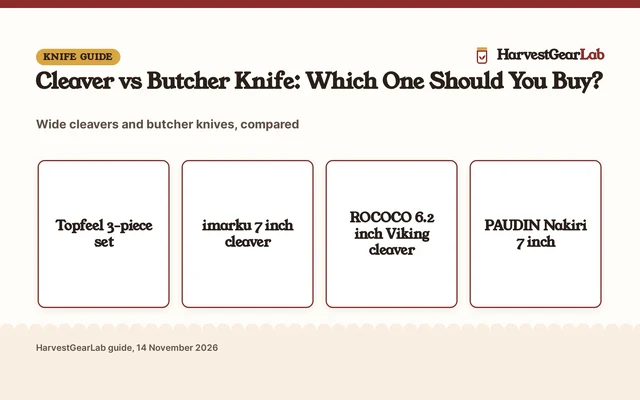
The cleaver vs butcher knife comparison sorts out the blades, and the whetstone vs knife sharpener comparison covers keeping the edge.
What to skip or double-check
- A nakiri for bone: a vegetable cleaver is not made for bone; check before chopping bone.
- A cleaver with no stated edge: check the sharpness before buying, since some listings state no angle.
- High carbon steel left wet: dry the blade after each use, since high carbon steel can rust.
- A handle that slips: check the grip before buying.
- Dishwasher use: some cleavers are not dishwasher-safe, so hand wash them.
What this guide does not cover
This is a guide to what a meat cleaver is and how to choose one. It does not give recipes or butchering steps. Take food safety guidance from current USDA guidance.
FAQ: preserving at home
What is a meat cleaver used for?
Cutting through bone and joints, and chopping meat and vegetables. A bone cleaver handles bone.
Can a meat cleaver be used for vegetables?
Yes. A cleaver chops vegetables with the weight of the blade, and a nakiri is made for vegetables and boneless meat.
What size meat cleaver is right for a home board?
The examples here are 7 inches and 7.5 inches, which suit a home board. Pick the size that fits the board and the hand.
Is a meat cleaver dishwasher-safe?
Not always. Some cleavers state they are not dishwasher-safe, so hand wash them and keep them dry.
What is the difference between a meat cleaver and a chef knife?
A chef knife slices with a thin, curved edge. A cleaver chops with a wide, straight edge and the weight of the blade, and a bone cleaver handles bone.
More preserving guides
See every game and fish processing guide and all harvest processing guides.
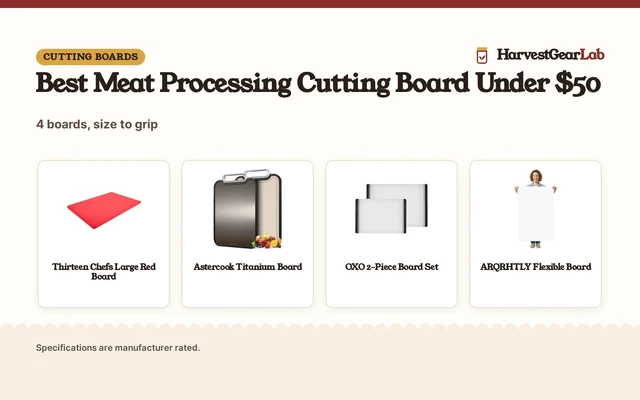
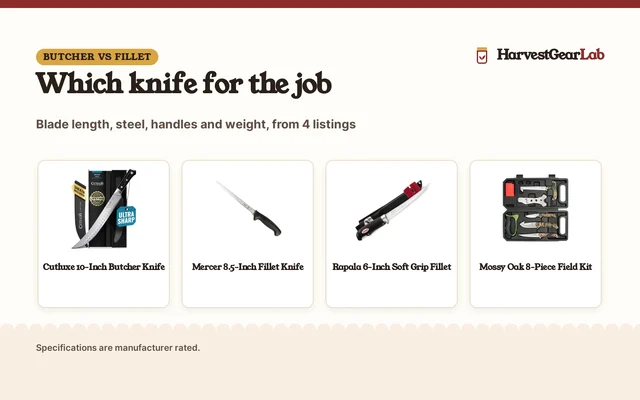
More picks: cleaver vs butcher knife, butcher knife vs boning knife, meat processing cutting board and knife sharpener for hunters.