How to Make Strawberry Fruit Leather
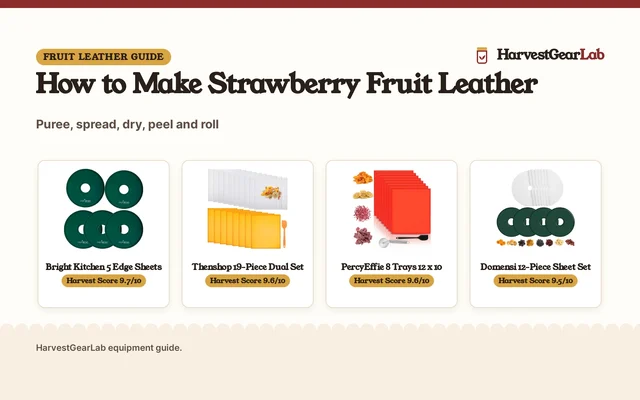
How to make strawberry fruit leather: puree ripe berries, spread them on a sheet with a raised edge, dry until pliable, then peel, roll and store.
Canning, drying, storing and harvest gear for home kitchens

Food dehydrators, home freeze dryers and herb drying racks compared by tray area, wattage, temperature range, timer and capacity for preserving the harvest.
How to make strawberry fruit leather: puree ripe berries, spread them on a sheet with a raised edge, dry until pliable, then peel, roll and store.
A large capacity food dehydrator holds a full harvest batch across enough trays, with even airflow, so fruit, vegetables, herbs and jerky dry in one load.
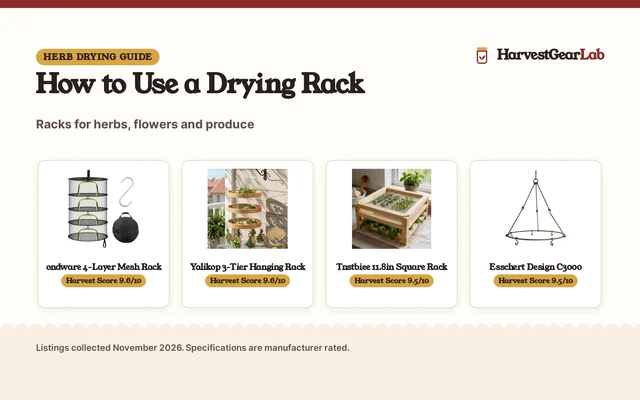
How to use a drying rack for herbs and produce: load, hang and store the harvest, with racks compared by layers, size and storage.
Food dehydrator cost, explained: size, build, controls and running costs, and how to match a dehydrator to the harvest without overspending.
Food dehydrator temperature sets how fast water leaves the food, so match the dial to the food and check each batch by feel before it goes…
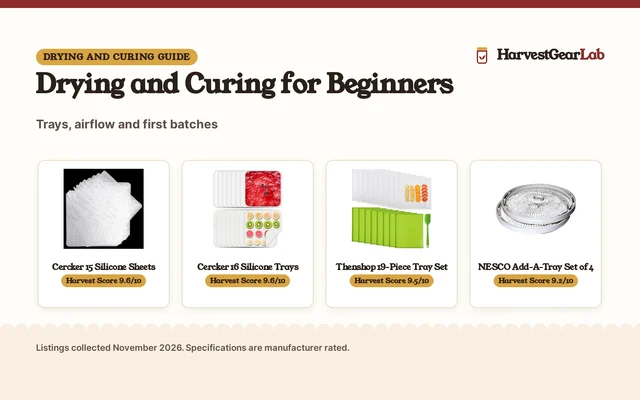
Drying and curing for beginners starts with the right tray: mesh sheets for small foods, edged trays for liquids, and a size that fits your dehydrator.
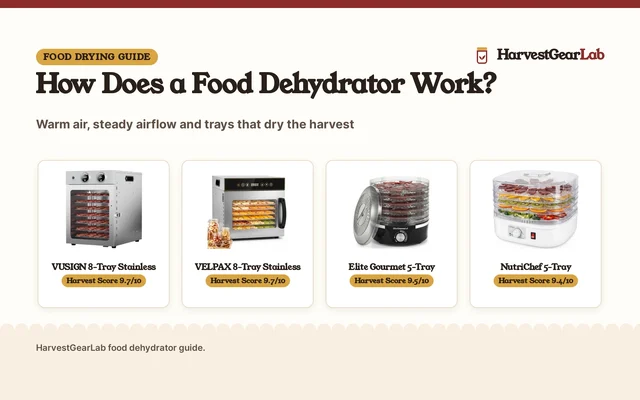
How does a food dehydrator work? Warm air and steady airflow dry sliced food on trays. See how 4 dehydrators compare on power, trays and controls.
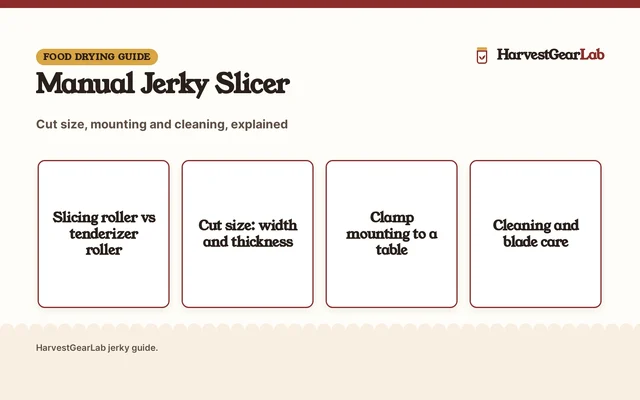
A manual jerky slicer cuts meat into even strips with a crank and a bladed roller; this guide covers cut size, mounting, and cleaning.
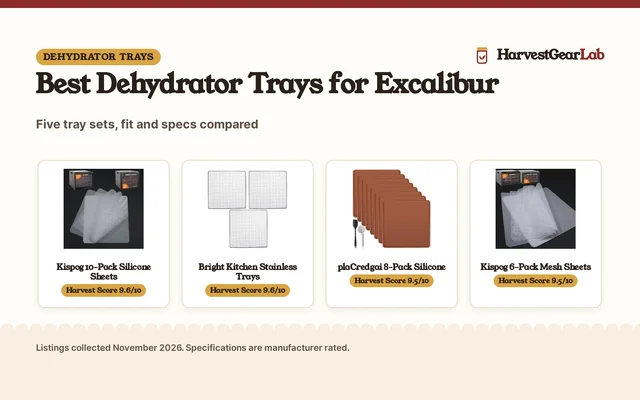
Five tray and sheet sets for Excalibur dehydrators, compared by fit, material, mesh, heat range and warranty, for drying fruit, herbs and jerky at home.
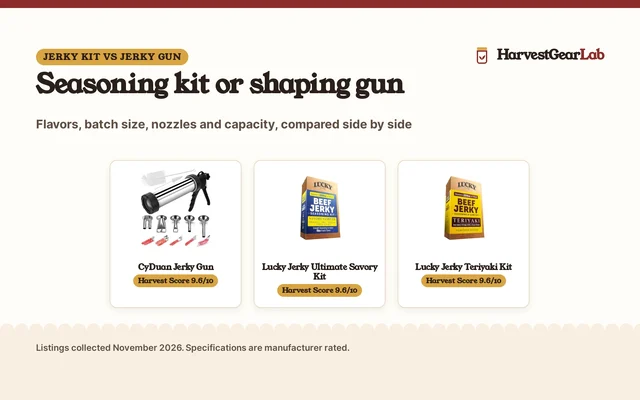
Jerky kit vs jerky gun, compared on two Lucky Beef Jerky seasoning kits and a CyDuan gun: flavors, batch size, nozzles and who each side suits.