
On this page
Top picks at a glance
As an Amazon Associate I earn from qualifying purchases.
- 1
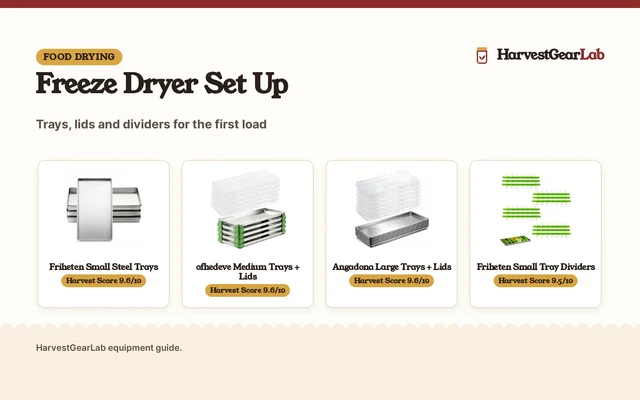
 Friheten 4 Sets Small Stainless Steel Trays for Harvest Right9.6/10View on Amazon
- 2
 Angadona 6 Sets Large Metal Trays with Lids for Harvest Right9.6/10View on Amazon
- 3
 Friheten 4 Sets Freeze Dryer Tray Dividers for Harvest Right9.5/10View on Amazon
- 4
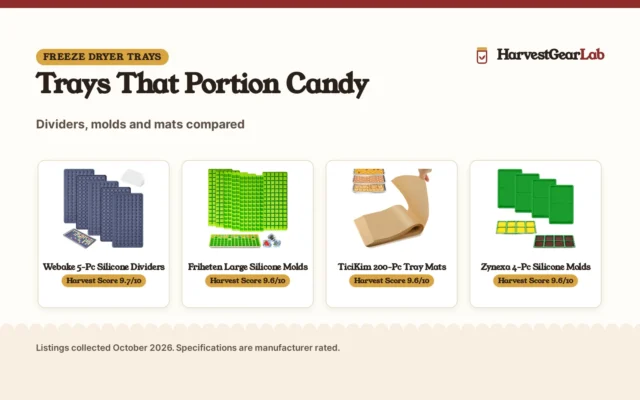
 200 PCS Freeze Dryer Tray Mats for Harvest Right Freeze DryerView on Amazon
- 5
 Metal Trays for Harvest Right Freeze Dryer MediumView on Amazon
- 6
 Metal Trays for Harvest Right Freeze Dryer SmallView on Amazon
- 7
 Freeze Dryers Small Home Use with 5 TraysView on Amazon
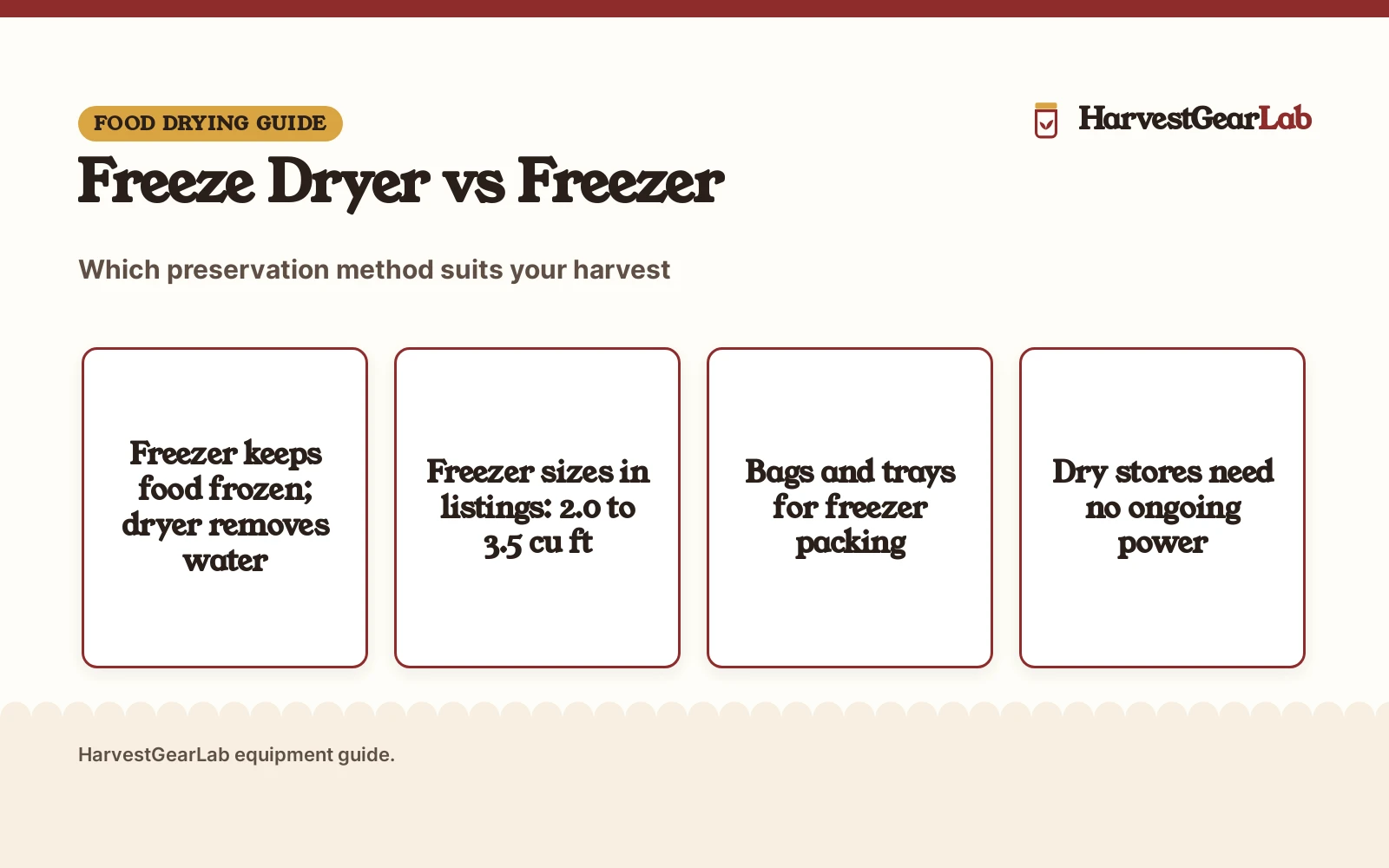
A freezer keeps food frozen; a freeze dryer removes the water so food stores dry without ongoing cold. Pick a freezer if you want the simplest way to hold garden produce through the season; pick a freeze dryer if you want lightweight food that keeps at room temperature once sealed. The two machines solve different storage problems, and this guide explains which problem each one solves.
Runners-up to consider
 200 PCS Freeze Dryer Tray Mats for Harvest Right Freeze DryerCheck price on Amazon
 Metal Trays for Harvest Right Freeze Dryer MediumCheck price on Amazon
 Metal Trays for Harvest Right Freeze Dryer SmallCheck price on Amazon
 Freeze Dryers Small Home Use with 5 TraysCheck price on Amazon
HarvestGearLab earns a commission when you buy through links on this page, at no extra cost to you. As an Amazon Associate I earn from qualifying purchases. Affiliate disclosure.
Freeze dryer vs freezer: the short answer
| Freeze dryer | Freezer | |
|---|---|---|
| How it preserves | Removes water; food stores dry | Keeps food frozen |
| Needs power to keep food | No, once dried and sealed | Yes, continuously |
| Example sizes in listings | Not stated | 2.0 to 3.5 cu ft |
| Packing shown in listings | Not stated | Quart and gallon bags, 1 and 2-cup trays |
| Best for | Light, dry, long storage | Simple frozen storage |
What a freezer does well
A freezer is the simpler machine: food goes in, stays frozen, and comes out ready to cook. The reference listings show the size range: a BLACK+DECKER 2.0 cu ft compact chest freezer that holds up to 70 lbs of frozen food, a Whynter 2.1 cu ft upright with an Energy Star rating, and 3.5 cu ft models from Igloo and Midea. For packing, the listings show quart bags (Amazon Basics, 120 count), gallon bags (Hefty, 56 count; Ziploc, 66 count), and portion trays in 1-cup (ZIP STANDING) and 2-cup (GGOW) sizes. Nothing about freezing is complicated, which is exactly the appeal.
What a freeze dryer does well
A freeze dryer freezes food and then removes the water, leaving it light and dry. Dried this way, food keeps at room temperature once sealed, needs no ongoing power, and rehydrates with water when you want it. That makes it a fit for produce you want to store without running a freezer all year, and for anyone who values light, compact stores. No freeze dryer figures appear in the reference listings, so this guide gives no sizes or cycle claims for them.
Space, power and effort
Freezers in the listings run 2.0 to 3.5 cu ft, so measure the corner before you buy; the Whynter upright is the compact pick at 2.1 cu ft. A freezer must stay powered the whole time food is in it, while a freeze dryer uses power during its cycle and then the food needs none. In practice that means a freezer is a permanent appliance with a running cost, and a freeze dryer is a batch machine you run when the harvest comes in.
What to buy first
If you are starting out, the freezer side needs less new gear: bags and trays for packing, and a freezer in the 2.0 to 3.5 cu ft range shown in the listings. A freeze dryer is the bigger commitment, worth it when you want dry storage without a powered appliance. Either way, start with how you actually cook: frozen bags suit soups and sauces, dried stores suit snacking and rehydrating.
Size the freezer and the bags
Match the freezer to the harvest. The Whynter upright lists 2.1 cubic feet at 44 pounds with a 79-watt draw, which suits a small garden. The Igloo and Midea chest freezers each list 3.5 cubic feet at 48.2 and 47.8 pounds, which suits a larger harvest or a hunting season. All three listings state a one-year warranty. Chest freezers hold cold air better when opened, while the upright’s shelves keep bags visible and easy to reach.
Bags matter as much as the freezer. The Amazon Basics listing offers 120 quart bags with a double zipper, the Hefty listing offers 56 gallon bags with a slider seal, and the Ziploc listing offers 66 gallon bags with a stand-up bottom. The Ziploc listing claims freezer burn protection for up to 12 weeks. Buy quart bags for soups and sauces, gallon bags for bulk meat and vegetables.
Start with the bags: a 120-count box of quart bags handles the first harvest while you decide on freezer size and whether a freeze dryer is worth the bigger commitment.
What this guide does not cover
Specific freeze dryer models, their cycle times and energy use, and preservation methods beyond freezing and freeze drying. For those, compare the model guides linked below.
FAQ: preserving at home
Can I store freeze-dried food in the freezer?
You can, but dried food sealed dry does not need freezing; the point of freeze drying is storage without ongoing power.
What size freezer suits a small harvest?
The listings show 2.0 cu ft (BLACK+DECKER, up to 70 lbs of food) and 2.1 cu ft (Whynter) compacts, and 3.5 cu ft models from Igloo and Midea for bigger harvests.
Do I need special bags for the freezer?
The listings include quart bags (Amazon Basics, 120 count) and gallon bags (Hefty, 56 count; Ziploc, 66 count), plus 1-cup and 2-cup silicone trays for portions.
More preserving guides
See every freeze dryers guide and all drying guides.
More guides: freeze dryer vs vacuum sealer, vacuum sealer vs freezer, dehydrating vs freezing food.