
On this page
Top picks at a glance
As an Amazon Associate I earn from qualifying purchases.
- 1
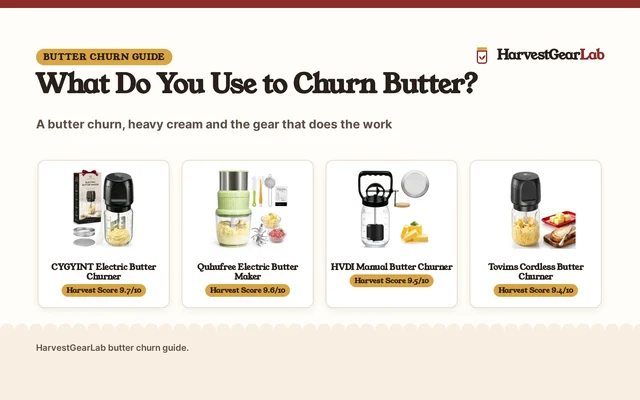
 Hokuvory Electric Butter Churn with 34 oz Glass Jar and9.6/10View on Amazon
- 2
 Roman Ventures Hand Crank Butter Churn Kit with Paddles and9.5/10View on Amazon
- 3
 IFOLO Electric Butter Churn9.5/10View on Amazon
- 4
 KILNER Butter ChurnView on Amazon
- 5
 VigorMach Cordless Electric Butter ChurnView on Amazon
- 6
 Cordless Electric Butter ChurnView on Amazon
- 7
 Butter ChurnView on Amazon
- 8
 Buttermeister Butter ChurnView on Amazon
- 9
 Electric Butter ChurnView on Amazon
A jar of fresh cream and a churn on the counter are the start of homemade butter, and the question of how does a butter churn work has a simple answer: steady agitation turns cream into butter. Inside the churn, moving cream knocks the fat together until it clumps into butter and leaves buttermilk behind. This guide explains what happens inside the churn, the main churn types, and the steps from cream to finished butter.
Runners-up to consider
 KILNER Butter ChurnCheck price on Amazon
 VigorMach Cordless Electric Butter ChurnCheck price on Amazon
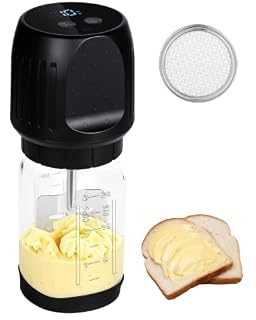 Cordless Electric Butter ChurnCheck price on Amazon
 Butter ChurnCheck price on Amazon
 Buttermeister Butter ChurnCheck price on Amazon
 Electric Butter ChurnCheck price on Amazon
HarvestGearLab earns a commission when you buy through links on this page, at no extra cost to you. As an Amazon Associate I earn from qualifying purchases. Affiliate disclosure.
How does a butter churn work: the short answer
A butter churn works by agitating cream until the fat separates from the liquid. Cream is an emulsion of tiny fat globules in liquid, and steady movement knocks the globules together until they stick and form butter grains. As the grains grow, they gather into a mass of butter, and the liquid left behind is buttermilk. The churn itself only supplies the motion; the cream does the rest, and the maker watches for the moment the butter gathers into a solid mass and the buttermilk separates.
What happens inside the churn
Churning has clear stages, and each stage shows in the cream. At the start, the cream moves as a liquid and thickens as air works into it. Then the cream turns grainy as fat globules clump together, and the sound of the churn changes as the mass firms up. Near the end, butter grains gather into a soft mass while buttermilk sloshes free around it. Stopping at the grainy stage leaves soft butter, while churning past the gathering stage works the butter too much.
The main churn types
Dash churns are the old upright style: a tall crock or jar with a lid and a plunger, called a dasher, that moves up and down through the cream. The dasher has a crosspiece or holes that push cream around as it moves, and the maker works the handle until butter forms. Jar churns use a sealed jar with a paddle or a ball inside, shaken or turned by hand until the cream turns to butter. Rotary churns have a crank on the side that turns paddles inside a crock, so the maker turns a handle instead of lifting a plunger. Electric churns use a motor to turn the paddles, so the maker only watches and stops the machine when butter forms.
Each type suits a different batch and a different kitchen. A dash churn handles a crock of cream with steady arm work, a jar churn suits small batches and a light touch, a rotary churn keeps the work at the table with a crank, and an electric churn takes over the motion entirely. Wood, glass and stainless steel all appear across the types, and the choice of material decides how the churn cleans up and how heavy it feels in use. Compare the types in the wood vs stainless steel butter churn comparison and the butter churn vs butter maker guide.
Churning step by step
Start with cream at room warmth, poured into the churn with room for it to move as it thickens. Churn with a steady rhythm, lifting the dasher or turning the crank at an even pace, and keep going through the thick stage until grains form. When butter grains gather into a mass, stop churning and drain off the buttermilk through a strainer into a jug, saving it for baking or cooking.
Next, wash the butter: pour cool water over the mass, work it gently with a spatula or wooden spoon, and drain the water away. Repeat the rinsing until the water runs clear, which means the buttermilk is out of the butter. Then knead the butter to press out the last water, add salt if the household wants salted butter, and shape the butter into a block or press it into a mold. Store the finished butter in a covered dish in a cool place.
What to look for in a churn
Match the churn to the cream on hand: a churn that is too small overflows as the cream thickens, while a churn that is far larger than the batch leaves the dasher or paddles barely touching the cream. Look for a lid that fits well, a handle that turns or lifts without wobbling, and parts that come apart for washing. A glass jar shows the cream as it changes, a wooden crock holds warmth, and stainless steel rinses clean and resists stains.
Check the drive before buying: a crank should turn smoothly through a full circle, a dasher should slide freely in its lid, and an electric churn should stop promptly when switched off. Spare paddles, gaskets and lids matter, since a churn with no spares is hard to repair when a part wears out. The best glass butter churn picks compare jar churns by jar and drive, and the best butter churn crock picks cover crock styles.
What can go wrong
Cream that is too warm turns to butter too fast and comes out soft, while cream that is too cold takes far longer to gather and may never form grains. Keep the cream at room warmth and churn at a steady pace, and the butter will gather in good time. A churn that leaks around the lid wastes cream, so check the seal and the fit of the lid before pouring. Over-churning past the gathering stage works the butter too much, and under-churning leaves the butter soft and full of buttermilk, so watch the cream and stop when the mass forms.
FAQ: preserving at home
How long does it take to churn butter?
It depends on the cream, the churn and the pace of churning, so watch the cream rather than the clock. The butter is ready when grains gather into a mass and buttermilk separates around it. Cream that is too warm gathers fast, while cream that is too cold gathers slowly.
Can you churn butter from store-bought cream?
Yes. Heavy cream from the store churns into butter the same way farm cream does, since churning only needs cream with enough fat to clump. Pour the cream into the churn, work it until butter grains form, then drain, wash and knead the butter as usual.
What is buttermilk?
Buttermilk is the liquid left in the churn after the butter gathers. It looks thin and pale next to the butter, and it can be saved for baking or cooking. Do not confuse it with cultured buttermilk from the store, which is milk with cultures added.
Do you need to wash butter after churning?
Yes. Washing rinses out the buttermilk trapped in the butter, and butter with buttermilk left in it spoils faster than washed butter. Rinse with cool water and knead gently until the water runs clear, then shape and store the butter.
Can you make butter in a jar?
Yes. Put cream in a clean jar with a tight lid, leave room for the cream to move, and shake the jar until butter grains form and buttermilk separates. A jar suits small batches, while a churn suits larger ones.
More preserving guides
See every butter churns guide and all harvest and processing guides.
More picks: glass butter churns, wood vs stainless steel butter churns, butter bells vs butter churns and butter molds for homemade butter.