
On this page
Top picks at a glance
As an Amazon Associate I earn from qualifying purchases.
- 1
 Bright Kitchen Fruit Leather Silicone Dehydrator Sheets9.7/10View on Amazon
- 2
 Magic Mill Replacement Fruit Roll Trays for MFD-50009.3/10View on Amazon
- 3
 OdoVow Two-Tier Ceramic Fruit Bowl with Metal Stand9.2/10View on Amazon
- 4
 Ball Mason Jar LidsView on Amazon
- 5
 4 Fruit Leather Silicone Dehydrator Sheets with EDGESView on Amazon
- 6
 Ball Wide Mouth Canning Lids 4 Dozen or 48 Lids Total IdealView on Amazon
- 7
 Set of 3-14" x 14" Edge Silicone Sheets for ExcaliburView on Amazon
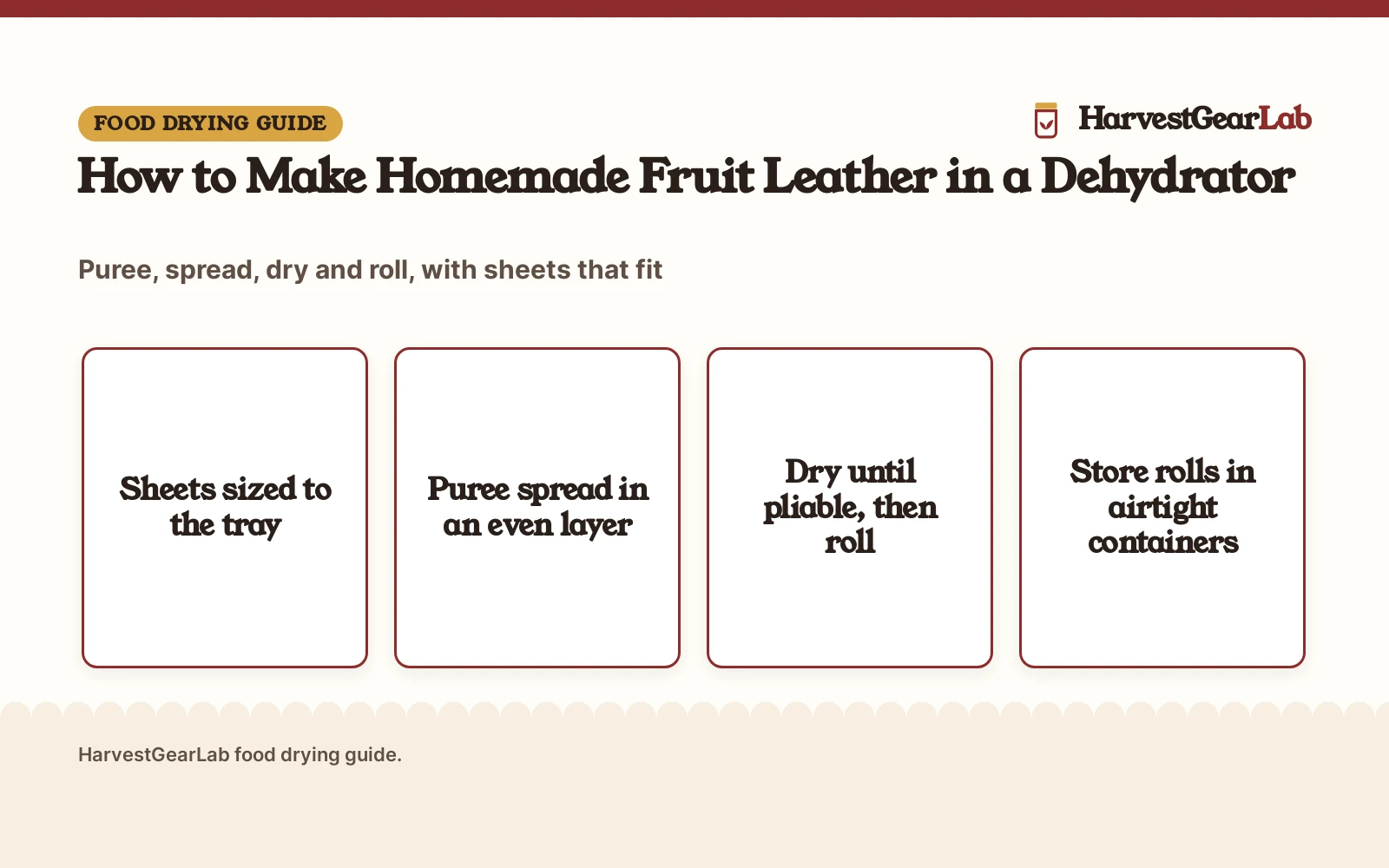
A basket of ripe fruit that will not keep until the weekend is the usual start of a fruit leather batch. How to make homemade fruit leather comes down to a simple sequence: puree ripe fruit, spread it in a thin, even layer on a fruit leather sheet, dry it in a dehydrator until it is pliable, then roll and store the strips. This guide walks through each step in order, and points to the site comparisons of specific sheets and dehydrators.
Runners-up to consider
 Ball Mason Jar LidsCheck price on Amazon
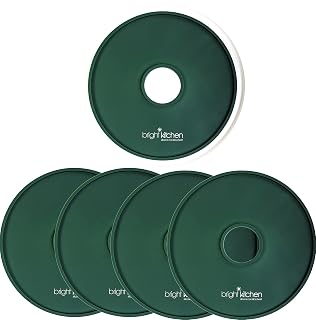 4 Fruit Leather Silicone Dehydrator Sheets with EDGESCheck price on Amazon
 Ball Wide Mouth Canning Lids 4 Dozen or 48 Lids Total IdealCheck price on Amazon
 Set of 3-14" x 14" Edge Silicone Sheets for ExcaliburCheck price on Amazon
HarvestGearLab earns a commission when you buy through links on this site, at no extra cost to you. As an Amazon Associate I earn from qualifying purchases. Affiliate disclosure.
How to make homemade fruit leather: the short list
Most batches need a short set of tools. The table shows what each step does and when it matters.
| Step | What it does | What to use |
|---|---|---|
| Puree the fruit | Turns ripe fruit into a smooth, spreadable puree | A blender or food mill |
| Fit a fruit leather sheet | Holds liquid puree on a mesh tray so it dries in a sheet | A silicone or plastic fruit leather sheet sized to the tray |
| Spread the puree | Lays the puree in an even layer that dries evenly | A spatula; a listed set includes a silicone spatula |
| Dry in the dehydrator | Moves warm air across the puree until it turns pliable | A food dehydrator with fitted trays |
| Roll and store | Turns the dry sheet into rolls that keep neatly | Parchment and airtight containers |
Pick sheets that fit your dehydrator
Start with the tray, not the sheet. Fruit leather sheets are cut for particular dehydrators, and a sheet that is too large will not sit flat while a sheet that is too small leaves puree with nowhere to go. The Cosori fruit roll sheets list dimensions of 11.73 x 11.57 inches and fit the Cosori 5 Trays CFD-N051-W only, while the Nesco fruit roll sheets (on Amazon) fit NESCO 20, 30, 60, and 70 Series dehydrators. Measure the tray before ordering, and check the listing for the models it names.
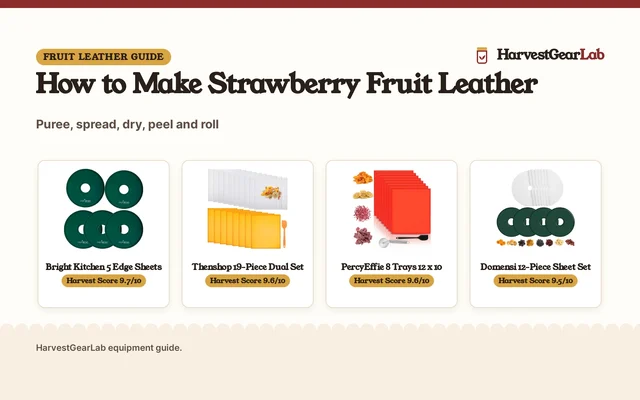
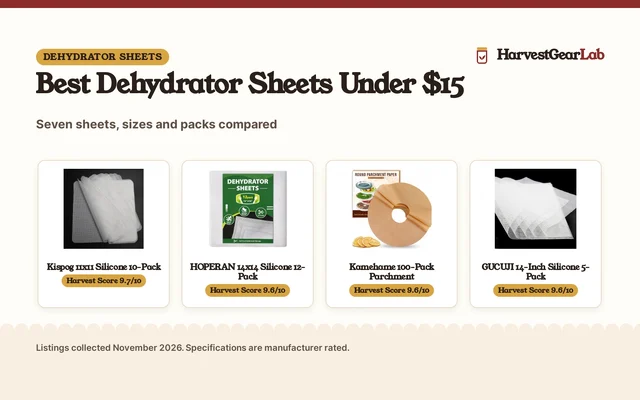
Size is only part of the fit. The Kispog silicone mats (on Amazon) measure 14 x 14 inches in a 10-pack and can be trimmed with household scissors to fit round or square trays, and the Thenshop set pairs mesh sheets of 11.8 x 11.8 inches with fruit leather trays of 12.2 x 10.2 inches. The Bookiq sheets (on Amazon) list an 11.5 inch diameter with a center hole for the Cosori CFD-N051-W (on Amazon) and the Elite Gourmet EFD319. A raised edge helps as well: the Thenshop trays (on Amazon) list a 0.4 inch raised edge, and the Aemygo sheets list a 0.4 inch tray edge, both meant to keep liquid puree from spilling. Compare fitted options in the best dehydrator for fruit leather and best dehydrator sheets guides.
Material decides how the sheet behaves after drying. Silicone sheets peel away from sticky puree and wipe clean, and the Kispog mats list food-grade silicone rated safe for temperatures up to 450 degrees Fahrenheit. Plastic sheets are lighter and often sold in smaller packs: the Nesco fruit roll sheets come as a 2-pack in food grade plastic, and the Nuenen trays come as a 4-pack in durable plastic. Check the care notes before buying, since the Cosori sheets are hand wash only and not dishwasher safe, while the Kispog, Thenshop and Nuenen sheets list dishwasher safe care.
Spread the puree in an even layer
An even layer is what makes the sheet dry evenly. Pour the puree into the middle of the fitted sheet and push it toward the raised edge with a spatula, keeping the middle and the edges at the same depth so no part stays wet while another part turns brittle. The Aemygo set includes a silicone spatula for lifting the finished sheet without tearing it, which helps when the leather sticks at the corners.
Do not overload the sheet. The Nesco listing states a capacity of 3 cups of pureed fruit per sheet, and that figure is a useful ceiling for the size of batch a single sheet holds. A thin layer dries more evenly than a thick layer, and another sheet is a better answer than a deeper pour when the batch is large. The how to make strawberry fruit leather guide walks through strawberry in detail, and the same spreading method applies to other ripe fruit.
Dry, check, and roll
Load the fitted sheets into the dehydrator with space for air to move across each layer, and leave the batch alone while it dries. A sheet that is ready peels cleanly away from its liner and bends without cracking or feeling wet in the middle. If the center still feels tacky while the edges feel firm, the layer was uneven, and the next batch should be spread thinner rather than dried longer on a thicker pour.
Peel the finished sheet from the liner while it is still warm and pliable, lay it on parchment, and roll it into a strip. Rolling on parchment keeps the layers from sticking to each other in storage. Cut the roll into strips of a length that fits the container, and keep the strips in airtight containers in a cool, dry place. Mesh sheets have a different job: the Kispog mats list a 1mm mesh that keeps small berries, sliced herbs and seeds on the rack, so use mesh for small pieces and a solid fruit leather sheet for puree.
What to skip or double-check
- Drying puree straight on a bare mesh tray: skip it. Liquid puree runs through the grid, so use a solid fruit leather sheet with a raised edge.
- Oven drying without a fitted tray: check whether the tray is made for that use. The food dehydrator vs oven drying comparison walks through the difference.
- Sheets sized for another brand: measure the trays first. The Nuenen listing asks buyers to measure trays before ordering to ensure compatibility.
- Hand wash only sheets: the Cosori sheets are hand wash only and not dishwasher safe, so check the care notes if dishwasher cleaning matters.
- Single-use liners: reusable trays are a lasting alternative to parchment paper or single-use liners, and the Nuenen trays list dishwasher safe care.
What this guide does not cover
This is a method guide. It does not give recipes, drying times, temperatures or storage times. Take those from current USDA and National Center for Home Food Preservation guidance, or from a current edition of a trusted food preservation guide, and follow them exactly for each fruit. Every food drying guide on the site is collected in the drying section.
FAQ: preserving at home
Are special sheets needed to make fruit leather in a dehydrator?
Yes. Liquid puree runs through a bare mesh tray, so a solid fruit leather sheet with a raised edge holds the puree in place while it dries.
How much puree goes on a fruit leather sheet?
The Nesco listing states a capacity of 3 cups of pureed fruit per sheet. Spread that amount in a thin, even layer rather than pouring a deeper layer on a sheet.
Can dehydrator sheets be trimmed to fit trays?
Some can be trimmed. The Kispog mats measure 14 x 14 inches and can be trimmed with household scissors to fit round or square trays, and the Thenshop and Aemygo sheets list that they can be cut to size.
How can you tell the fruit leather is dry?
The sheet should peel cleanly away from its liner and bend without cracking or feeling wet in the middle. A tacky center with firm edges means the layer was spread unevenly.
How should homemade fruit leather be stored?
Roll the finished sheet on parchment so the layers do not stick, cut it into strips, and keep the strips in airtight containers in a cool, dry place.
More preserving guides
See the best food dehydrator guide and the best food dehydrator for fruit guide.
More picks: dehydrators for fruit leather, dehydrator sheets, food dehydrators for fruit and drying net vs dehydrator sheets.