
On this page
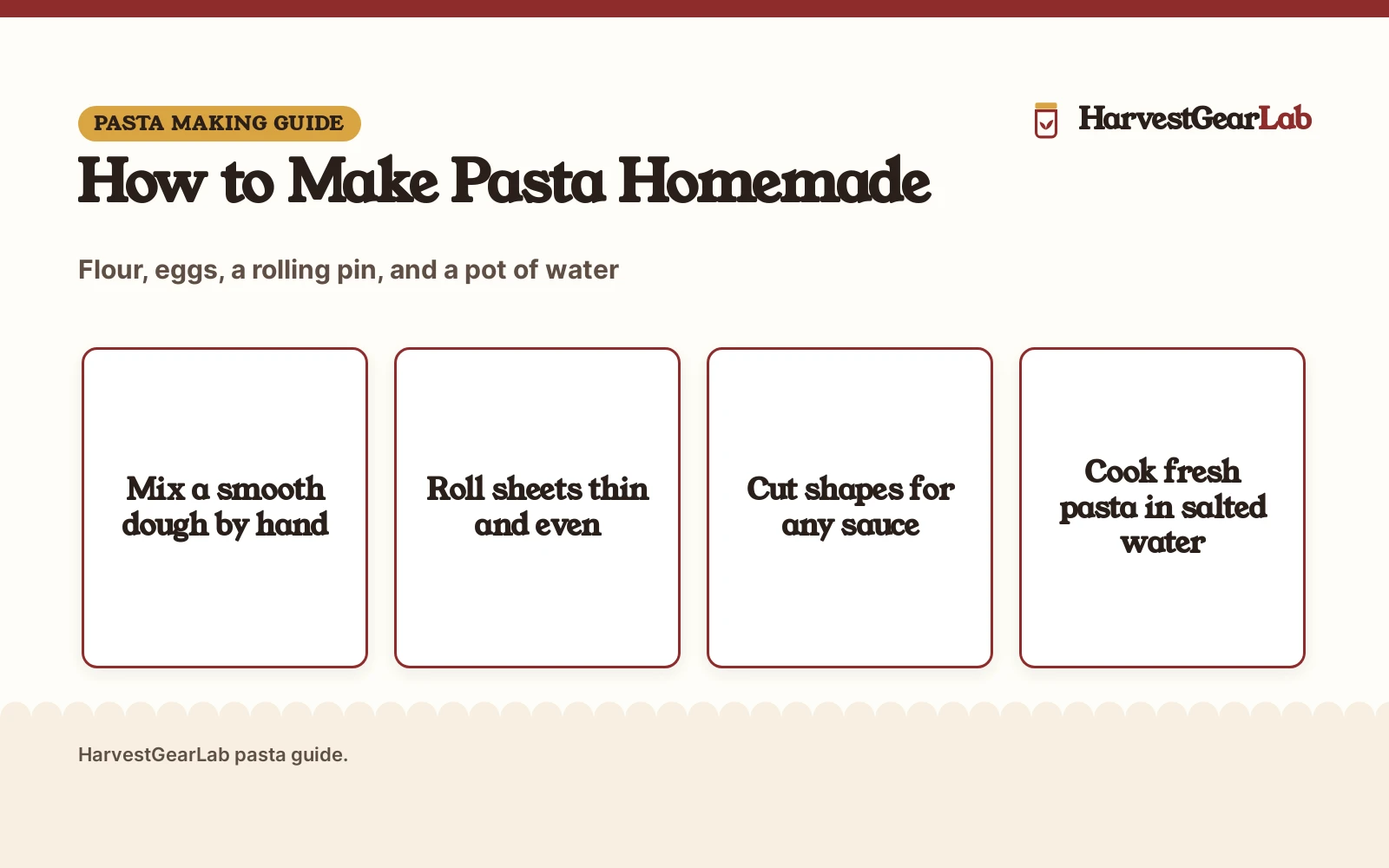
A quiet kitchen, a mound of flour on the counter, and a bowl of eggs is all the start that homemade pasta needs. How to make pasta homemade comes down to a simple sequence: mix flour and eggs into a smooth dough, let it rest, roll it thin, cut the shapes you want, and cook it in salted water until tender. This guide walks through each stage in order, with the tools that help and the slips to avoid.
HarvestGearLab earns a commission when you buy through links on this site, at no extra cost to you. As an Amazon Associate I earn from qualifying purchases. Affiliate disclosure.
How to make pasta homemade: the short version
Fresh pasta follows the same path every time, whatever shape you plan to serve.
| Stage | What happens | Tools that help |
|---|---|---|
| Mix | Flour and eggs come together into a firm dough | A wooden board, a fork, clean hands |
| Rest | The dough relaxes so it rolls without springing back | A bowl or wrap to cover it |
| Roll | The dough becomes a thin, even sheet | A rolling pin or pasta machine |
| Cut | The sheet becomes strands, ribbons or filled shapes | A knife, a cutter wheel or a stamp |
| Cook | The pasta turns tender in salted water | A large pot, a colander |
What you need before you start
Gather everything before the flour leaves the bag, so the dough never waits on a missing tool. Most of the list is ordinary kitchen gear.
- Flour: fine flour made for pasta gives a smooth dough, and plain flour also works for everyday shapes.
- Eggs: fresh eggs bind the dough and give it colour and a tender bite.
- A large wooden board or a clean counter: the work surface for mixing and rolling.
- A rolling pin or a pasta machine: either tool rolls the dough into thin, even sheets.
- A sharp knife or a cutter wheel: for cutting strands, ribbons and squares.
- A large pot and a colander: for cooking and draining the pasta.
- A drying rack or clean towels: for shapes that wait while the rest of the batch is cut.
Our best pasta making tools comparison lines up the kits and hand tools by what each kit includes, and the best pasta making kit picks bundle the board, pin and cutters for a new pasta maker.
Mix the dough
Tip the flour onto the board, shape it into a mound, and press a wide well into the middle. Crack the eggs into the well and beat them lightly with a fork, drawing in flour from the inner wall a little at a time until a shaggy mass forms. Gather the mass and knead it on the board, folding and pressing until it turns smooth, firm and even.
If the dough feels dry and crumbly, wet your hands and knead again rather than pouring in water. If it feels sticky, dust the board with a little flour and keep kneading. The dough is ready when it holds its shape and feels smooth under your palm.
Rest and roll the dough
Cover the dough with a bowl or a damp cloth and let it rest on the counter. Resting lets the flour take up the moisture from the eggs, and a rested dough rolls out without fighting back. A dough that springs back at every pass needs a longer rest.
When the dough feels relaxed, divide it into portions and work with a portion at a time, keeping the rest covered. Flatten the portion with your palm, then roll it out, turning the sheet and dusting lightly so it never sticks. Roll from the middle outward, and pass the sheet through a pasta machine from the widest setting down, folding and re-rolling until the sheet looks even. Our pasta maker vs rolling pin comparison walks through the ways to roll, and the hand crank vs electric pasta maker comparison covers the machine styles.
Cut the shapes
Match the shape to the sauce you plan to serve. Thin strands suit light sauces, wide ribbons suit rich sauces that cling, and squares suit filled pasta. Lay the sheet flat, dust it lightly so the cut pieces never stick together, and cut with steady, even strokes.
Keep the cut pasta in loose nests on a floured tray or hang the strands over a rack while you finish the batch. Strands left in a pile weld themselves together, so give them room and a light dusting of flour.
Cook and serve fresh pasta
Bring a large pot of water to a rolling boil and salt it well. Fresh pasta cooks fast, so have the sauce ready before the pasta goes in. Drop the pasta in, stir gently so the strands separate, and taste a piece as it nears the end of cooking. It should feel tender with a slight bite at the centre.
Drain the pasta and move it straight into the sauce, tossing so every strand is coated. Do not rinse it: the light starch on the surface helps the sauce cling. Serve right away, while the pasta is hot and the sauce is still loose.
Dry or store the extra pasta
If you made more than dinner needs, dry the extra shapes before you store them. Hang strands over a rack or spread ribbons and squares on clean towels in a layer, turning them as they dry. Our do you need a pasta drying rack guide walks through when a rack earns its place on the counter.
When the pasta feels dry and firm, pack it in airtight containers and keep it in a cool, dark pantry. Label each container with the shape inside. Our best pantry storage for pasta comparison lines up the containers by seal and size.
What to skip or double-check
- Skipping the rest: dough that springs back at every pass needs more rest, not more force.
- Rolling on a sticky surface: a sheet that grips the board tears, so dust lightly and often.
- Crowding the pot: pasta in a crowded pot clumps together, so cook in batches when the pot is small.
- Rinsing cooked pasta: rinsing washes away the starch that helps sauce cling to the strands.
- Leaving cut pasta in a pile: strands in a heap weld together, so keep them in loose nests or hang them up.
FAQ: preserving at home
Can I make pasta without a pasta machine?
Yes. A rolling pin and a board are enough for strands, ribbons and squares. A machine only makes the rolling faster and more even.
What flour works for homemade pasta?
Fine flour made for pasta gives the smoothest dough, and plain flour also works well for everyday shapes. Either way, the dough should feel smooth and firm.
How do I keep fresh pasta from sticking together?
Dust the sheets and cut pieces lightly with flour, keep the cut pasta in loose nests or hang it on a rack, and stir gently when it goes into the pot.
Can I dry homemade pasta for later?
Yes. Hang strands over a rack or spread the shapes on clean towels until they feel dry and firm, then pack them in airtight containers in a cool, dark pantry.
Why does my dough keep springing back when I roll it?
The dough needs a longer rest. Cover it and let it sit on the counter until it feels relaxed, then roll again with light, even passes.
More preserving guides
See every pasta makers guide and all bread and pasta making guides.
More picks: pasta making kits, pasta makers for beginners, pasta drying racks and pantry storage for pasta.