
On this page
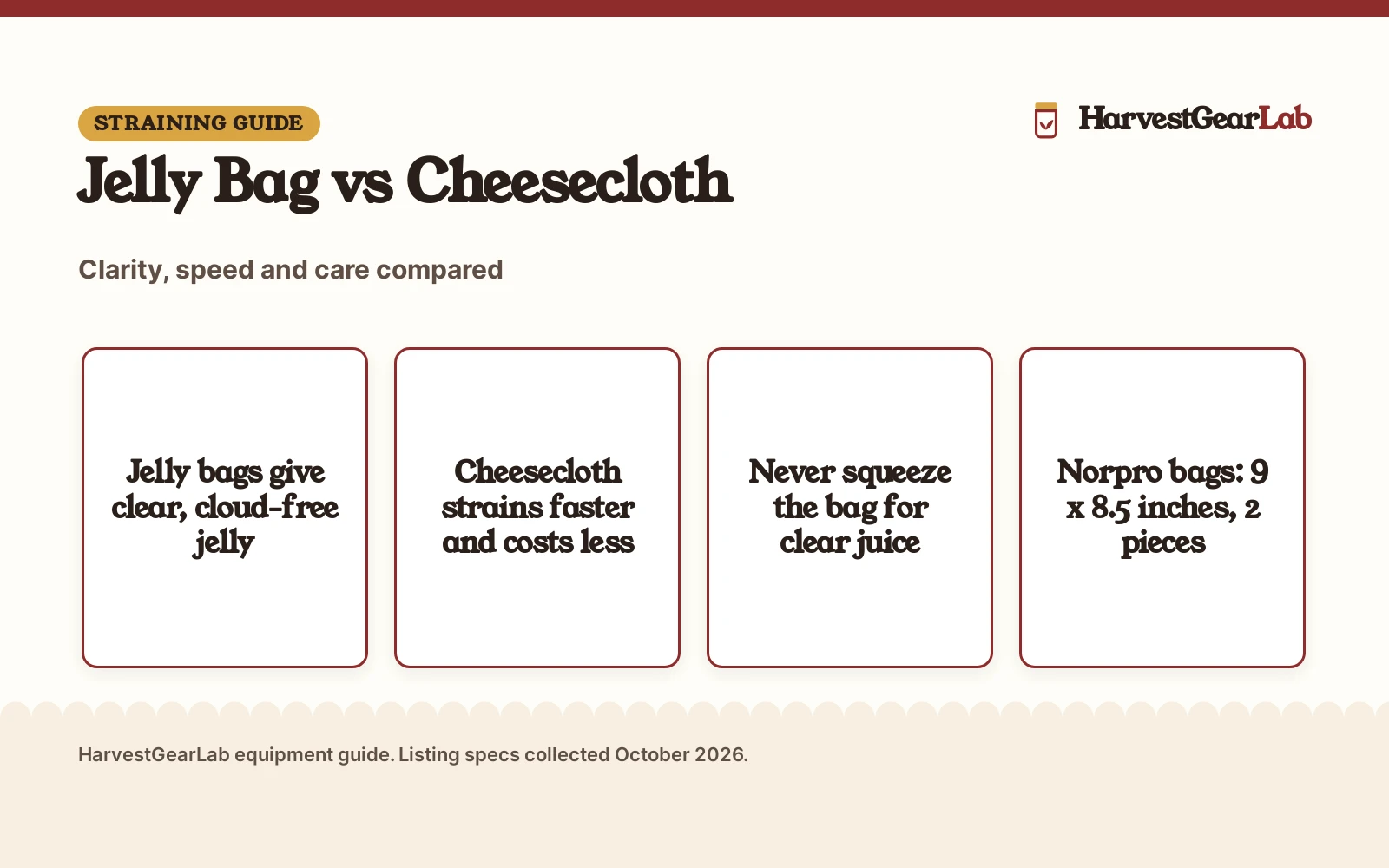
Jelly bag vs cheesecloth comes down to how clear you want the result: a jelly bag is a purpose-made straining bag with a tighter, more even weave that gives clear jelly and juice with no squeezing, while cheesecloth is a loose open-weave gauze that strains fast but lets fine sediment through. For crystal-clear jelly, pick the jelly bag. For quick straining of stocks, nut milks and bundles of herbs, pick cheesecloth. Most preserving kitchens keep both, because they solve different problems.
HarvestGearLab earns a commission when you buy through links on this site, at no extra cost to you. As an Amazon Associate I earn from qualifying purchases. Affiliate disclosure.
Jelly bag vs cheesecloth: what each one is
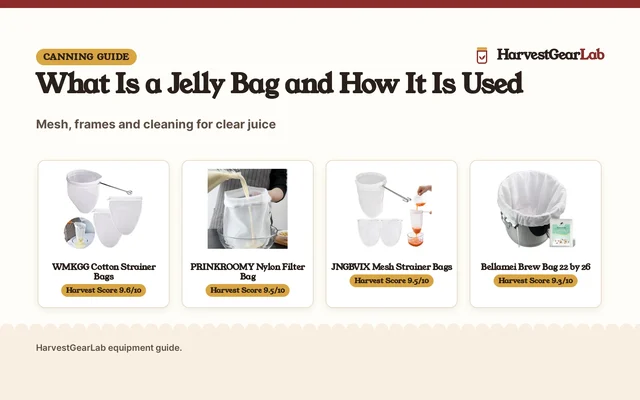
A jelly bag is a cone or square bag made for straining fruit pulp. The Norpro listing here sells replacement bags, 2 pieces measuring 9 inches wide by 8.5 inches high in a cotton and polyester mix, designed to tie snugly around a strainer stand frame. The weave is fine enough to hold back pulp while juice drips through on its own, which is exactly what clear jelly needs. The Eaasty listing pairs reusable jelly filter bags with a stainless steel sieve stand that hooks over bowls and pans, so the bag hangs hands-free.
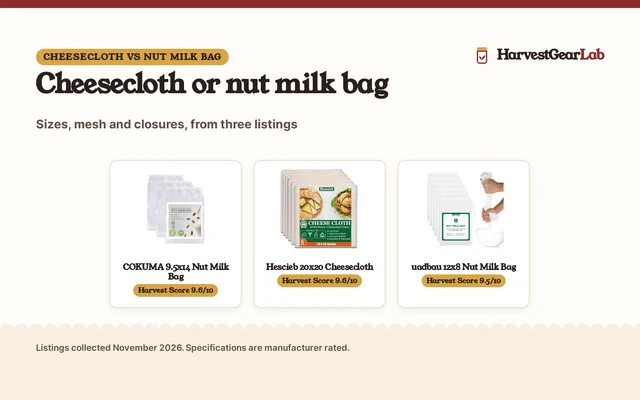
Cheesecloth is a loose cotton gauze sold in folded squares, graded by thread count. It is cheap, disposable and everywhere, which is why it is the default strainer in most kitchens. Its open weave strains fast, but fine pulp and sediment pass right through it. Double or triple layering helps, though each layer slows the drip and adds cost. For juice extraction equipment, see our best fruit press for pomegranate juice guide.
Clarity: where the jelly bag wins
Clear jelly is the whole point of a jelly bag. Fruit pulp goes in, the bag hangs on its stand, and juice drips through untouched by a squeezing hand. The fine weave holds back the sediment that makes jelly cloudy, and the hands-free setup means no pressing, no wringing, and no pulp forced through. The Norpro bags are made for this exact job: straining homemade vinegar, jelly, juice and soup.
Cheesecloth can strain juice, but clarity suffers. The loose weave lets fine particles through, so cheesecloth-strained juice looks cloudy next to bag-strained juice. Layering helps but never matches a purpose-made bag, and wringing the cloth to speed things along pushes pulp through and defeats the purpose. If clear jelly is the goal, the bag wins every time.
Speed and versatility: where cheesecloth wins
Cheesecloth is faster and more flexible. It strains a big pot of stock in minutes, lines a colander for ricotta, wraps a bouquet garni, and covers a fermenting crock. It comes in bulk, costs little per use, and you throw it away when it is stained. No washing, no storing a damp bag.
A jelly bag is slower and narrower in purpose. The drip takes time, the bag is sized for straining over a bowl, and a cotton-polyester bag needs washing and drying between uses. For nut milks and everyday straining, cheesecloth is the easier pick. See tomato strainer vs juicer for other straining comparisons.
How to use a jelly bag
Hang the bag on its stand over a bowl, as the Eaasty stand does with its hook legs, or tie the Norpro bag around a frame opening. Pour in the cooked fruit pulp and walk away: gravity does the work. Never squeeze the bag if you want clear juice; squeezing forces pulp through and clouds the result. When the dripping slows to almost nothing, the pulp is spent.
Wash the bag after use. A cotton-polyester mix like the Norpro washes well and dries fast, and the Eaasty bags are sold as reusable. A bag that smells sour or shows mold has served its last season. Cheesecloth, being disposable, skips this step entirely.
Which one should you buy first?
Buy the jelly bag first if you make jelly. The Norpro 2-piece set is cheap insurance against cloudy batches, and the stand makes the whole process hands-free. Add cheesecloth later for stocks, herbs and quick jobs. Buy cheesecloth first if you rarely make jelly: a bag of gauze handles everything else in the kitchen.
For most preserving kitchens, the answer is both. The jelly bag lives with the canning gear and comes out for fruit season. The cheesecloth lives in the pantry drawer and gets used weekly. Together they cover every straining job a harvest brings.
FAQ: preserving at home
Can I use cheesecloth instead of a jelly bag?
For clear jelly, no: cheesecloth lets fine sediment through. For quick straining of stock or nut milk, yes, it works fine.
Should I squeeze a jelly bag?
No, if you want clear jelly. Squeezing forces pulp through and clouds the juice. Let gravity do the work.
How big are jelly strainer bags?
The Norpro listing here gives 9 inches wide by 8.5 inches high per bag, sold as 2 pieces.
More preserving guides
See every harvest and processing guide and all canning guides.
More picks: cider press vs steam juicer, electric tomato juicer vs food mill and tomato strainer for salsa.