Electric Water Bath Canner vs Stovetop Canner: Which to Buy?
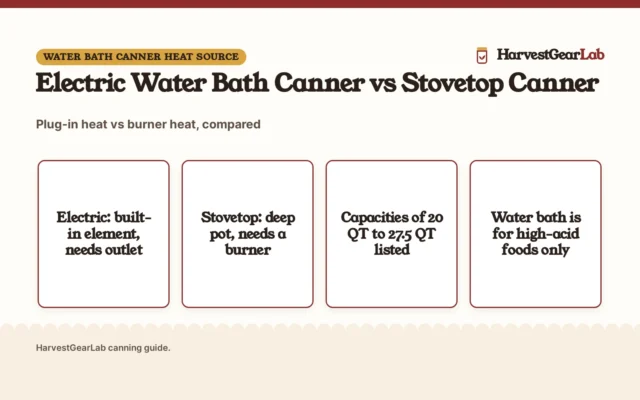
Electric water bath canner vs stovetop canner: electric models free the burner with dial or digital controls, while stovetop pots need a burner that fits.
Canning, drying, storing and harvest gear for home kitchens


Electric water bath canner vs stovetop canner: electric models free the burner with dial or digital controls, while stovetop pots need a burner that fits.
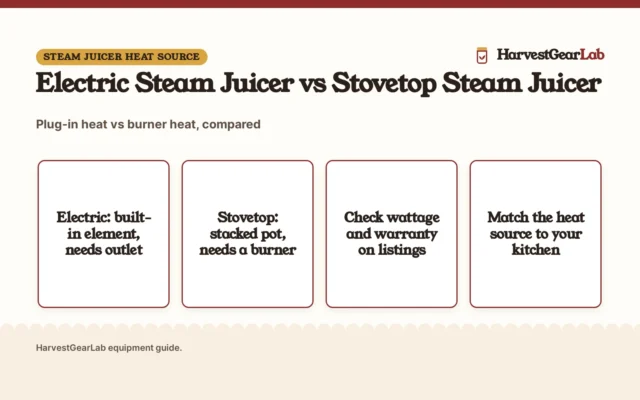
Electric steam juicer vs stovetop steam juicer: plug-in models free the burner and state wattage, while stovetop models need no outlet; match the heat source to…
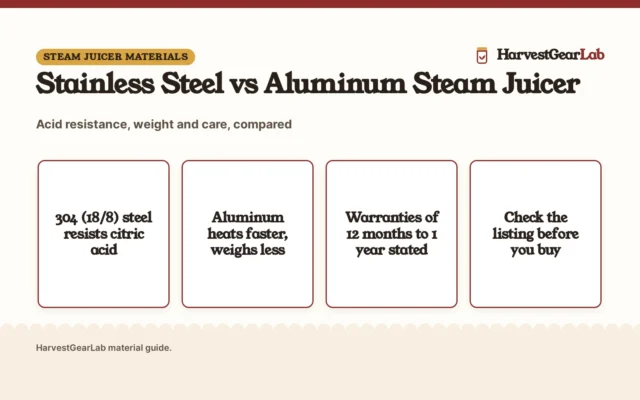
Stainless steel vs aluminum steam juicer: steel resists acidic juice with 12-month to 1-year warranties in the listings, while aluminum is lighter but needs prompt hand…
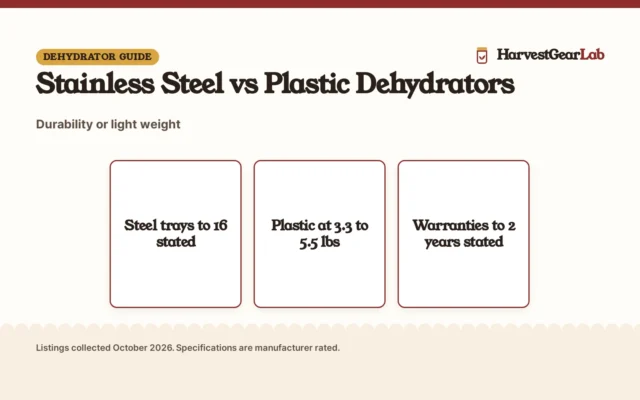
Stainless steel dehydrators list rust-proof trays and up to 1200W; plastic lists 3.3-5.5 lbs and BPA-free trays. Stated figures to help you choose.
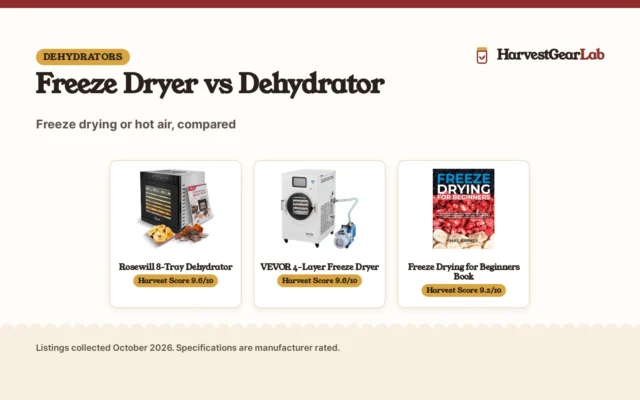
Freeze dryer vs dehydrator: three listings compared honestly, with a freeze dryer, a dehydrator and a book, plus specs and listing gaps.
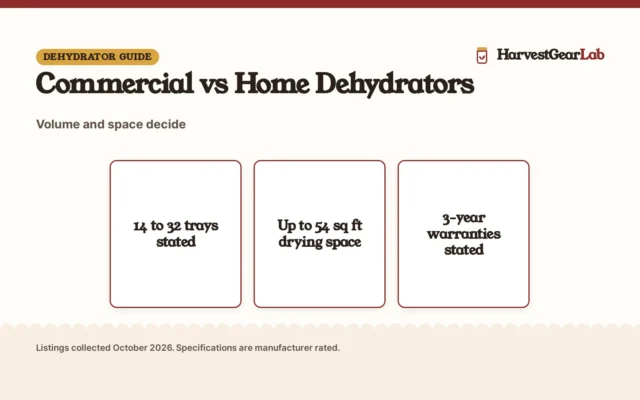
Commercial dehydrators list 14-32 trays and up to 3150 watts; home units are countertop scale. Stated figures from dehydrator listings to help you choose.
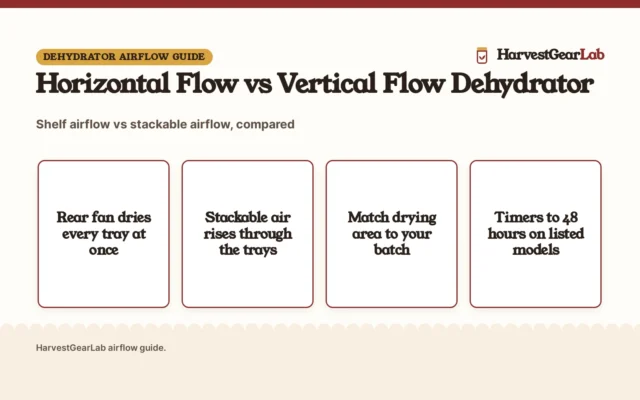
Horizontal flow vs vertical flow dehydrator: shelf models dry every tray at once, stackable models move air through the stack, so match tray area and timer…
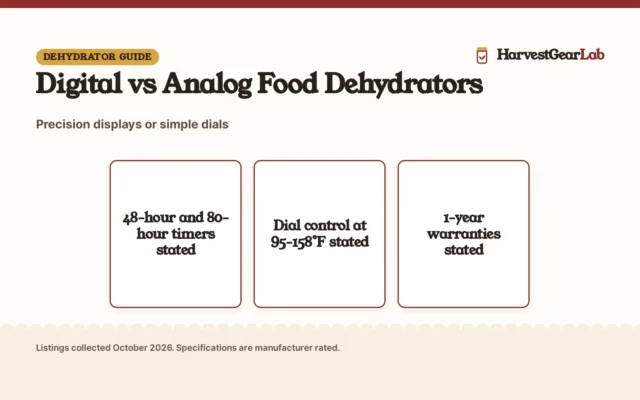
Digital dehydrators offer exact temps and timers up to 80 hours; analog offers simple dial control. Stated figures from dehydrator listings to help you choose.
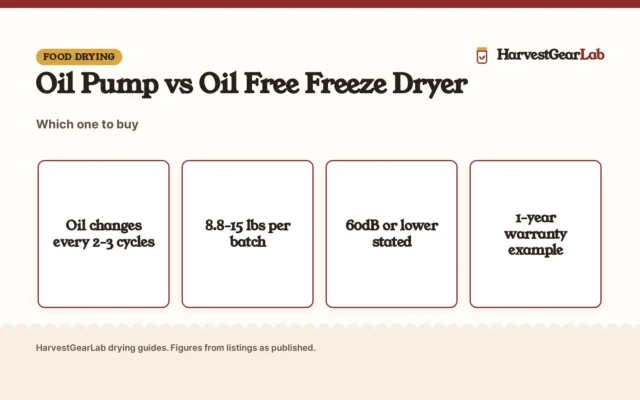
Oil pump vs oil free freeze dryer explained: pump mechanics, oil change intervals and batch capacities, with a clear verdict for simple home drying.
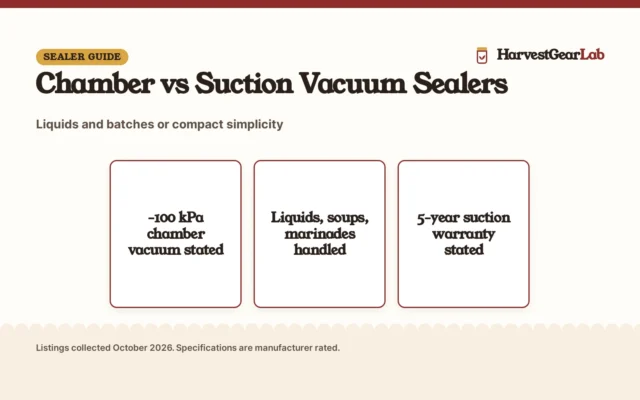
Chamber sealers handle liquids at -100 kPa; suction sealers are compact and simple. Stated figures from sealer listings to help you choose.