
On this page
The garden gives more than the freezer can hold, and the pantry shelves fill fast. Freeze drying benefits start there: food keeps its shape, color and flavor, turns light for storage, and comes back with water when you need it. This guide explains how freeze drying works, what a home freeze dryer handles in a batch, and when the machine earns its space.
HarvestGearLab earns a commission when you buy through links on this site, at no extra cost to you. As an Amazon Associate I earn from qualifying purchases. Affiliate disclosure.
Freeze drying benefits: the short answer
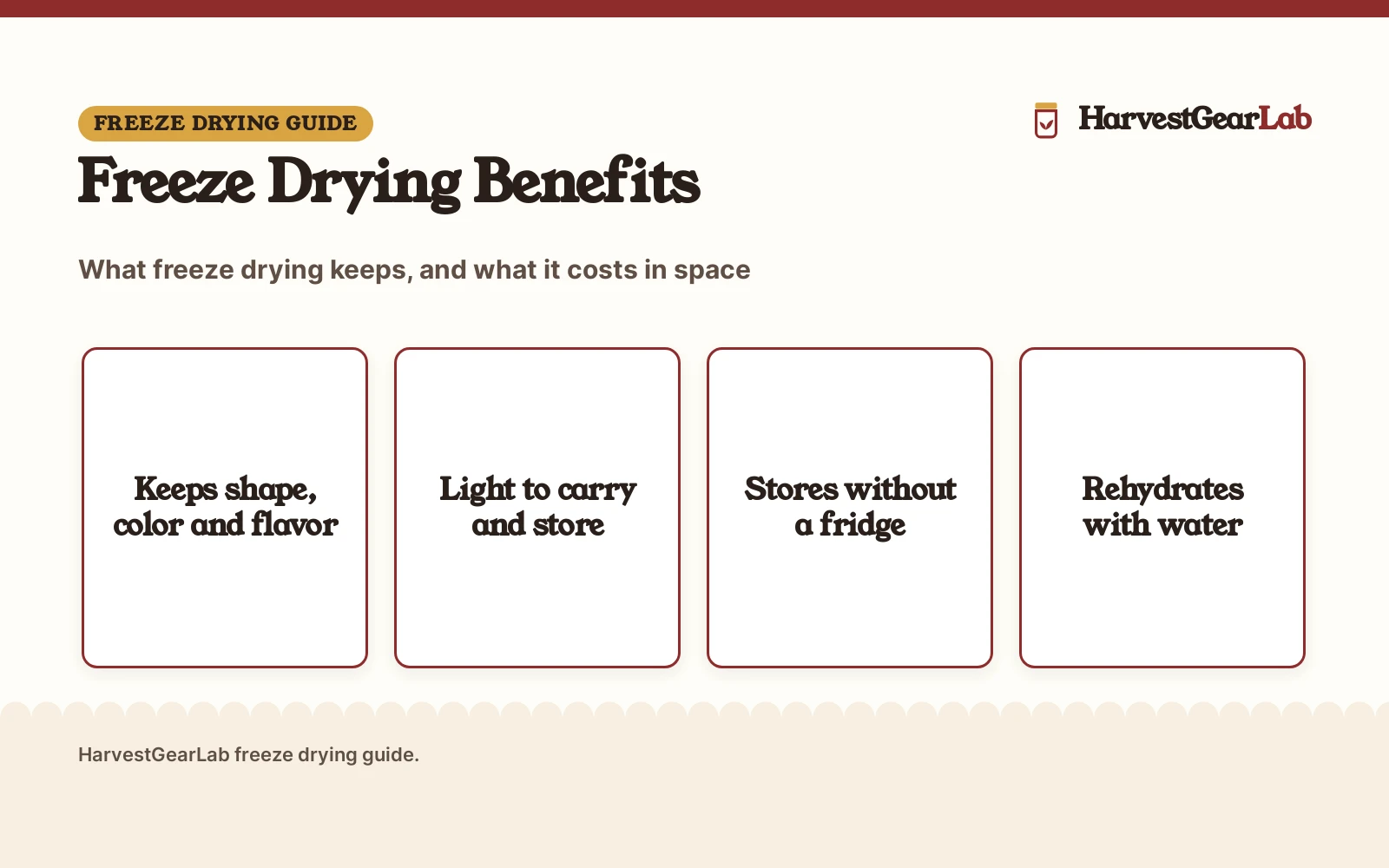
Freeze drying takes the water out of food without cooking it, so the food keeps the shape and color it had going in. The table sums up the benefits that matter for a home harvest.
| Benefit | What it means | Why it matters |
|---|---|---|
| Keeps shape and color | Food freezes solid, then water leaves as vapor | Pieces look like the food you put in, not shriveled chips |
| Light to store and carry | Water leaves the food, so the dried batch weighs less | A full batch lifts and moves with ease |
| Stores without a fridge | Dried food goes into sealed bags or jars in the pantry | No freezer space needed for the batch |
| Rehydrates with water | Add water and the food softens back | Dried meals and fruit come back for cooking and snacking |
| Works for many foods | Fruit, vegetables, meat, candy and pet treats | The same machine covers the garden and the pantry |
How freeze drying works
Freeze drying works in cold, not heat. The machine freezes the food solid, then a vacuum pulls the water out as vapor, and the food keeps its shape and color. The VEVOR freestanding freeze dryer cools to -60°C, while the compact VEVOR model cools to -35°C. A dehydrator works the other way, drying with warm air: the Ayovoch dehydrator (on Amazon) runs at 86-194°F. That heat is why dried fruit from a dehydrator shrivels, while freeze-dried fruit holds its shape. See our freeze drying for beginners guide for the full setup.
What a home freeze dryer handles
Batch size sets what a home freeze dryer can do in a run. The VEVOR freestanding model handles 11-15.4 lbs per batch on 4 trays, and the compact VEVOR model handles 4.4-6.6 lbs per batch on 4 trays. The freestanding model offers 10 preset recipes, and the compact model offers 5 presets for fruit, vegetables, meat, liquids and candy. Each model takes fruit, vegetables, meat, candy and pet treats, so the same machine covers the garden, the freezer and the treat jar.
Space, weight and power
A home freeze dryer is a big machine, so check the space before it arrives. The VEVOR freestanding model measures 28.4 x 17.7 x 31.1 in and weighs 217.16 lb, and it rolls on wheels. The compact VEVOR model measures 27.6 x 14.8 x 23.6 in and weighs 147.27 lb, and it fits on a countertop. The compact model draws 1400W. Give the machine a steady spot with room to open the door and pull the trays. Compare sizes in our small vs medium freeze dryer guide before you choose.
Is a home freeze dryer worth it?
It depends on how much you dry. A freeze dryer earns its space when the garden gives more than the freezer can hold and you want the harvest to keep its shape and color for the pantry. A dehydrator dries fruit, vegetables, herbs and jerky with warm air: the Ayovoch dehydrator holds 18 trays and runs at 86-194°F, and the BenchFoods dehydrator (on Amazon) holds 10 trays with 6.5 sq. ft. of drying area. If your harvest goes into jars and the freezer already, a dehydrator may cover it; if you want light food that stores in the pantry and rehydrates with water, the freeze dryer is the tool for the job. See our freeze dryer vs dehydrator comparison for the full side-by-side.
FAQ: preserving at home
What foods freeze dry well?
Fruit, vegetables, meat, candy and pet treats, per the VEVOR listings. The compact model lists presets for fruit, vegetables, meat, liquids and candy.
How much can a home freeze dryer hold per batch?
The VEVOR freestanding model handles 11-15.4 lbs per batch on 4 trays, and the compact VEVOR model handles 4.4-6.6 lbs per batch on 4 trays.
How is freeze drying different from warm-air drying?
Freeze drying freezes food, then a vacuum pulls the water out, while a dehydrator dries with warm air. The VEVOR freeze dryer cools to -60°C, and the Ayovoch dehydrator runs at 86-194°F.
Does freeze-dried food need a fridge?
No. Freeze-dried food stores in sealed bags or jars in the pantry, with no fridge needed.
How big is a home freeze dryer?
The VEVOR freestanding model measures 28.4 x 17.7 x 31.1 in and weighs 217.16 lb, while the compact model measures 27.6 x 14.8 x 23.6 in and weighs 147.27 lb.
More preserving guides
See every freeze dryers guide and all food drying guides.
More picks: freeze drying for beginners, freeze dryer vs dehydrator, freeze dryer price and best food dehydrator.