
On this page
Top picks at a glance
As an Amazon Associate I earn from qualifying purchases.
- 1
 Syntus Vacuum Sealer Bags9.6/10View on Amazon
- 2
 Ziploc Food Storage and Sandwich Bags Variety Pack9.5/10View on Amazon
- 3
 Bonsenkitchen Precut Vacuum Sealer Bags 100 CountView on Amazon
- 4
 Vacbird Travel Vacuum Bags with Rechargeable PumpView on Amazon
- 5
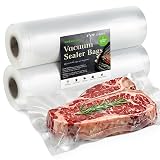 Vacuum Sealer Bags RollsView on Amazon
- 6
 FoodSaver Easy Fill 1-Gallon Vacuum Sealer BagsView on Amazon
- 7
 Potane Vacuum Sealer BagsView on Amazon
- 8
 Anova Culinary Precision Vacuum Sealer BagsView on Amazon
A counter full of tomatoes in August and a freezer that needs filling is when most gardeners ask about vacuum seal bags vs ziploc bags. The short answer: vacuum seal bags suit food you want to keep air away from in the freezer, since a machine pulls the air out and heat-seals the bag; zipper bags suit food you reach for often, since they open and close by hand. Use the guide below to match the bag to the job.
Runners-up to consider
 Bonsenkitchen Precut Vacuum Sealer Bags 100 CountCheck price on Amazon
 Vacbird Travel Vacuum Bags with Rechargeable PumpCheck price on Amazon
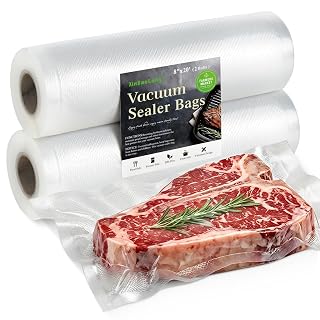 Vacuum Sealer Bags RollsCheck price on Amazon
 FoodSaver Easy Fill 1-Gallon Vacuum Sealer BagsCheck price on Amazon
 Potane Vacuum Sealer BagsCheck price on Amazon
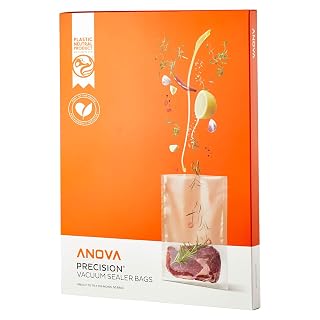 Anova Culinary Precision Vacuum Sealer BagsCheck price on Amazon
HarvestGearLab earns a commission when you buy through links on this page, at no extra cost to you. As an Amazon Associate I earn from qualifying purchases. Affiliate disclosure.
Vacuum seal bags vs ziploc bags: the short list
Different closures, different jobs. Vacuum seal bags need a vacuum sealer machine that draws the air out and heat-seals the edge; zipper bags press shut with your fingers. The table below lines up the differences that matter in a preserving kitchen.
| Feature | Vacuum seal bags | Zipper bags |
|---|---|---|
| How it closes | Machine heat-seals after air removal | Press the zipper shut by hand |
| Air removal | Machine draws air out | Squeeze out what you can |
| Reopening | Cut open; some listings state reusable | Open and reseal by hand |
| Best home use | Freezer storage of garden produce and meat | Fridge, pantry and lunchbox storage |
How vacuum seal bags work
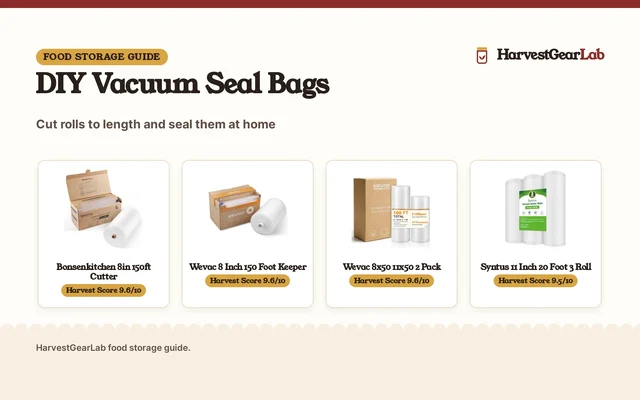
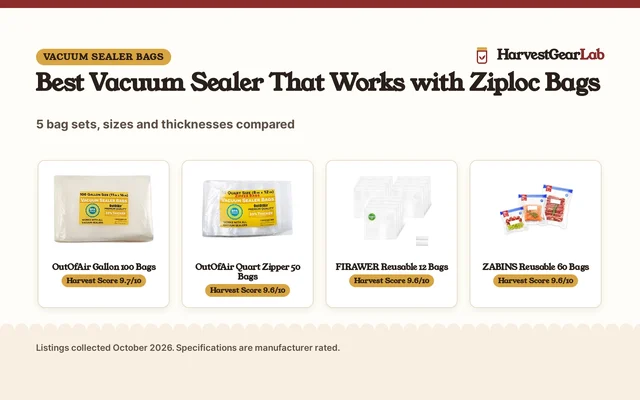
Vacuum seal bags are sold as rolls or precut bags and closed with a vacuum sealer. The machine pulls air from the bag and then heat-seals the open end. Rolls let you cut any length: listings show 8 inch by 50 foot rolls, 11 inch by 50 foot rolls, and an 11 inch by 150 foot roll, all compatible with standard suction sealers. Precut bags skip the cutting step: one listing packs 150 bags as 50 each of 11 by 16 inch gallon, 8 by 12 inch quart and 6 by 10 inch pint sizes, and another offers 200 precut 8 by 12 inch quart bags.
Most food-grade bags state BPA-free material, and textured bags add embossed channels that help the machine draw air out; see our textured vs smooth vacuum sealer bags comparison for the difference. For sous vide cooking, one listing states its bags handle water up to 195°F (90°C). Let the sealer rest between bags: one maker notes waiting more than 20 seconds between sealings so the sealing strip cools down.
How zipper bags work
Zipper bags close with a press-to-seal strip, no machine needed. They open and close by hand, which makes them handy for food you reach for daily: snacks, cut vegetables, cheese and leftovers headed for the fridge. They do not remove air the way a sealer does, so they are a short-term answer rather than a freezer strategy. For produce you want to keep breathing, see our produce storage guides.
Bag materials and thickness
Food vacuum sealer bags are usually polyethylene, sometimes layered with PA film, and several listings state BPA-free, food-grade material. One precut listing states 4 mil thickness, which the maker ties to puncture resistance around bones. Textured bags carry embossed channels on one or both sides so a suction sealer can pull air through; smooth bags are meant for chamber machines. If you buy rolls, keep them in the keeper box with the cutter that several listings include, so the roll stays clean between uses.
Do not mix up the bag types
Vacuum storage bags sold for clothes are a different product from food vacuum sealer bags. Clothing bags come in sizes like X-Jumbo 48 by 32 inches and Jumbo 40 by 30 inches and list clothing as the use; they are made for compressing bedding and linens, not for food. Use only bags the listing marks for food storage. Check the listing for food-grade and BPA-free statements before you buy.
When to choose each
- Choose vacuum seal bags for freezer storage of garden produce, meat and fish, bulk buys you portion out, and sous vide cooking within the bag’s stated temperature.
- Choose zipper bags for fridge storage, daily snacks, marinating, and anything you open and close more than once.
- Either works for pantry dry goods, where air removal matters less and the zipper’s convenience wins on busy weeks.
If you seal often, rolls beat precut on waste: cut exactly the length the food needs instead of sizing up. If you seal rarely, precut bags save the cutting step. Our rolls vs precut vacuum sealer bags guide compares the two formats, and best vacuum sealer bags under 20 lines up current packs.
What to skip or double-check
- Vacuum sealing as canning: a vacuum sealer is not a canner. Sealed bags still need the fridge or freezer; sealing does not make food safe at room temperature.
- Clothes storage bags for food: they are sized for bedding and list clothing as the use, not food storage.
- Smooth bags on a suction sealer: suction machines need textured or channeled bags to draw air out; smooth bags suit chamber sealers. See our chamber vs suction vacuum sealer comparison.
- Boiling in any bag: check the listing’s stated temperature limit, such as 195°F, before the bag meets hot water.
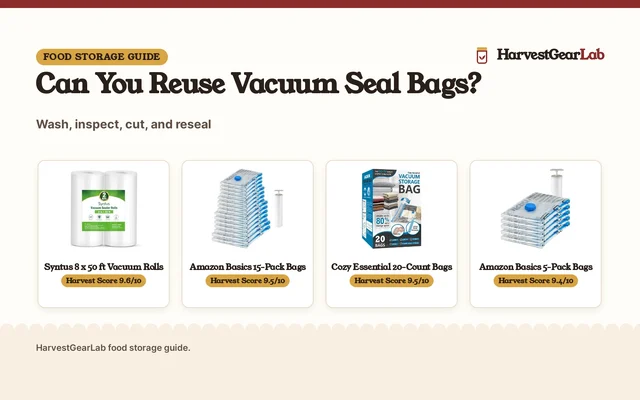
- Reusing single-seal bags: each seal trims the bag shorter, so a roll gives you more second chances than precut.
What this guide does not cover
This is a bag-choice guide. It does not give recipes, processing times or storage times. For current food safety guidance, check USDA sources; every vacuum sealing guide on the site is collected in our vacuum sealers section.
FAQ: preserving at home
Are vacuum seal bags better than zipper bags for the freezer?
For the freezer, yes: the machine removes air and heat-seals the bag, while a zipper bag traps air you cannot squeeze out. Use zipper bags for the fridge and pantry instead.
Can I use vacuum sealer bags without a machine?
No. The bags are heat-sealed by a vacuum sealer; without the machine you cannot close them. Zipper bags are the machine-free option.
What size vacuum sealer bags should I buy?
Match the bag to the food: listings show 8 inch and 11 inch wide rolls, and precut packs in 11 by 16 inch gallon, 8 by 12 inch quart and 6 by 10 inch pint sizes. Rolls let you cut any length in between.
Are vacuum sealer bags safe for sous vide?
Check the listing: one food-grade bag listing states its bags handle water up to 195°F (90°C). Only use bags the listing marks for sous vide cooking.
Can I reuse vacuum seal bags?
Some listings state their bags are reusable, others state disposable. Never reuse a bag that held raw meat without a thorough wash.
More preserving guides
See every vacuum sealers guide and all food storage guides.
More picks: vacuum sealer bags under 20, rolls vs precut bags, textured vs smooth bags and vacuum sealing vs mylar bags.