
On this page
Top picks at a glance
As an Amazon Associate I earn from qualifying purchases.
- 1
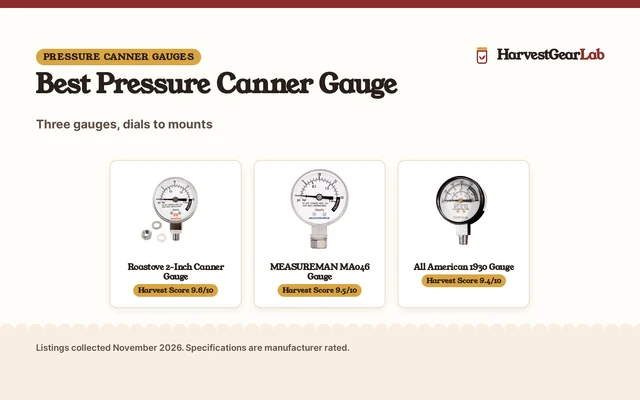
 Roastove Stainless Steel Pressure Canner Gauge9.6/10View on Amazon
- 2
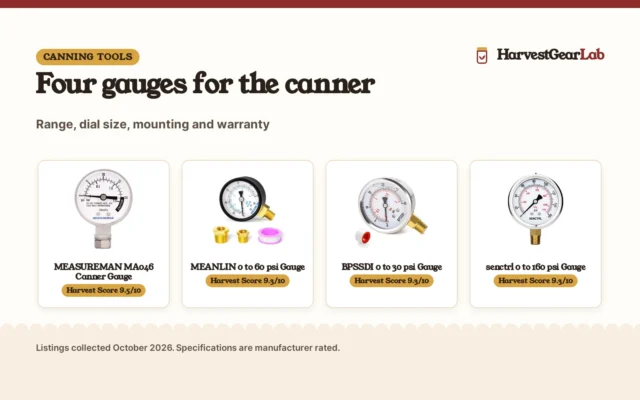
 MEASUREMAN MA046 Pressure Canner Gauge9.5/10View on Amazon
- 3
 All American 1930 Steam Gauge 72 for Pressure Canners9.4/10View on Amazon
Why is my pressure canner whistling on the stove, and should the sound worry you? In most cases a whistle is steam finding its way out, through the vent pipe, past the regulator weight or around the lid seal, and the sound alone does not mean the canner is broken. This guide walks through each cause in turn, so you can tell a normal venting sound from a problem that needs a part checked or replaced.
HarvestGearLab earns a commission when you buy through links on this site, at no extra cost to you. As an Amazon Associate I earn from qualifying purchases. Affiliate disclosure.
Why is my pressure canner whistling: the short answer
A whistle is steam escaping under pressure, and where it escapes tells you what to check. The table below matches the sound to the likely cause, using the parts named in the gauge listings HarvestGearLab compared.
| Sound | Likely cause | What it means | What to do |
|---|---|---|---|
| Steady whistle from the vent pipe | Steam venting as the canner heats | Air and steam leaving through the vent | Let it vent, then seat the regulator weight |
| Rhythmic whistle from the weight | Regulator weight rocking and releasing steam | Pressure rising and falling at the weight | Lower the heat until the rocking steadies |
| Hiss around the lid rim | Gasket not sealing, or lid not seated | Steam escaping past the seal | Cool the canner, then check the gasket and lid |
| Whistle with a gauge that does not move | Gauge fault, or steam escaping elsewhere | The dial is not showing the pressure inside | Cool the canner and check the gauge and vent |
The parts that make the sound
A pressure canner whistles through a small set of parts, and each part has a job. The vent pipe lets air and steam out while the canner heats. The regulator weight sits on the vent pipe and rocks to release steam as pressure builds. The dial gauge shows the pressure inside, and the gasket seals the lid to the pot. When any of these parts is worn, loose or blocked, steam finds a new path out, and that path whistles.
The gauge is the part to watch. Replacement dial gauges for Presto canners read 0-20 PSI, and the Measureman canner gauge (on Amazon) reads 0-30 psi with a 2-inch dial and a 1/4-inch connection. A gauge that reads low while the canner whistles hard, or a needle that stays still while steam pours out, is a sign the gauge may need replacing. Compare options in the best pressure canner gauge guide, which lines up gauges by range and fit.
When whistling is normal
Whistling is normal while the canner vents. As the pot heats, air and steam leave through the open vent pipe, and the sound can be loud enough to hear across the kitchen. The sound should change when the regulator weight is seated on the vent pipe: the whistle gives way to the rhythmic rocking of the weight, with short bursts of steam. That rocking is the canner holding pressure, and the heat can be turned down until the rocking steadies into a calm rhythm.
A dial gauge canner and a weighted gauge canner sound different, and the difference matters. A dial gauge shows pressure on its face, while a weighted gauge relies on the rocking weight, so the sound of the weight is the main signal on that style. The weighted gauge vs dial gauge pressure canner comparison explains how each style reads and what to listen for.
When whistling means stop and check
Stop and check when the whistle never settles, or when steam escapes where it should not. A constant loud whistle with the weight seated, steam hissing around the lid rim, or a gauge that does not move while the canner whistles all point to a sealing problem. Turn the heat down and let the canner cool on its own, with the lid untouched until the pressure has dropped and the lid lifts freely. Never force a lid open, and never block the vent pipe to quiet the sound: the vent is the path steam uses to leave safely.
Food or liquid in the vent pipe can cause the same trouble. Bits of food can lodge in the pipe and narrow the path steam takes, which makes the whistle sharper and the pressure harder to read. A vent pipe that is blocked needs cleaning before the canner is used again, and a gasket that is cracked, stretched or hard needs replacing. The pressure canner repair guide lists the parts that wear out and what to look for on each part.
Checks before the next batch
Work through these checks with the canner cool and empty:
- Vent pipe: look through the pipe and clear any food or residue, so steam has a clean path out.
- Regulator weight: seat it firmly on the vent pipe and check that it rocks freely, with no wobble from damage.
- Gasket: check the seal for cracks, flat spots and stiffness, and replace it when it no longer feels soft and springy.
- Dial gauge: check that the needle rests at 0 when the canner is cool, and compare the reading with the rocking of the weight. A Presto replacement gauge installs within 1 minute, with a silicone washer and a stainless steel nut on the lid.
- Lid and plug: check that the lid seats evenly and that the overpressure plug is in place and undamaged.
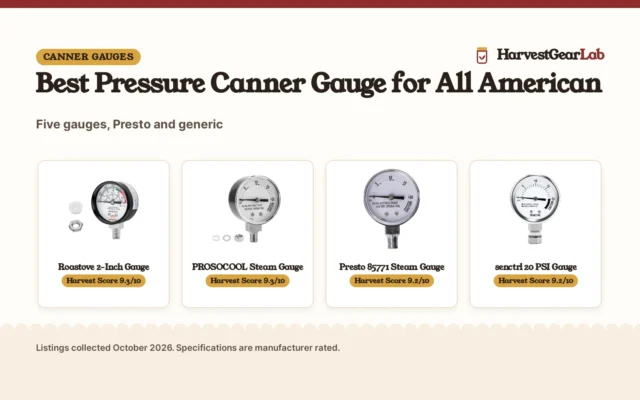
- Fit: match a replacement gauge to the canner model. The XCWT gauge (on Amazon) fits All American models 910, 915, 921, 925, 930 and 941, covering canners from 10.5 quarts to 41.5 quarts.
For Presto canners, the how to use Presto pressure canner guide walks through the lid, weight and gauge in order, and Mirro pressure canner parts covers gaskets, gauges and valves for that brand.
What this guide does not cover
This guide explains the whistle, not the canning itself. It does not give recipes, times, pressures or fill levels, and it does not cover water bath canning. Take those figures from current USDA and National Center for Home Food Preservation guidance, and follow them exactly for each food. Every canner guide on the site is collected in the canning section.
FAQ: preserving at home
Is it normal for a pressure canner to whistle while it heats up?
Yes. Air and steam leave through the vent pipe while the canner heats, and the sound changes when the regulator weight is seated. The whistle should settle into the rhythmic rocking of the weight.
Why does my canner whistle but the gauge does not move?
The gauge may be faulty, or steam may be escaping past the lid seal instead of building pressure inside. Cool the canner, check the gasket and vent pipe, and compare the gauge with the rocking of the weight. Replacement dial gauges for Presto canners read 0-20 PSI.
Can a worn gasket make a canner whistle?
Yes. A gasket that is cracked, stretched or hard lets steam hiss out around the lid rim instead of holding it inside. Replace the gasket and check that the lid seats evenly before the next batch.
Should I block the vent pipe to stop the whistling?
No, never block the vent pipe. The vent is the path steam uses to leave the canner, and blocking it traps steam inside. Let the canner cool, then clean the vent pipe and check the gasket and weight.
When should I replace the dial gauge?
Replace it when the reading no longer matches the canner, such as a needle that stays still while the canner whistles, or a gauge that reads low while steam escapes. The XCWT gauge fits All American models 910, 915, 921, 925, 930 and 941.
More preserving guides
See every pressure canner gauges guide and all canning guides.
More picks: best pressure canner gauge, best pressure canner, pressure canner repair and weighted gauge vs dial gauge.